
















The head decides how the camera moves on the tripod. A ball head locks the camera at any angle and suits photography, a video head pans and tilts smoothly, and a gimbal head carries long telephoto lenses in balance. Check which quick release plate the head takes, which mount the tripod has and that the load capacity covers camera and lens.



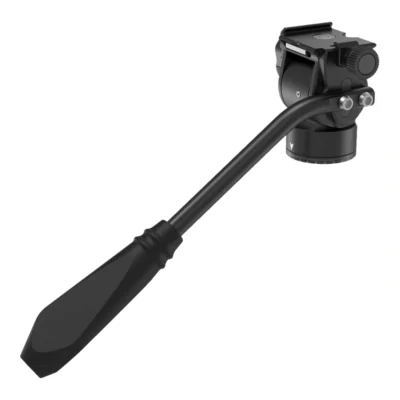
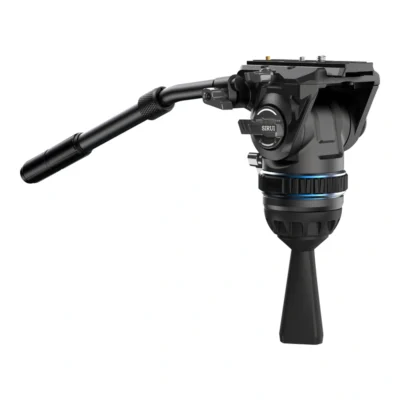
The same legs can carry very different heads, and swapping one changes how the tripod works more than people expect. A landscape tripod with a ball head becomes a film tripod with a video head, and a gimbal head turns the same legs into a support for a 600 mm lens. This guide goes through the common tripod heads, what each one is good at and where it falls short.
Head types compared
| Head | How it moves | Best for | Weak point |
|---|---|---|---|
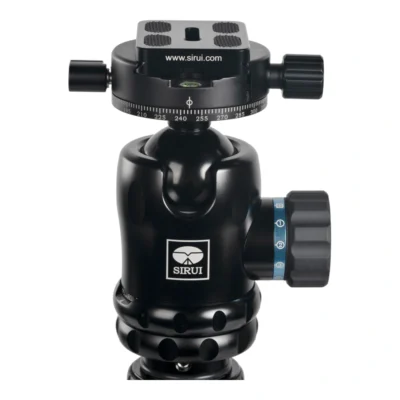
| Ball head | Any direction with one lock | Most stills work, travel | Hard to adjust one axis at a time |
| 3-way and 4-way head | One axis at a time, with separate handles | Architecture, product, macro | Slow and bulky |
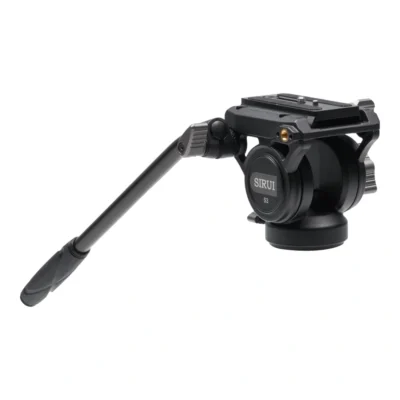
| Video head | Pan and tilt with damping | Film, birdwatching | Heavy, not made for portrait orientation |
| Gimbal head | The lens balances freely | Birds, wildlife and sport with telephoto lenses | Large and only for long lenses |
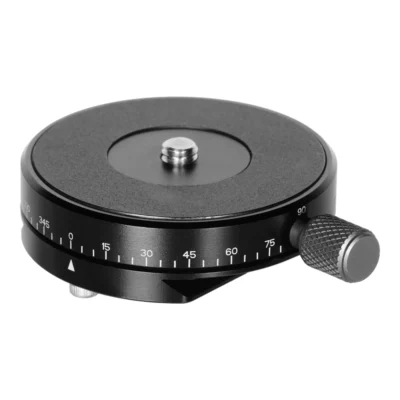
| Panoramic head and panning plate | Precise rotation around one axis | Panoramas, 360 images | A specialist head |
| Tilt head | Forward and back | Monopod | Only one movement |
Ball head
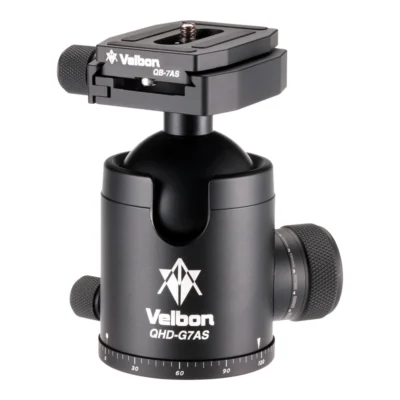
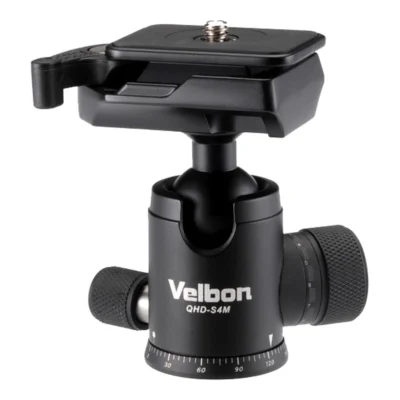
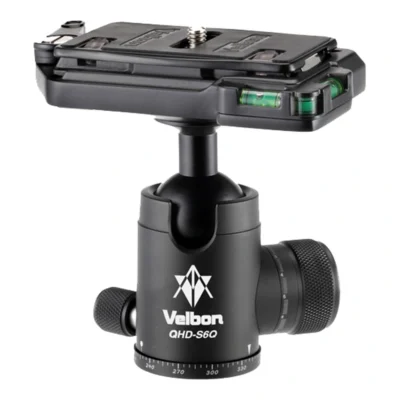
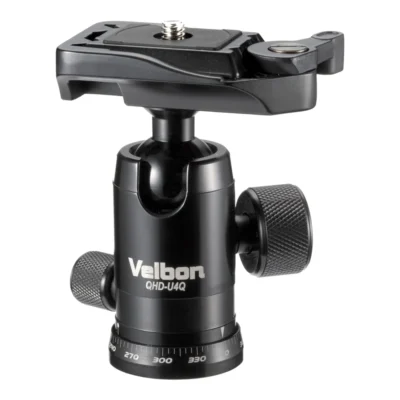
The ball head is standard on nearly every photo tripod, and for good reason. You loosen one knob, point the camera where you want it and lock. No other head is as quick or takes up as little room in the bag.
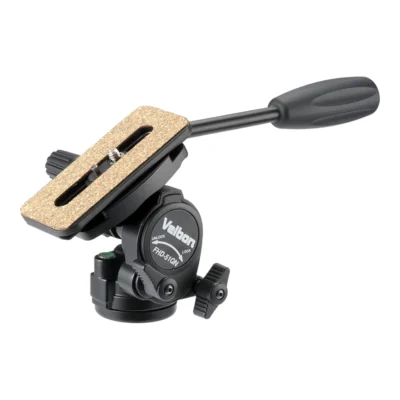
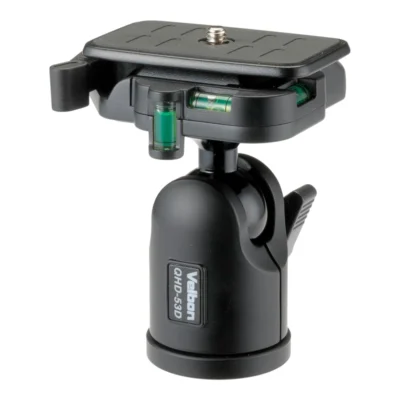
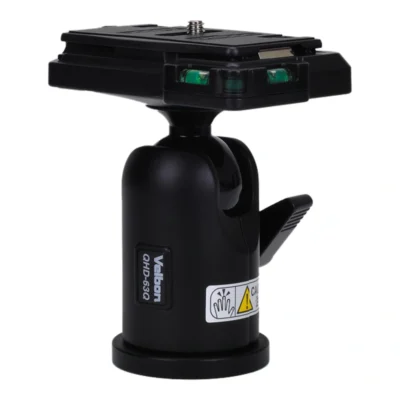
A good ball head has three controls. The main lock holds the ball. A friction control sets how stiffly the ball moves when the lock is loosened, so the camera does not flop to the side while you adjust. A separate pan lock lets you rotate without the ball coming loose. Velbon, for example, has ball heads with two independent locking knobs.
The size of the ball gives a rough idea of how much the head can hold. A larger ball keeps a heavy camera from creeping when locked. Remember that load capacity assumes the camera sits straight above the ball. Tilt a heavy lens forward and the strain goes up.
Video head
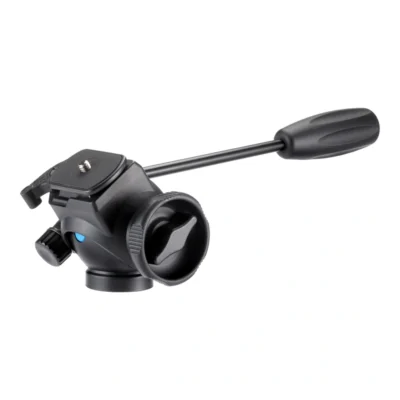
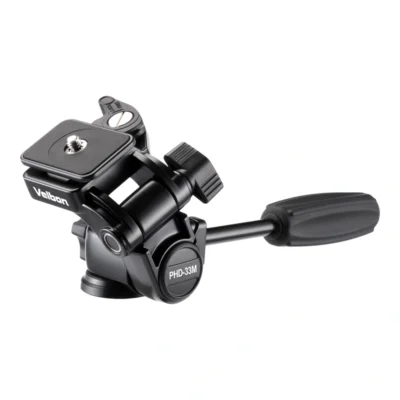
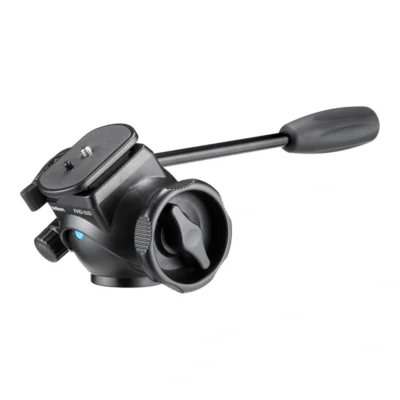
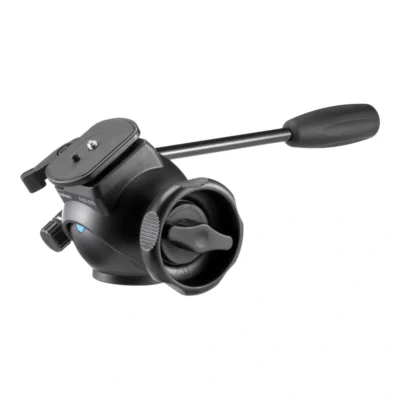
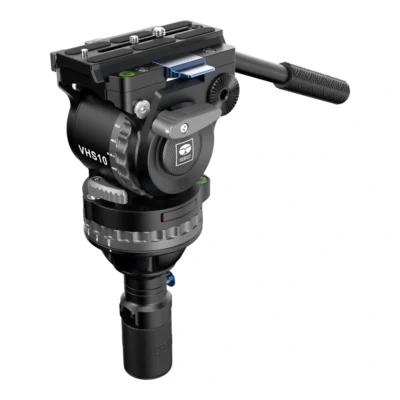
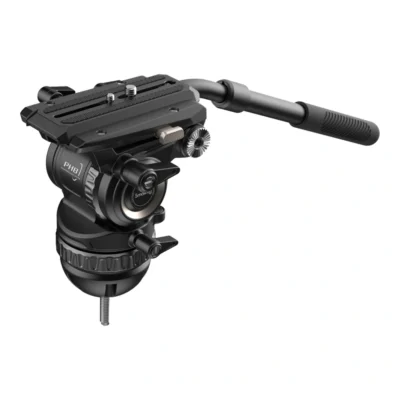
A video head, often called a fluid head, is built for movement. The damping comes from a viscous fluid or grease between moving parts, and it gives pans and tilts that start and stop softly.
The differences between basic and better video heads come down to three things. Drag can be fixed or adjustable in steps, for pan and tilt separately. Counterbalance, the spring that holds the camera in place when you tilt, can be missing, fixed or adjustable to the camera's weight. And the plate should slide back and forth so the camera balances before counterbalance is set.
Video heads sit either on a flat base with a 3/8 inch thread or on a half ball that fits a bowl in the tripod, most often 75 mm. Check which kind your legs have before buying. Most tilt around 150 degrees, which is enough for everything except filming straight up or down. If you want to shoot vertical video for social media, there are heads with a plate that turns the camera 90 degrees.
3-way head and 4-way head
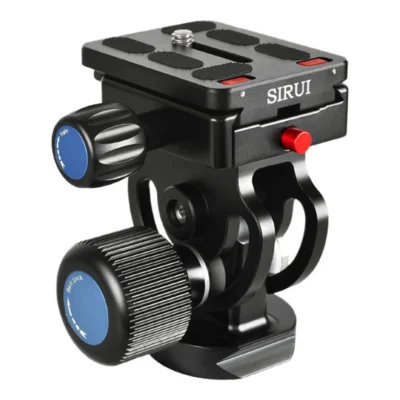
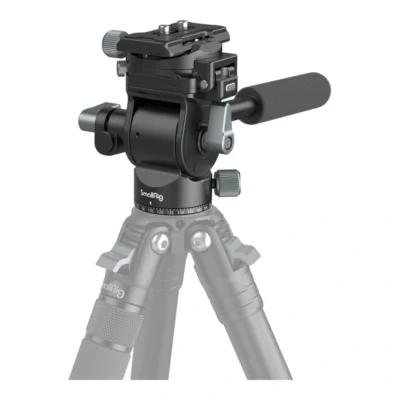
A 3-way head has a handle or knob for each axis. You can tilt the camera forward without it moving sideways, which makes the head good when a frame has to be adjusted millimetre by millimetre. Architecture, product shots and reproduction are typical uses. A 4-way head adds one more adjustment on top of the three axes.
The drawback is size. The handles stick out and the head is heavier than a ball head for the same load. Some models have retractable handles that make them easier to pack.
Gimbal head for telephoto lenses
A long telephoto lens on a ball head is front-heavy. Loosen the lock and it tips. A gimbal head solves that by hanging the lens in a fork so its centre of gravity sits level with the tilt axis. Balanced correctly, the lens stays at whatever angle you leave it, and you can follow a bird in flight with two fingers.
The lens is mounted by its own tripod foot, not by the camera. The foot needs an Arca-compatible plate, slid until the lens balances both forward and back. Gimbal heads are large and heavy, and they are made for exactly that kind of heavy lens. With an ordinary lens without a tripod foot they do nothing for you.
Panoramic head and levelling base
Someone searching for a panoramic head usually wants to shoot several frames to stitch into one. Two things make that work: the rotation has to be perfectly level, and it has to happen around the right point in the lens.
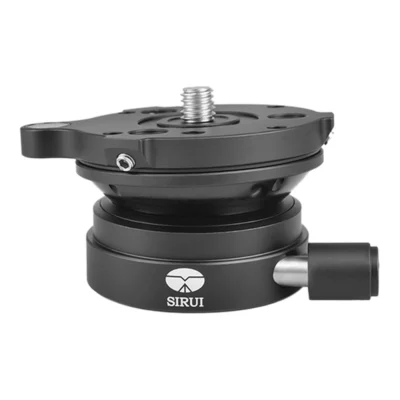
Level is solved from below. A levelling base between legs and head lets you level everything without touching the legs. On top of it, a panning plate or panning clamp with a degree scale rotates so every frame is taken at the same step. Put the panning clamp on top of a ball head instead and the camera rotates level even if the legs are not, as long as the clamp itself is level.
The right point needs a rail. The camera slides back on the rail until the lens's no-parallax point sits straight above the rotation axis. Then foreground and background do not shift against each other between frames. For landscapes where everything is far away, level is enough. For interiors and subjects close to the camera you need both.
The tripod mount and the plate
Almost every head has a 3/8 inch thread underneath, and most tripods have a screw to match. Smaller heads and mini tripods sometimes use 1/4 inch, the same as under the camera. An adapter bushing turns a 3/8 thread into 1/4.
On top sits the clamp for the quick release plate. Most heads use Arca-Swiss, while many video heads take a larger Manfrotto-type video plate. Velbon has its own plates for its heads. If you own several tripods, it pays to stick to one standard so the plate under the camera fits everywhere.
Weigh the head as well. A heavy head on a light travel tripod makes it top-heavy and can cancel out what you saved on the legs.
Frequently asked questions about tripod heads
What is a video head?
A tripod head with damping and a long handle, built to pan and tilt smoothly while filming. Better video heads also have counterbalance that holds the camera in place as you tilt. It sits on a flat base or on a half ball for the tripod's bowl.
What is a panoramic head?
A head or plate that lets the camera rotate level in set steps, so several frames can be stitched into one panorama. For subjects close to the camera, a rail is also used to move the rotation to the lens's no-parallax point.
Ball head or 3-way head, which should I choose?
A ball head is faster and smaller and suits most stills work. A 3-way head is better when you want to adjust one axis at a time, for architecture and product shots for example. Many landscape photographers manage fine with a good ball head.
Do I need a gimbal head?
Only if you use long telephoto lenses with their own tripod foot, for birds and sport for example. With ordinary lenses a ball head or video head does the job better.
Do all tripod heads fit all tripods?
Most heads have a 3/8 inch thread that fits most tripods. Video heads with a half ball need a tripod with a bowl of the same size. Also check that the head takes the same quick release plate you already use.