
















A quick release plate stays under the camera and clicks into the clamp of the tripod head, so you do not have to screw it on every time. The plate must fit the clamp, so first see which standard your head uses, Arca or another. An L-bracket has an extra plate on the side and lets you turn the camera to portrait orientation without tipping the head. Universal plates fit several cameras, while L-brackets are often made for a specific model.
Read more about quick release plates & L-brackets
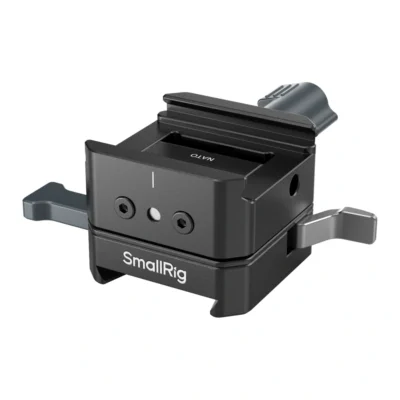
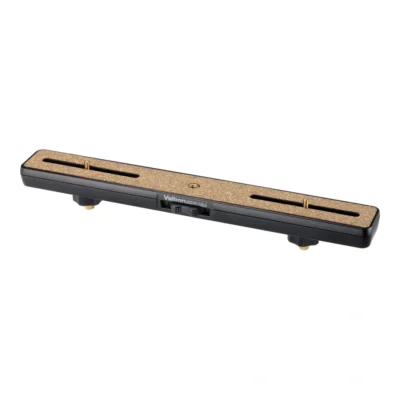
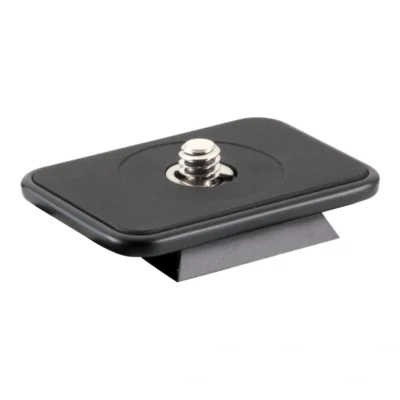
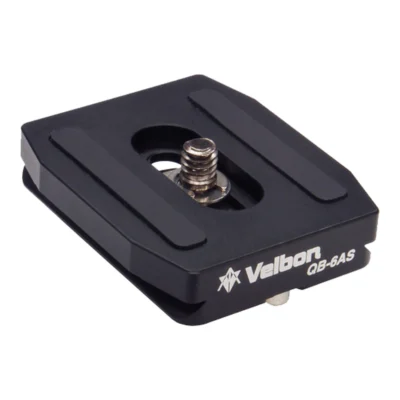
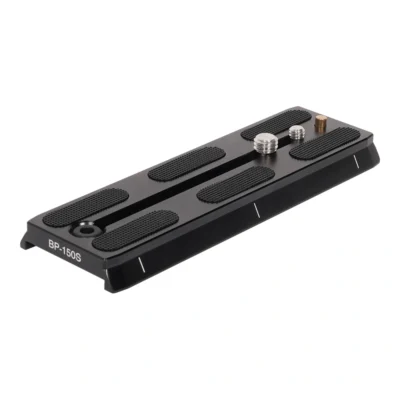
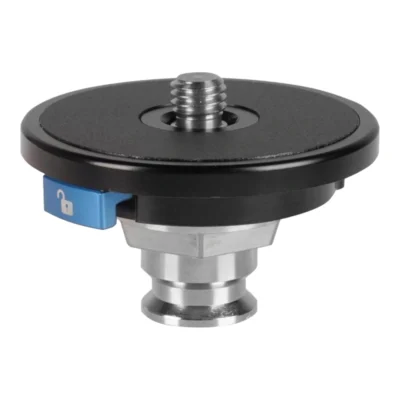
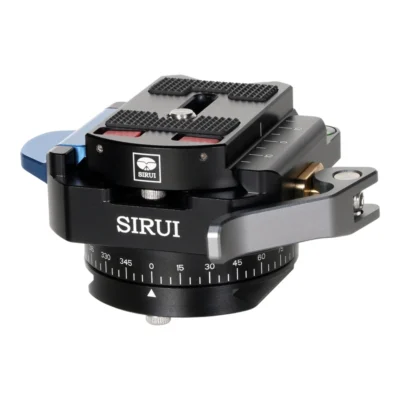
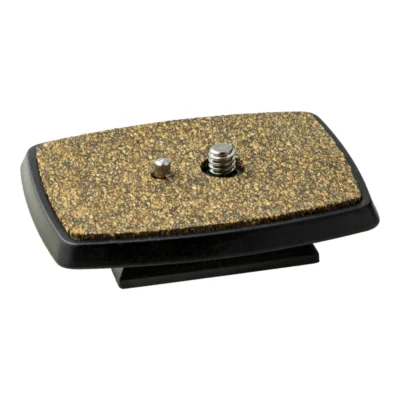
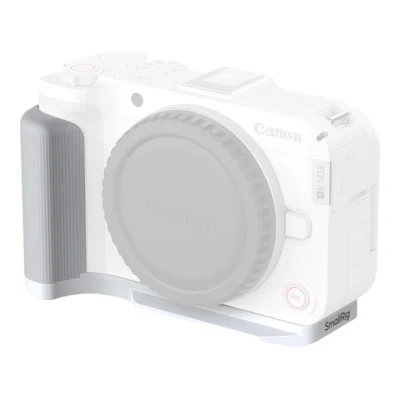
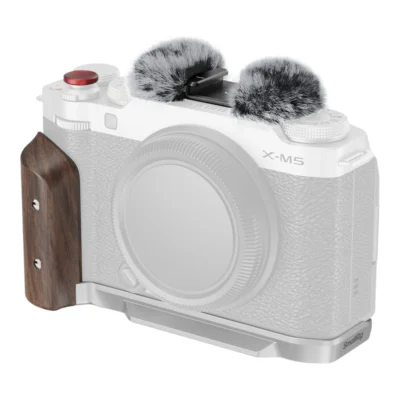
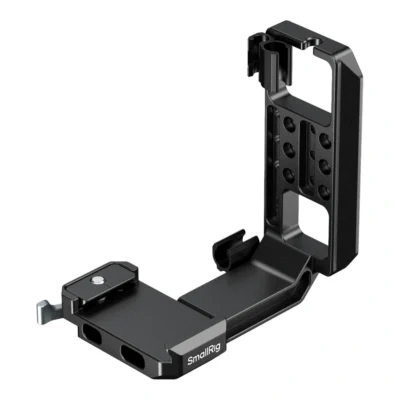
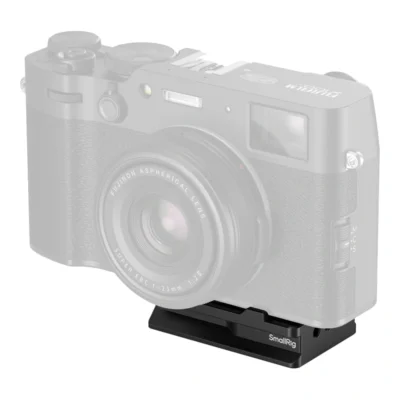
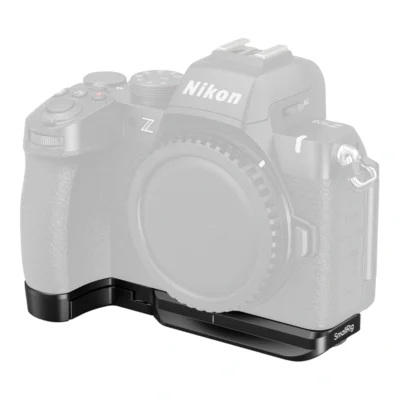
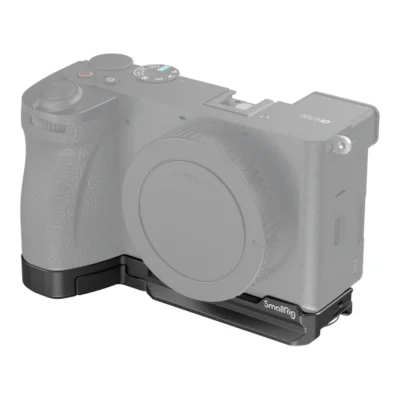


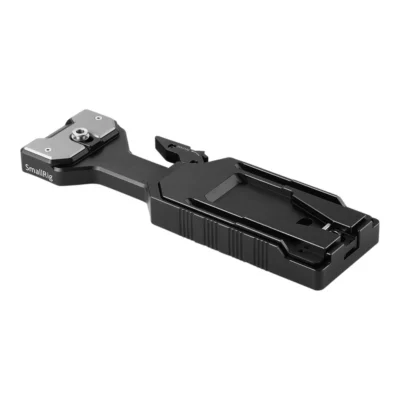

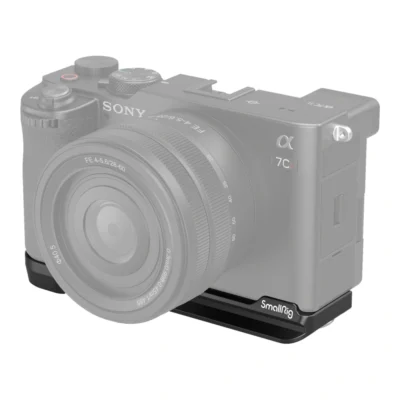
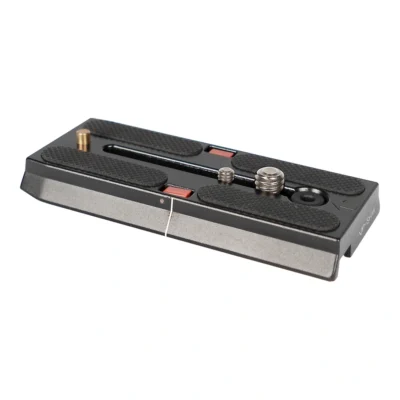
The quick release plate is the smallest part of a tripod and the one you touch most. It decides how quickly the camera goes onto the tripod, whether it sits straight and whether the same camera fits your other tripods, your gimbal and your rig. A plate is worth choosing as carefully as a head.
How a quick release plate works
The plate is screwed under the camera with a 1/4 inch screw and stays there. The tripod head has a clamp. You slide or drop the plate into the clamp and lock it with a knob or a lever.
The bottom of a camera is smooth, and a plate held by a single screw can twist when you aim a heavy lens. That is why good plates have rubber or cork against the camera, and many have a lip or pin that braces against the body. The screw is tightened with a coin, a hex key or a fold-out ring.
Plates usually have small stop screws at the ends. They keep the plate from sliding out of the clamp if the knob is loose. Do not remove them to make swapping faster.
Arca-Swiss and other standards
Arca-Swiss is the standard most makers follow. The plate has angled edges, a dovetail profile that the jaws of the clamp grip. Sirui, SmallRig and many others use it, so an Arca plate from one brand usually fits an Arca clamp from another.
Usually, not always. Dimensions vary slightly between makers. A screw-knob clamp takes almost any Arca plate because it can be tightened as far as needed. A lever clamp is set for one width and can be too loose or too tight for another brand's plate. Many lever clamps can be adjusted.
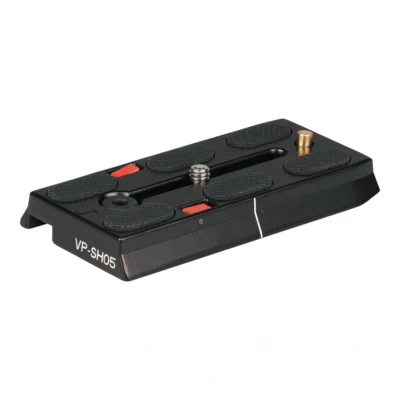
Besides Arca there are other systems. Velbon has its own QB series plates for its heads. Many video heads take a larger, longer Manfrotto-type video plate. There are also kits with plates that fit both Arca clamps and those video heads, which helps if you own both kinds.
Plate length and shape
A short plate is enough for a small camera on a ball head. A long plate gives room to slide the camera forward or back, and you need that when the centre of gravity has to be right: on a video head, on a gimbal and with heavy lenses.
There are also plates for a lens's tripod foot. A lens with its own foot should sit on the tripod by the foot, not by the camera, or the camera mount carries all the weight.
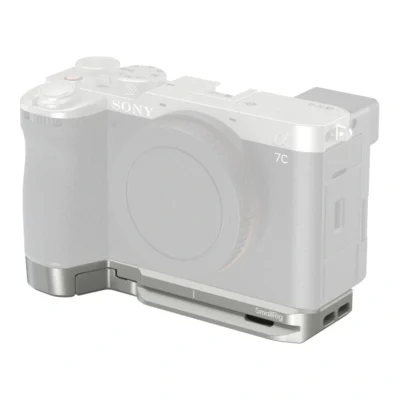
Then there are plates made for one camera. Base plates follow the shape of the body, sit straight without twisting and leave the battery door free. Some have a slot for a tracking tag, so the camera can be found if it goes missing. Others are built for camera rigs and gimbals such as the DJI RS, with mounting points for accessories.
L-bracket: portrait orientation without tipping the head
With an ordinary ball head you turn the camera to portrait by dropping the head into a notch on its side. The camera then hangs off the centre of the tripod, the lens ends up lower and to the side, and the tripod becomes lopsided. You also have to recompose.
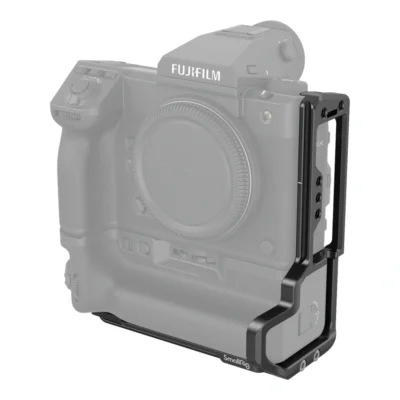
An L-bracket, or L-plate, has an Arca plate both under the camera and along its side. You open the clamp, lift the camera off and put it back on the side plate. The lens stays in almost the same place and the head stays upright. For landscapes and panoramas in portrait orientation it makes a big difference.
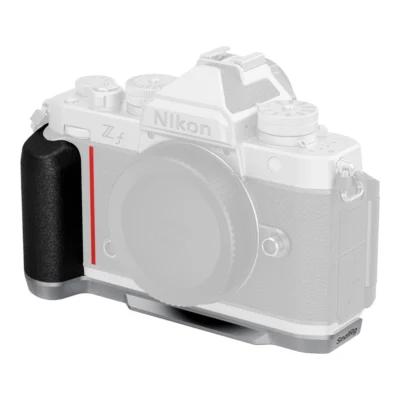
Camera-specific L-brackets are made for one body, and the ones here are mainly for Sony Alpha, Fujifilm X and Nikon Z. They sit tight against it and leave ports, battery door and the flip-out screen accessible. Many have a silicone or wooden grip that makes the camera nicer to hold. Some fold away or slide out so cables and a microphone can reach the side. Universal L-brackets adjust to different cameras but rarely fit as snugly.
Buy by exact camera model. Two bodies with almost the same name can have ports and threads in different places.
Spare plates for a head you already own
The safest route to a spare plate is the head's own name. Several makers produce plates designed for a specific head, and then you know that length, stop screws and clamp dimensions match. If the head is Arca-compatible, most Arca plates fit, but check lever clamps.
If you have several cameras, an extra plate for each is money well spent. It saves the screwing every time you change cameras on the tripod.
Common mistakes
The most common cause of a crooked frame on a tripod is a plate that has twisted under the camera. Tighten the screw properly and check it now and then. It works loose from vibration when travelling.
Another is a plate in the way. Before buying, check that the battery door opens with the plate fitted, especially on small bodies.
And never trust a lever clamp that has not been tried with your particular plate. Give the camera a light tug once it is locked. If it stays put, all is well.
Frequently asked questions about quick release plates & L-brackets
Which camera plate fits my tripod?
Look at the clamp on the tripod head. Most heads use Arca-Swiss, and then most Arca plates fit. If the head uses its own system, such as Velbon QB plates or a video plate, choose the plate by the head's name.
What is an Arca-Swiss plate?
A quick release plate with angled edges that is clamped by the jaws of the tripod head. It is the most common standard, and plates and clamps from different makers usually fit together. Lever clamps can be sensitive to small differences in width.
What is an L-bracket for a camera?
A plate that runs both under and along the side of the camera. It lets you switch to portrait orientation by moving the camera to the side plate, instead of dropping the tripod head sideways. The camera stays above the centre of the tripod.
Does an L-bracket fit every camera?
Universal L-brackets adjust to many cameras. Camera-specific ones fit more snugly and leave ports and the battery door free, but they only fit the camera they are made for. Buy by exact camera model.
Why does my camera twist on the quick release plate?
Usually the screw is not tight enough, or the plate lacks rubber and a lip that braces against the camera. Tighten the screw with a tool and check it after travelling. A camera-specific base plate or an L-bracket does not twist.