
















Standard lenses give an angle of view close to that of the eye and are used for street, portraits and everyday shooting, often with a wide aperture for shallow depth of field. Telephoto lenses bring distant subjects closer, and zoom lenses cover several focal lengths in one. Check the mount and sensor format before you buy. Anamorphic adapters give a wider image and oval out-of-focus highlights for film.
Read more about standard, telephoto & zoom lenses

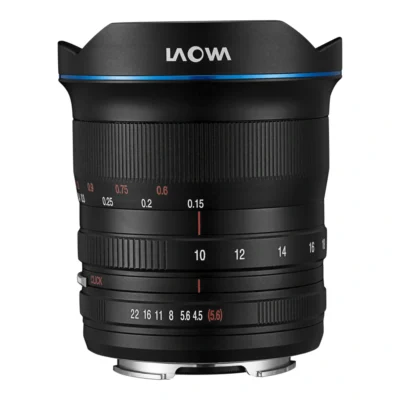
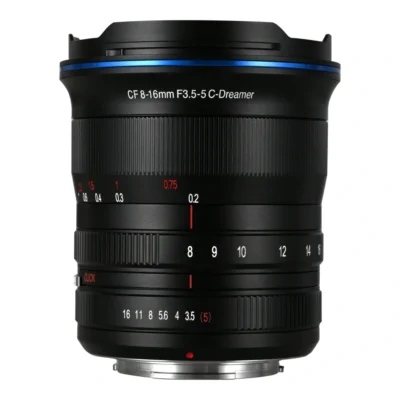

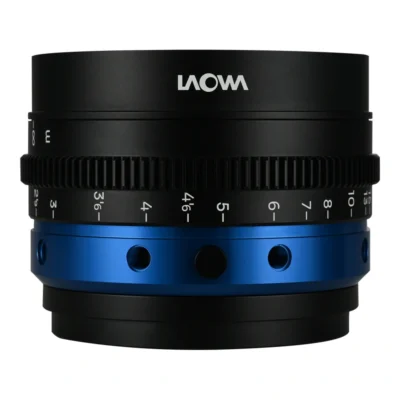
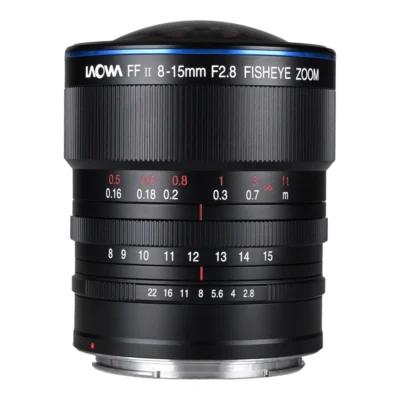
This is where we keep lenses from the standard focal length upwards, plus zoom lenses. They are the lenses for people, street life, travel and anything that should look roughly the way you saw it. Which focal length suits you depends mostly on how close you want to get, or can get, to what you photograph.
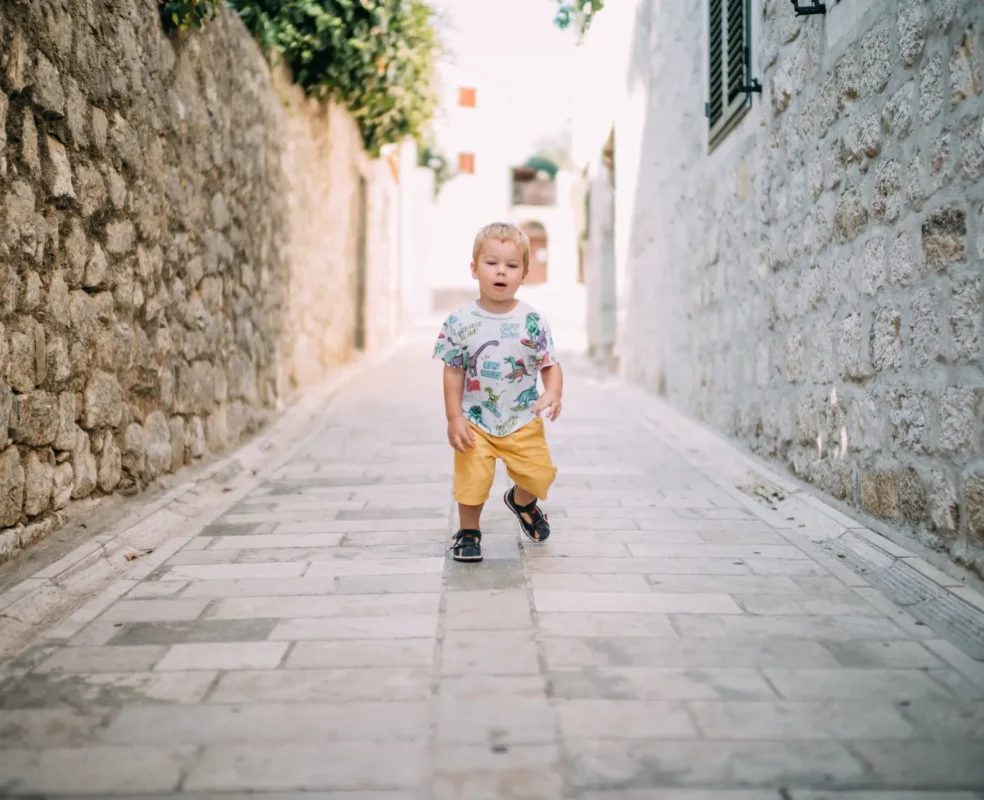
The standard lens, 35 to 50 mm
A 50 mm on full frame is called a standard lens because the perspective looks natural. Faces and objects get the proportions we are used to. A 35 mm is a little wider and shows more of the surroundings, and many street photographers consider it the most useful focal length there is.
The nice thing about standard lenses is that they can be fast without getting big. A 50 mm at f/1.4 or a 35 mm at f/0.95 gives shallow depth of field and works indoors without flash. If you are still on the zoom that came with your camera, a fast standard prime is often the biggest upgrade money can buy.
On APS-C a 35 mm frames about like a 50 mm on full frame. On Micro Four Thirds a 25 mm fills that role.

Portrait lenses and short telephotos
The classic portrait focal lengths sit between 85 and 135 mm. It comes down to distance. To fill the frame with a face at 85 mm you stand a few metres away, so the nose and cheeks are not exaggerated the way they are with a wide lens up close. The background also seems to move closer and is easier to blur.
An 85 mm is the most common pick and works indoors in an ordinary room. A 135 mm gives an even softer background but needs more space, so it is more of an outdoor lens. A 50 mm also does fine for half-length shots and groups.
Speed matters here. An 85 mm at f/1.8 or faster gives the separation between person and background that most people are after.
Telephoto lenses for nature, sport and detail
From about 70 mm up a lens counts as telephoto. A longer tele, 200 mm and beyond, is what you need for birds, wildlife and sport where you cannot get closer. A tele also compresses distance, so mountains behind a lake or houses along a street look stacked close together.
At long focal lengths every shake shows. A rule of thumb is a handheld shutter speed of at least 1 over the focal length, so 1/200 s at 200 mm, or faster on a high-resolution camera. Image stabilization in the lens or body helps against your own shake, not against a moving subject.
If you want a telephoto for Canon or another system, check the mount first. Lenses for Canon EF work on mirrorless Canon RF bodies with an adapter, but not the other way round.
Zoom or prime
This is one of the most common questions, and the answer depends on how you shoot.
| Prime | Zoom | |
|---|---|---|
| Speed | Often f/1.8 or faster | Usually f/2.8 or slower |
| Size and weight | Smaller at the same speed | Bigger and heavier at wide apertures |
| Flexibility | You move your feet | Change framing without moving |
| Best for | Portraits, low light, street | Travel, events, nature |
A tele zoom such as a 70-200 mm covers both portraits and sport. A wide zoom does the same for landscapes and architecture. Many photographers pair a zoom for range with a fast prime for the moments when the light runs out.

Very fast lenses at f/0.95 and f/1.2
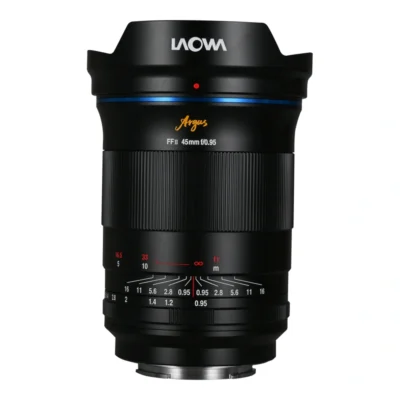
Laowa's Argus series includes lenses that open up to f/0.95. That is a little over a stop brighter than f/1.4, and you notice it. You can shoot in city light at night without pushing ISO very far, and the background dissolves completely.
Wide open the depth of field is so thin that the eye can be sharp and the ear soft. Focus manually with viewfinder magnification and take several frames. Stop down to f/1.4 or f/2 when the subject moves.
In daylight even the camera's fastest shutter speed can be too slow at f/0.95. An ND filter fixes that and lets you keep the wide aperture.

Lenses and adapters for video
Cine lenses also come in standard and tele focal lengths, for example in NiSi's Athena series. They frame like the photo lenses but are built for film work, with geared rings, a long focus throw and T-stops.
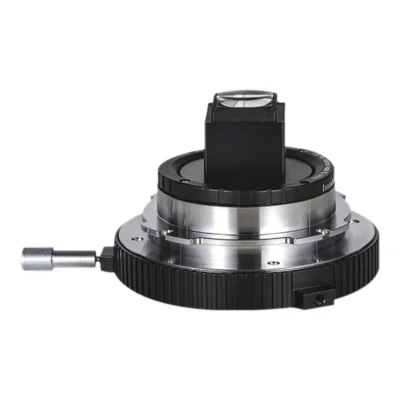
A 1.33x anamorphic adapter squeezes the image horizontally. Stretch it back out in the edit and you get widescreen, oval bokeh and the long flares many people link with cinema. A front adapter sits in front of the lens, while a rear one goes between lens and camera.
Frequently asked questions about standard, telephoto & zoom lenses
What is a standard lens?
A standard lens has a focal length around 50 mm on full frame and gives a perspective close to the eye's. On APS-C the equivalent is about 35 mm and on Micro Four Thirds 25 mm. Standard lenses are often fast and small.
What focal length is best for portraits?
85 mm is the most common portrait choice on full frame, giving natural proportions and a soft background at a comfortable distance. 135 mm gives an even softer background but needs more room, and 50 mm works well for half-length shots and groups.
What is a telephoto lens?
A telephoto lens has a long focal length, from about 70 mm on full frame upwards, and makes distant subjects look closer. It is used for portraits, nature, sport and distant details.
Should I choose a zoom or a prime?
A zoom gives flexibility when you cannot move, for example when travelling or at events. A prime is usually faster and smaller, and better in low light and for portraits.
What is a telephoto zoom lens?
A telephoto zoom covers several long focal lengths, for example 70-200 mm. You can switch between portrait framing and distant details without changing lenses.