
















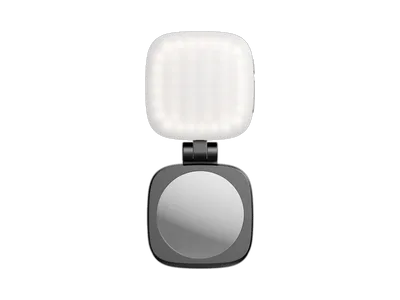
A rig turns the camera into a working platform: a cage around the body gives mounting points, and on it go handles, monitor, microphone, light and battery. Here you will find cages, handles and grips, shoulder rigs, phone rigs and accessories for gimbals and action cameras. The parts connect through standards such as NATO rails, Arca plates, rods and ordinary screw threads, so check which mount you have before you buy a new part.
Read more about rigs & Mounting Systems
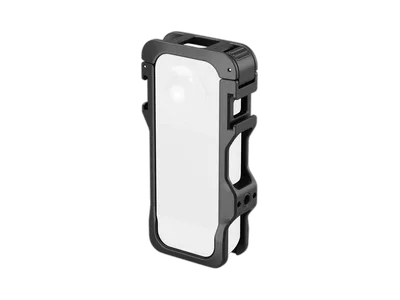
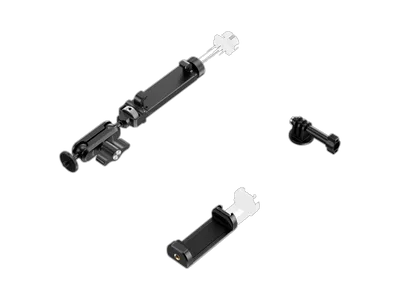
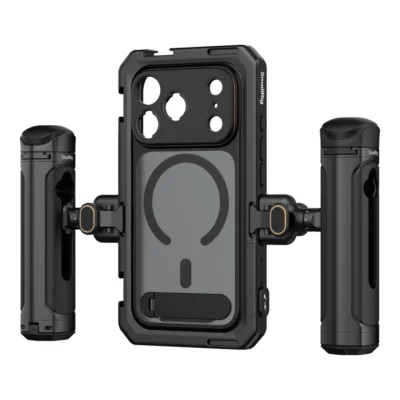
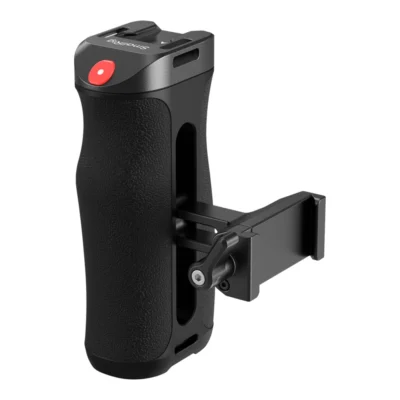
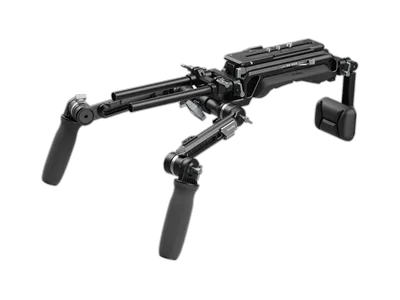
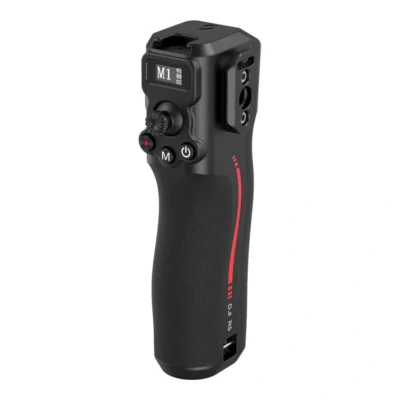
Most of what you find here is built for video. A camera is shaped to be held to your eye and take one picture at a time. Once it has to film for hours with a microphone, a monitor and extra power, it needs something to carry all of that, and that is the job of a rig. Which parts you need depends mostly on how you shoot: handheld, from the shoulder, on a gimbal or with your phone.
The parts of a camera rig

A rig is rarely one product. It is built from parts that each solve one problem, so you can start small and add to it.
Cage
The frame around the camera body. It is the base for almost everything else and is made for one specific camera model. It puts threaded holes and rails all around the camera, so accessories end up where they are useful instead of all fighting for the hot shoe.
Handles and grips
A top handle makes the rig easy to carry and to shoot low with. Side handles give you a firmer two-handed hold. For smaller cameras there are also grips that simply make the camera nicer to hold, without turning it into a video rig.
Shoulder rig
For anyone who films handheld for long stretches. The camera rests on your shoulder and you steer it with handles in front of you. It is built on rods and takes up more room, but it is hard to beat when an interview or an event runs for an hour.
Rig accessories
Everything that mounts onto the rig: articulating arms, clamps, monitor mounts, battery plates, cable clamps, matte boxes and follow focus units. This is where the rig becomes yours.
Phone, gimbal and action camera
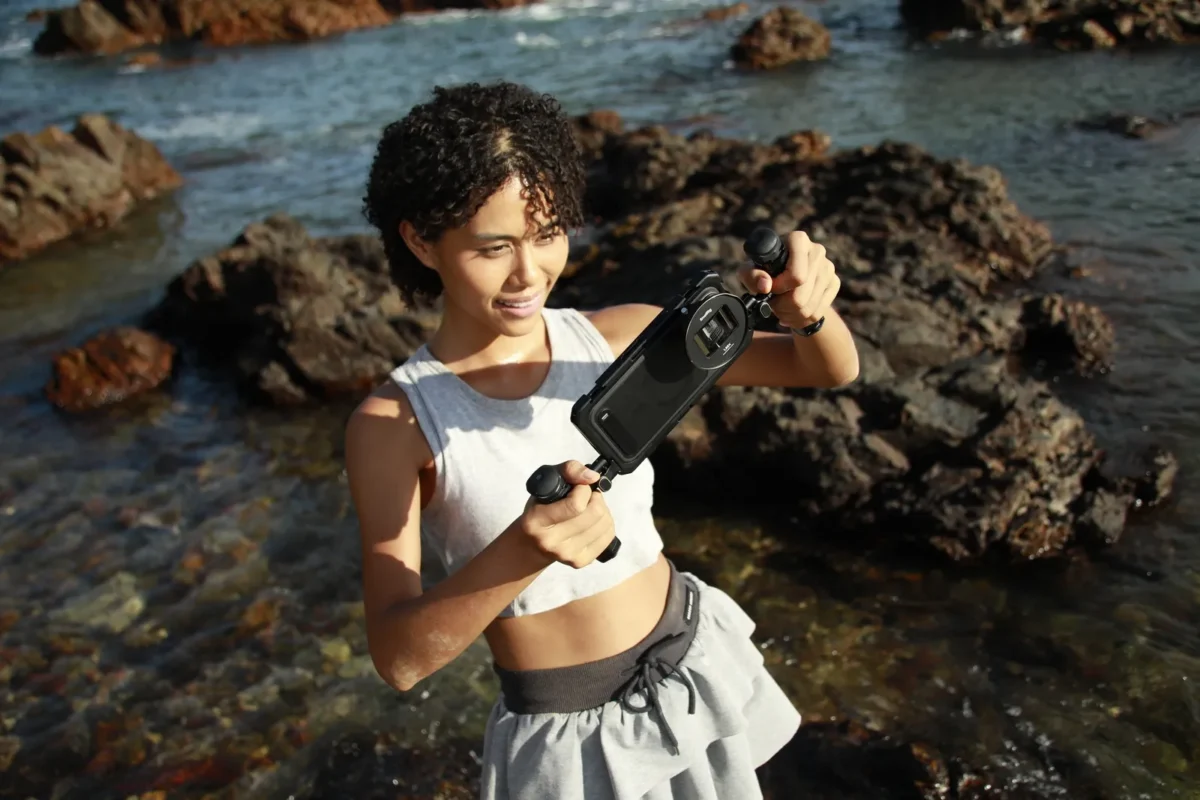
The same idea comes in smaller sizes. A phone rig gives the phone handles and mounting points for a microphone and a light. It can be made for one phone or be universal, and there is often a filter adapter to go with it.
For gimbals there are plates, handles and controllers that make the gimbal easier to carry and operate. The gimbal itself is not in this category, only the parts around it.
Action camera accessories are mostly about where the camera goes: on your chest, the handlebars, a backpack strap or a suction cup on the car. Quick release mounts let you move it between them in seconds.
How the parts connect
Whether two parts fit together comes down to the mount. Most rig parts use a handful of standards, and once you recognise them shopping gets much easier.
| Mount | How it works | Often used for |
|---|---|---|
| 1/4"-20 thread | The small screw thread found under almost every camera | Light accessories, monitors, tripod plates |
| 3/8"-16 thread | A coarser thread that takes more weight | Heavier parts, arms and stands |
| ARRI locating screw | A 3/8" screw with two pins beside it, so the part cannot twist | Handles and arms that must not move at all |
| NATO rail | A rail with angled edges that a clamp locks onto | Handles you take on and off often |
| Cold shoe | Shaped like the flash shoe, but with no electrical contact | Microphones, small lights and receivers |
| Arca type | A dovetail plate that is clamped into a matching mount | Tripod heads and many gimbals |
| 15 mm rods | Two tubes 15 mm thick, usually 60 mm apart | Follow focus, matte box, batteries and shoulder rigs |
| HawkLock | SmallRig's quick release, where a part clicks on without tools | Handles and accessories on SmallRig cages |
Parts from different makers usually work together as long as the mount is the same. Quick release systems are the exception. They are designed as families and as a rule only fit their own.
Build the rig in the right order
Start with the camera and how you are going to hold it. That tells you if you need a cage, a simple base plate or just a grip.
The handle comes next, because the grip is what changes your footage the most. Power and a monitor follow once you notice the battery dying mid take or the camera screen being too small. Sound and light come after that.
Our usual advice is to buy one part at a time and shoot with it a few times. It is easy to build a rig that looks impressive and weighs too much to bother bringing. Every clamp and arm adds weight, and if the rig goes on a gimbal, the gimbal has a limit to what it can carry.
Common mistakes
The most common one is a cage that does not fit. Camera models look alike, but a cage for an older version often will not go on the new one. Check the exact model, and if you use a battery grip, since that often calls for a different cage or base plate.
Screws work loose. Small threads running metal on metal can turn after a day of vibration. Tighten them with the right tool and check them before you start filming.
A long arm holding a heavy monitor droops over time and wobbles when you walk. The shorter the distance between the rig and the accessory, the steadier it stays.
Frequently asked questions about rigs & Mounting Systems
What is a camera rig?
A camera rig is a frame plus a set of mounts that make the camera easier to hold and give room for accessories like a monitor, microphone, light and battery. It is usually built around a cage, with handles and accessories screwed or clicked on. It can stay small and light or grow into a shoulder rig.
What is the difference between a cage and a rig?
The cage is the frame that sits directly around the camera body. The rig is the whole setup, the cage together with handles, arms, rods and accessories. Many people start with a cage and build from there.
Do I need a rig to film with a mirrorless camera?
No, for short clips the camera works fine as it is. A rig matters most when you film handheld for a long time, need an external microphone and monitor at once, or want a steadier grip. A top handle or a side handle is often the first thing worth buying.
Do rig parts from different brands fit together?
Usually, if they use the same mount, such as a 1/4" thread, ARRI screw, NATO rail, Arca plate or 15 mm rods. Quick release systems like HawkLock generally only fit their own parts. Check the mount on both the rig and the new part.
What is an ARRI locating screw?
It is a 3/8" screw with two small pins next to it. The pins go into holes in the rig and stop the part from twisting. It is used on handles and arms that must stay completely fixed.