








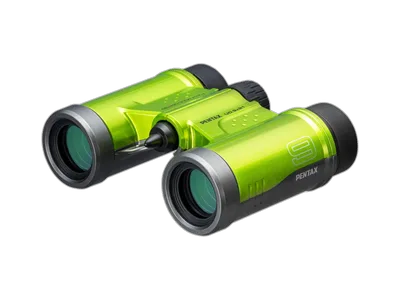








The numbers in the name of a pair of binoculars give the magnification and the objective diameter. Higher magnification shows more detail but shakes more handheld, and a larger objective diameter gives a brighter image at dusk but more weight. Compact binoculars fit in a pocket, nature binoculars are the all-round model for birds and hiking, and spotting scopes are used on a tripod for long distances. If you wear glasses, compare the eye relief.


Binoculars are one of the few optical instruments that get better the more you use them. Birds you never noticed show up, and boats far out become recognisable. The choice depends mostly on where and how you will use them. This guide covers the basics that apply to all binoculars and which type suits what.
What the numbers on binoculars mean
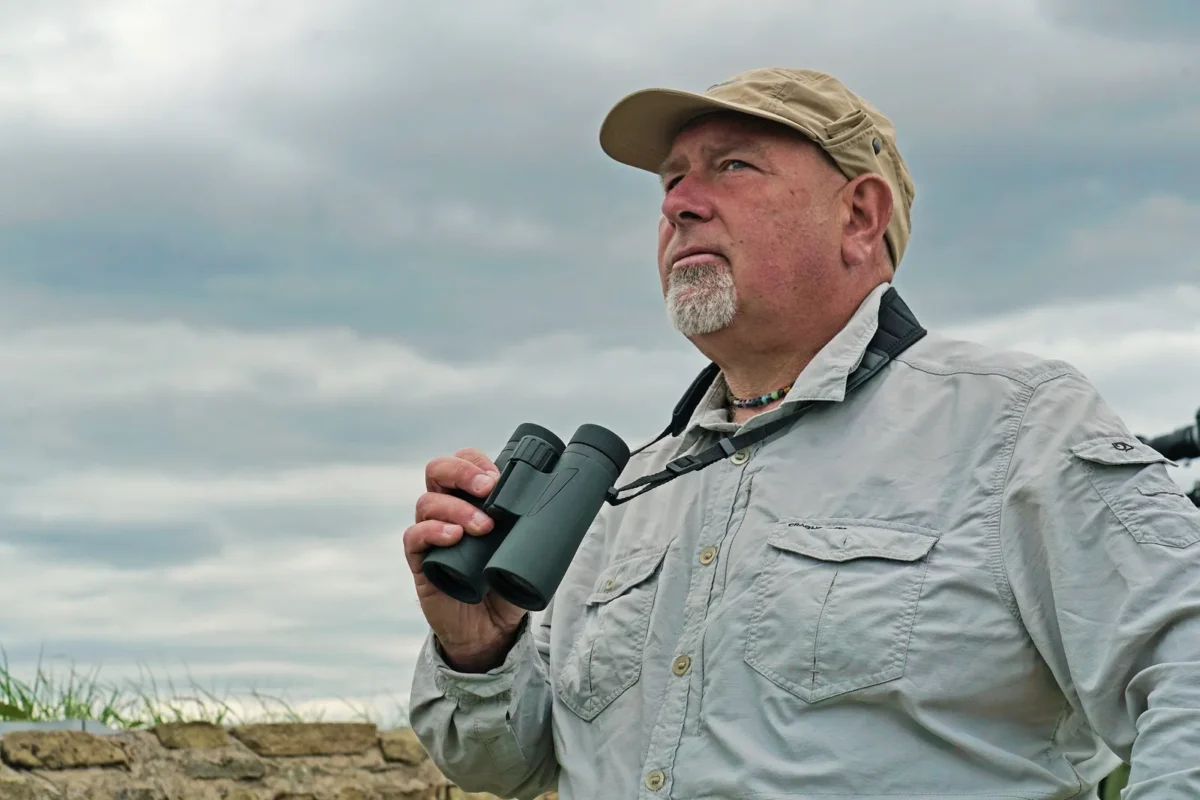
Binoculars carry two numbers, for example 8x42. The first is magnification. At 8x, something 80 metres away looks as if it were 10 metres away. The second is the objective diameter in millimetres, the size of the front lenses. Bigger objectives gather more light but add weight.
Divide the objective by the magnification and you get the exit pupil, the bright circle you see in the eyepiece when you hold the binoculars away from your eye. An 8x42 gives 5.25 mm and a 10x25 gives 2.5 mm. In daylight a small exit pupil is fine, because your own pupil is small. At dusk your eye opens up, and a bigger exit pupil gives a clearly brighter view.
Field of view is given in metres at 1000 metres. A wide field makes it easier to find and follow something moving. It usually narrows as magnification goes up.
Types of binoculars and when you need them
Nature binoculars
All-rounders for birding, hiking and hunting, usually 8x or 10x with 32 to 56 mm objectives. Most first-time buyers end up here.
Compact binoculars
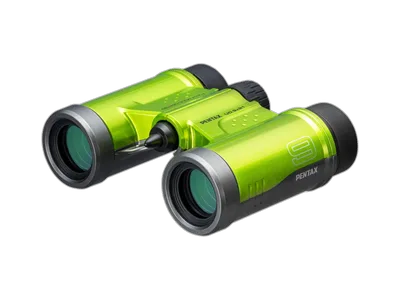
Small binoculars with objectives around 20 to 25 mm that fit in a jacket pocket. Good for travel, concerts and the backpack, but darker in low light.
Marine binoculars
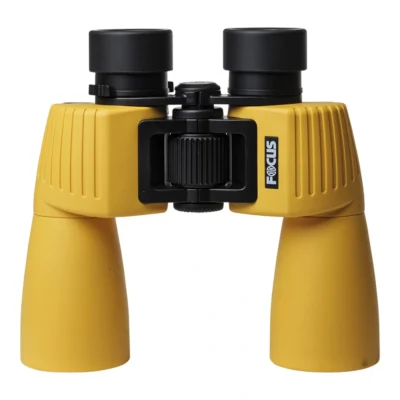
Binoculars for boats and the sea, almost always 7x50. Low magnification and a big exit pupil make them easy to hold steady on a rocking deck, and several have a compass and a range scale.
Spotting scopes and digiscoping
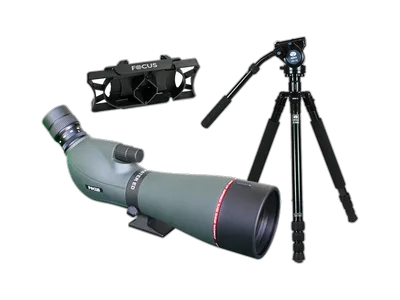
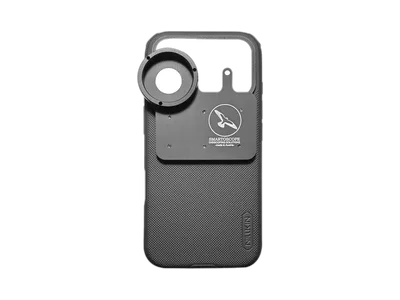
A spotting scope is a single-tube scope with 15x to 70x magnification used on a tripod. You need one when distances get too long for binoculars, such as watching seabirds or at the shooting range. With an adapter you can photograph through it with your phone, which is called digiscoping.
Rangefinders and riflescopes
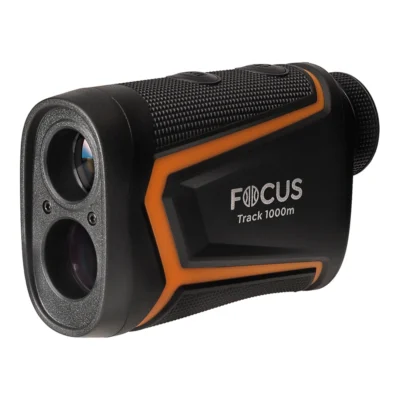
Laser rangefinders for hunting, golf and the outdoors, and riflescopes for hunting rifles. They have their own optics but are for measuring and aiming rather than looking.
Binocular accessories
Straps, harnesses, tripod adapters, eyepiece covers, cases and eyepieces for spotting scopes.
Roof prism or Porro prism
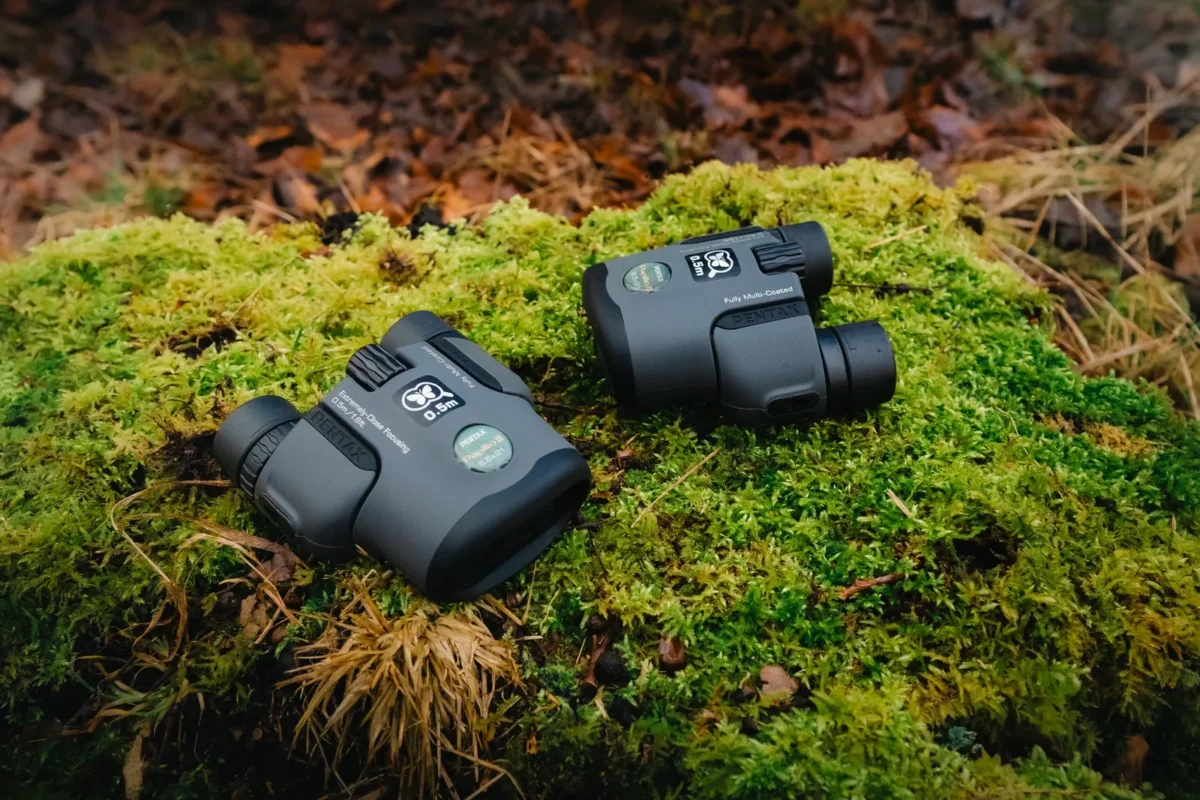
The prisms turn the image the right way up. There are two designs, and you can tell them apart by shape.
A roof prism gives straight barrels with the objectives in line with the eyepieces. The binoculars are slim, well sealed and easy to hold. Nearly all modern nature binoculars are built this way.
A Porro prism gives the classic shape with the objectives set wider apart than the eyepieces. That adds a little depth to the view and is a simple design that gives good optics for the money. Marine binoculars are almost always Porro, and some compacts use a reverse Porro with the objectives closer together.
The optics inside: lenses, prisms and coatings
Light passes through the objective lens, the prisms and the eyepiece before reaching your eye. Every glass surface reflects a little light away, which is why the lenses carry thin coatings. FMC means every glass surface is multi-coated, giving a brighter view with better contrast than single coatings.
Roof prism binoculars also use phase coating on the prisms. Without it the image is noticeably softer. BaK-4 is a prism glass that gives an even, bright image out to the edges.
ED or XD glass in the objective reduces colour fringing, the purple and green edges you otherwise see around dark branches against a bright sky. It shows most at higher magnification and against the light.
Glasses, eye relief and diopter
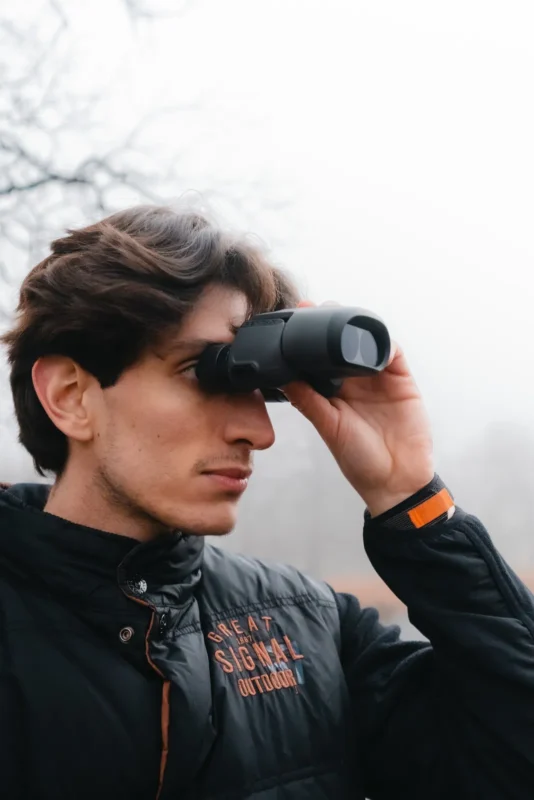
If you wear glasses you need to see the whole image even though your eye sits further from the eyepiece. That measure is called eye relief. Around 15 mm or more usually works for glasses wearers. Twist or fold the eyecups down when wearing glasses and up when not.
The distance between pupils varies between people. Fold the binoculars at the hinge until you see one round image. Children and people with narrow faces may need binoculars that fold quite far.
The diopter dial corrects the difference between your eyes. Focus with the centre wheel for the left eye, then set the diopter for the right. After that you focus with the centre wheel only.
Weather and care
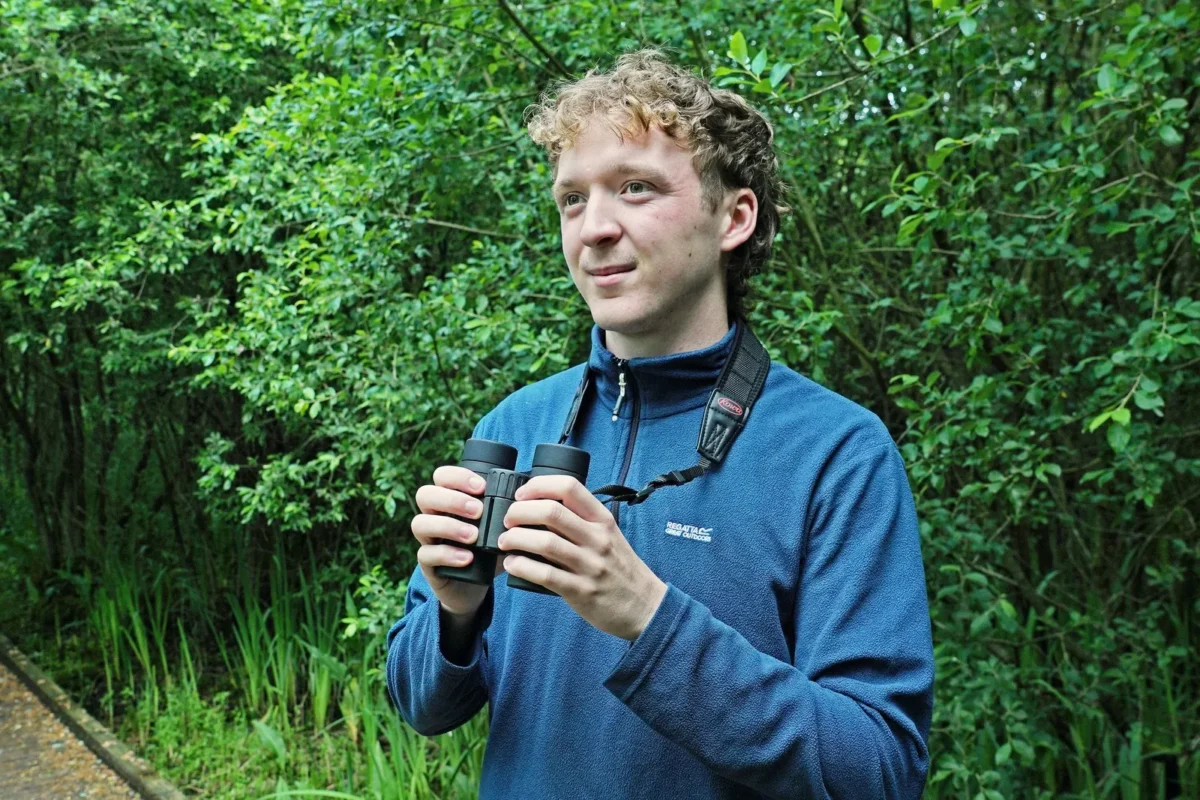
Waterproof binoculars are sealed against rain and often filled with nitrogen so they do not fog inside when you go from cold to warm. For birding and hunting in Scandinavian weather, waterproof is worth having.
Blow grit off the lenses before wiping, and use a soft cloth or a lens pen. Never pour liquid straight onto the glass. Let wet binoculars dry outside their case, and do not leave them in a hot car all summer. Over time heat can affect the grease in the focus mechanism and the cement between lens elements.
Frequently asked questions about binoculars
What is kikare in English?
Kikare is Swedish for binoculars, and a tubkikare is a spotting scope. A single-tube handheld kikare is called a monocular.
What does 8x42 mean on binoculars?
8x is the magnification, meaning things look eight times closer. 42 is the objective diameter in millimetres. A bigger objective gives a brighter view but heavier binoculars.
What is the difference between 8x30, 8x40 and 8x50?
The magnification is the same but the objective gets bigger. An 8x50 gathers more light and is brighter at dusk, while an 8x30 is smaller and easier to carry all day.
What lenses are inside binoculars?
Binoculars have objective lenses at the front, prisms in the middle that turn the image upright and eyepieces closest to the eye. The lenses are coated to let through as much light as possible.
Can you use binoculars with glasses?
Yes, if they have enough eye relief, around 15 mm or more. Twist or fold the eyecups down while wearing glasses and you will see the whole image.