
















A spare battery is what saves a long day of shooting or recording. Camera batteries are chosen by the code printed on the original battery of the camera, because shape and contacts differ between models. Some batteries can be charged directly over USB-C without a separate charger. V-mount batteries are large batteries that power the camera, monitor and lights on a rig.
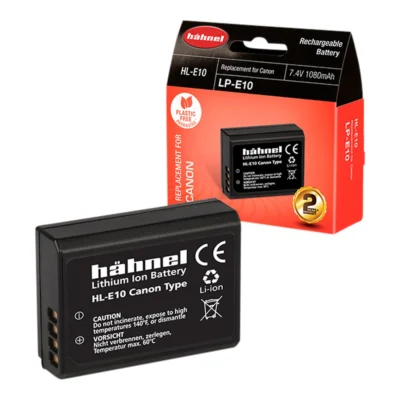
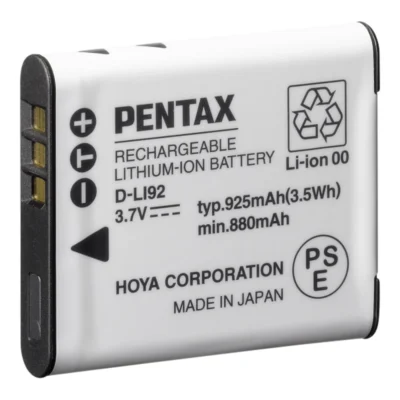
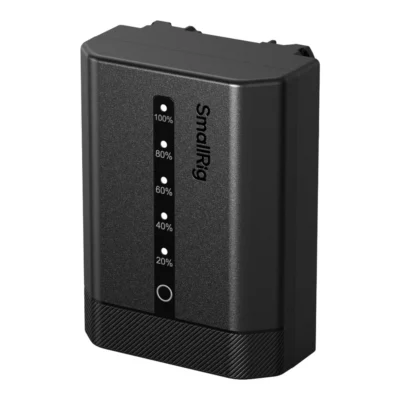
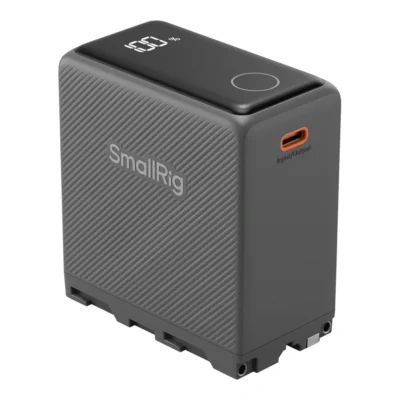

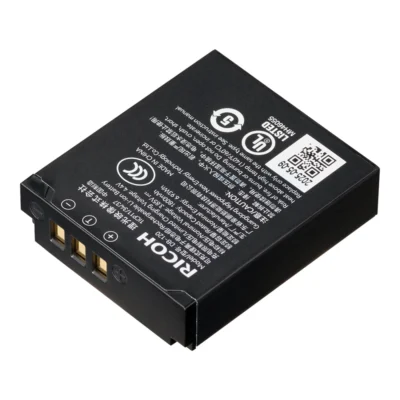
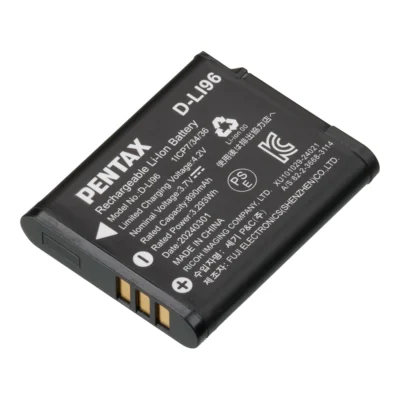
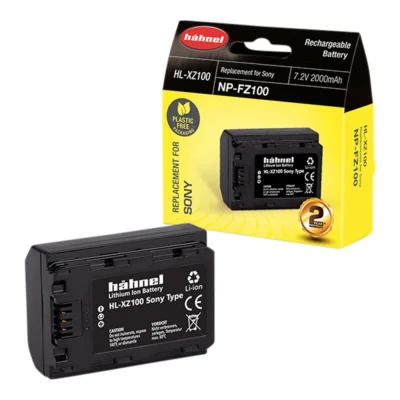
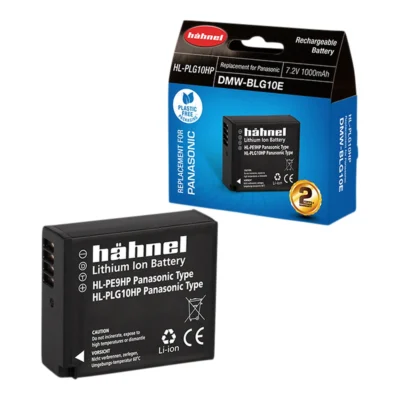
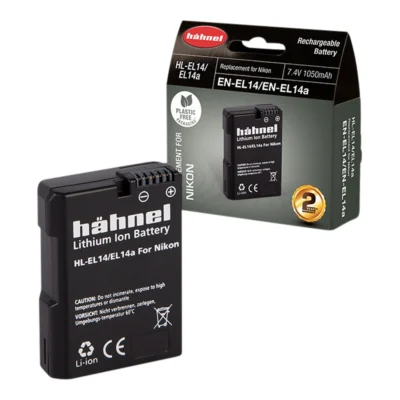
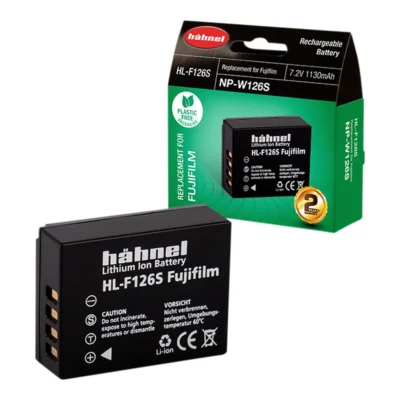
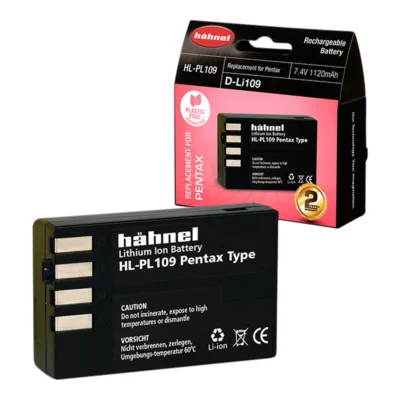



The code on the original battery decides
The code is printed on the battery, usually next to the voltage and capacity. Read it off the battery that is in the camera today, not the camera box, since some cameras take several versions. A battery that looks almost the same can be a few millimetres too thick or have its latch in the wrong place.
Typical codes are LP-E6NH or LP-E17 for Canon, EN-EL15 or EN-EL25 for Nikon, NP-FZ100 or NP-FW50 for Sony, NP-W235 or NP-W126S for Fujifilm, DMW-BLK22 for Panasonic and BLX-1 for OM System and Olympus. Ricoh and Pentax use codes starting with D-Li and DB.
The letters at the end matter. They usually mark a newer version of the same battery, with the same shape but sometimes more capacity or support for charging inside the camera. That is why we list which codes each battery replaces. One of our Nikon batteries, for example, replaces EN-EL15, EN-EL15A and EN-EL15B. If your code is not on the list, pick another battery.
Original or replacement battery
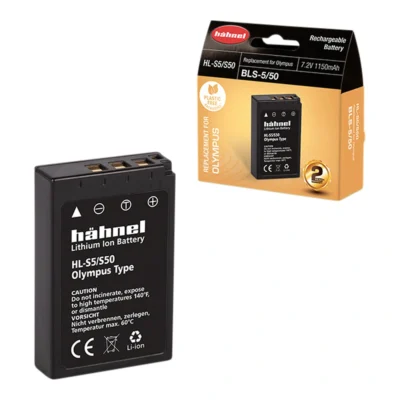
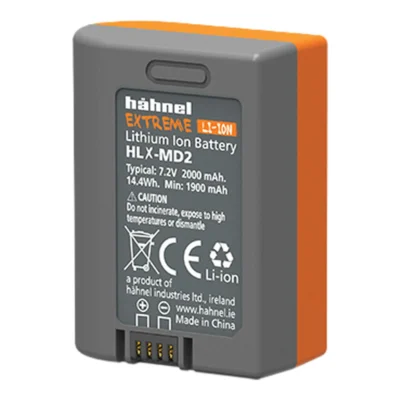
We sell replacement batteries from Hähnel and SmallRig, plus Ricoh and Pentax batteries for their own cameras. A replacement from a serious brand has the same voltage as the original and a built-in protection circuit, as the Hähnel and SmallRig batteries do. Cheap unbranded packs from marketplaces are a different story, and that is where swollen cells and wrong charge readings tend to show up.
Capacity is given in mAh, and for the same code it can vary between brands. For NP-FZ100 we have batteries rated at both 2400 and 2600 mAh. Compare by all means, but 10 percent more mAh will not give you exactly 10 percent more shots. Cold, the screen, stabilisation and video matter more.
To compare batteries with different voltages, convert to watt-hours. Voltage times capacity in amp-hours gives Wh, so a 7.2 V battery of 2400 mAh holds about 17 Wh.
Several SmallRig batteries have a decoding chip so the camera shows the charge level as it does with the original. Hähnel designs its batteries to match or beat the original's performance. Lithium-ion has no memory effect, so topping up a half-empty battery does it no harm.
Batteries that charge straight from USB-C
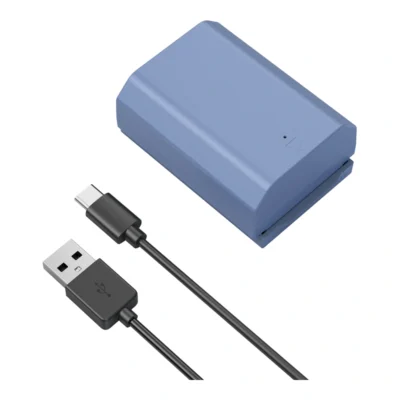
Some newer batteries have their own USB-C port on the side. You charge them with the same cable as your phone, from a wall adapter, a laptop or a power bank. On SmallRig's USB-C batteries five LEDs show what is left, so you can tell which battery is full without putting it in the camera.
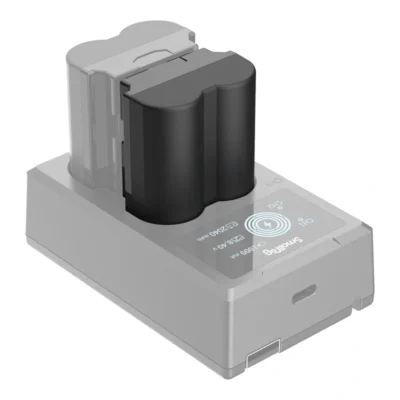
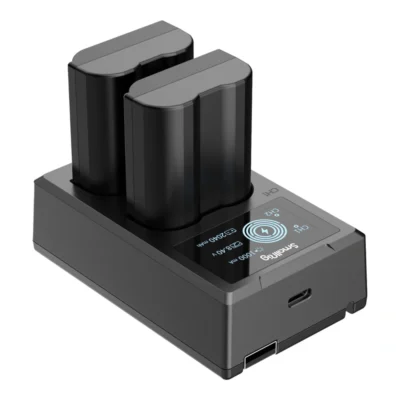
That is handy when travelling or working in the field. One charger fewer in the bag. The catch is one battery per cable, and if four batteries need to be ready by morning, a charger with several slots is usually easier.
The larger NP-F970 batteries with USB-C can also deliver power, working as a small power bank for a phone or a monitor.
NP-F, BP-U and V-Mount for video and rigs
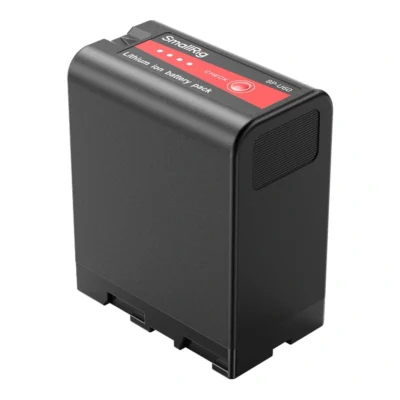
NP-F batteries, with codes such as NP-F550 and NP-F970, come from Sony's older camcorders but are now mostly used in monitors, LED lights and adapter plates. They are cheap, easy to find and fit a lot of accessories. BP-U batteries are made for Sony's cinema cameras and run at around 14.4 V.
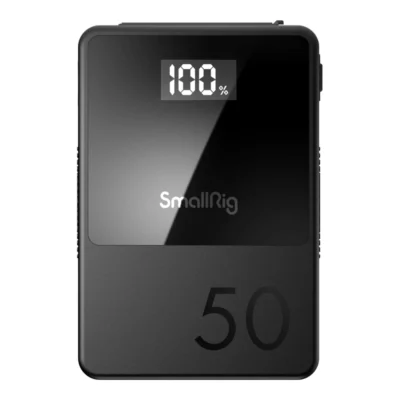
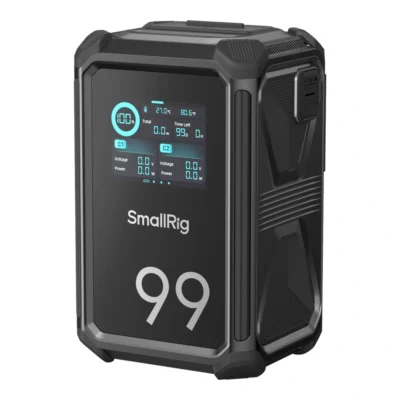
V-Mount is the standard on larger rigs. The battery clicks onto a plate and supplies power through D-Tap and USB-C. We stock SmallRig mini V-Mount batteries from 50 Wh to over 150 Wh, much smaller than the classic bricks. Around 99 Wh is the most common choice, since it runs a mirrorless camera with a monitor for a long time and still stays under the carry-on limit.
To run the camera itself from external power you also need a dummy battery cable or an adapter plate. You will find those among the cables.
Battery grips and how many batteries you need
A battery grip screws onto the bottom of the camera and holds one or two extra batteries. The camera gets heavier but lasts longer, and you get a second grip and shutter button for portrait-format shots. For Pentax we carry grips made by Pentax.
For an ordinary day of photography one spare is usually enough. For travel, weddings and video, two or three is more realistic. Mirrorless cameras use more power than DSLRs with an optical viewfinder, since the sensor and electronic viewfinder are always running. Many of the batteries also come as twin packs.
Care, cold and flying
Cold does not take capacity away for good, but a cold battery delivers less. In winter, keep the spare in an inside pocket and swap when the first one dies. The empty one often recovers some charge once it has warmed up.
Batteries that will sit unused for a long time are happiest half charged and kept cool. A fully charged battery left in a hot car all summer ages faster. Stop using a swollen or damaged battery at once.
When flying, spare batteries generally belong in your hand luggage, not in checked bags. Batteries under 100 Wh are normally fine. Larger ones need the airline's approval, so check before you pack a 150 Wh V-Mount. Tape or a cap over the contacts keeps them from shorting against keys and coins.
Frequently asked questions about batteries
Which battery fits my camera?
Look at the code printed on the camera's original battery, such as LP-E6NH, EN-EL15 or NP-FZ100. Then pick a battery that lists exactly that code among the ones it replaces. Shapes differ between models, so a battery that merely looks the same is not enough.
Is a replacement battery as good as the original?
A replacement from a known brand such as Hähnel or SmallRig has the same voltage and its own protection circuit. Capacity can match or exceed the original. Be careful with cheap unbranded batteries, where quality varies a lot.
What is a V-Mount battery?
A large battery that clicks onto a plate on a video rig and powers the camera, monitor and lights. It usually has D-Tap and USB-C outputs. Batteries under 100 Wh are the most common because they can travel in hand luggage.
What is a battery grip?
A grip that screws onto the bottom of the camera and holds extra batteries. The camera runs longer and gains a second shutter button for portrait-format shots. Each grip is made for a specific camera model.
Can I take camera batteries on a plane?
Yes, but spare batteries normally go in your hand luggage, not in checked bags. Batteries under 100 Wh are usually fine. Larger ones need the airline's approval.
How should camera batteries be stored?
Half charged and somewhere cool if they will sit for a while. Avoid leaving fully charged batteries in heat, such as a car in summer. Do not use a swollen battery.