
















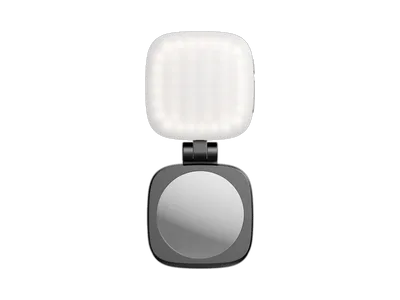
Rig accessories are the parts mounted on a cage or rig to hold the monitor, battery, microphone or light in the right place. Articulating arms and clamps put accessories where you want them, battery plates power several things from one large battery, and cable clamps stop connectors from being pulled out. Check how the part attaches, with a screw, cold shoe, NATO rail or rod clamp, and that your rig has that spot free.
Read more about rig accessories
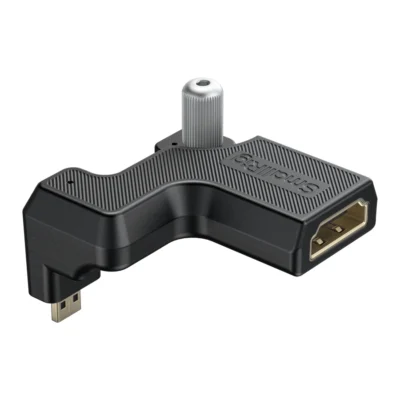
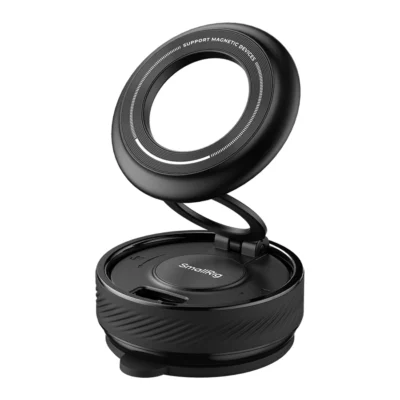
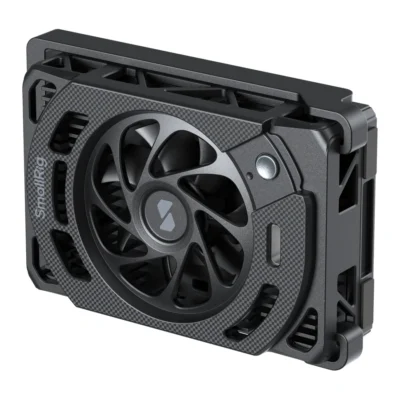
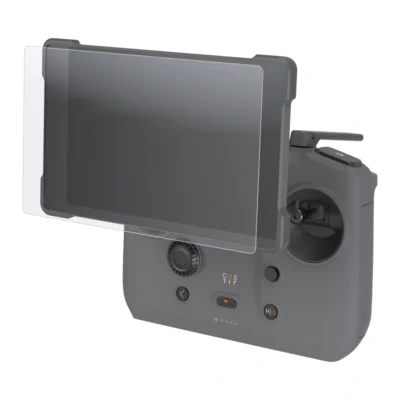
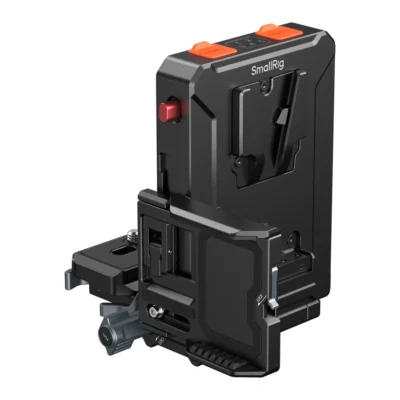
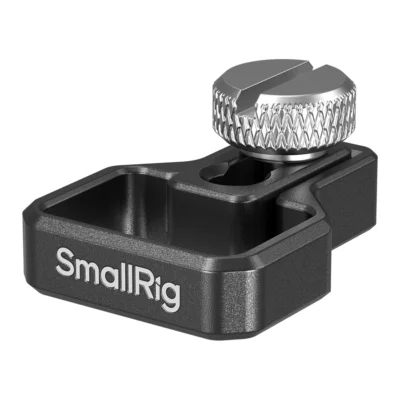


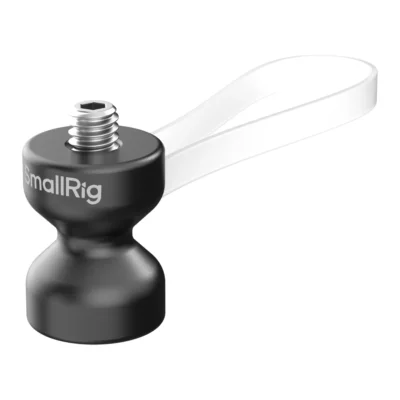


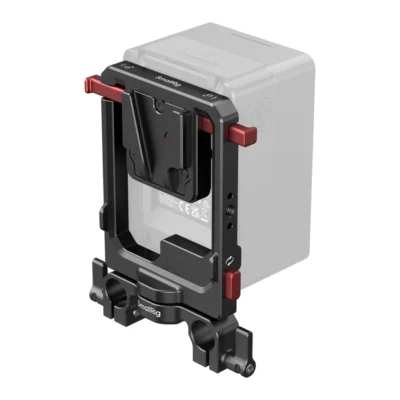
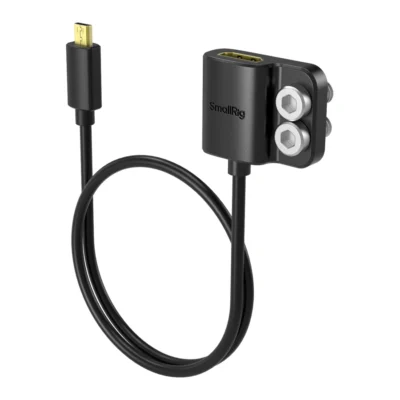

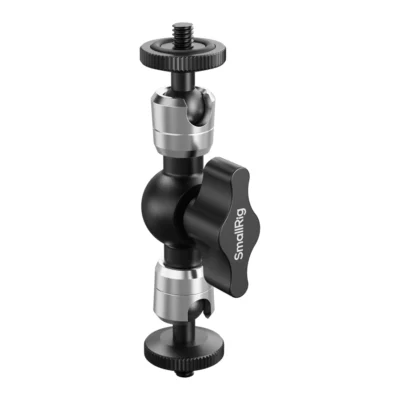
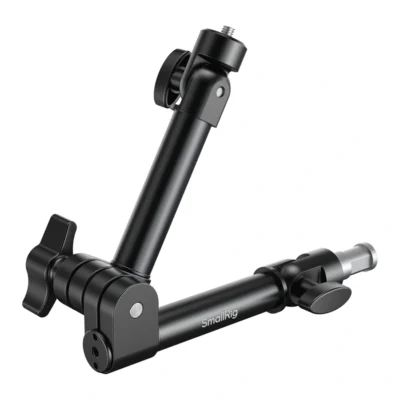



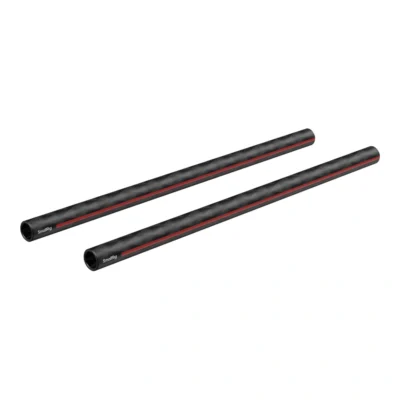
Once the cage and handle are in place, the real building starts. Rig accessories are the parts that put your own gear exactly where you want it, and this is where the variety is greatest. Start with whatever annoys you most when you film today.
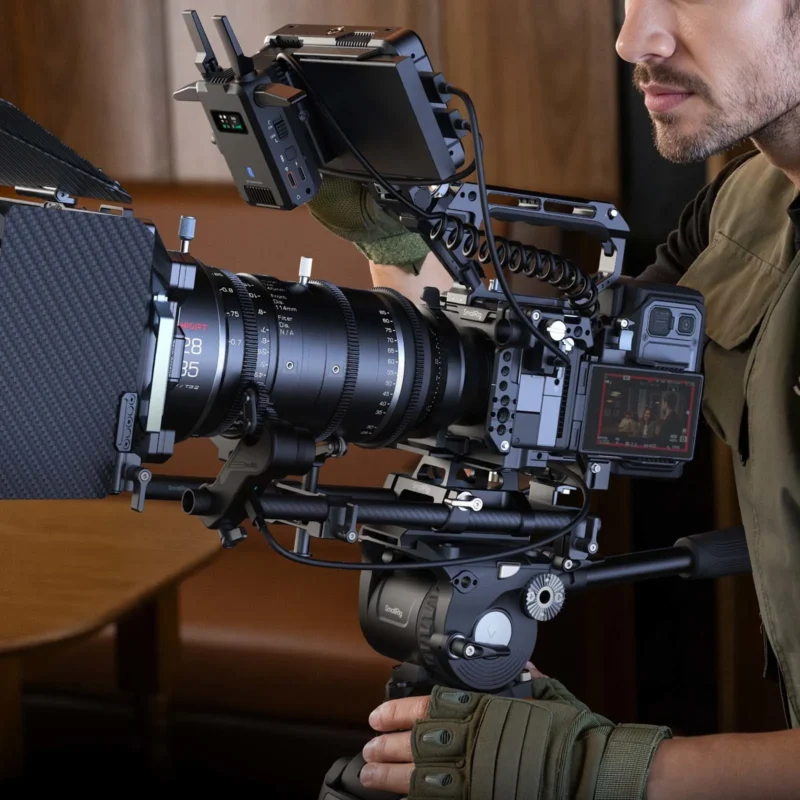
Arms and clamps
A magic arm is an articulating arm with two or three joints that lock with a single knob. You angle it to where you want the monitor or light and tighten. The short ones are the steadiest. A long arm reaches further but sways more when you walk with the rig.
Clamps are for things that are not on the camera. A crab clamp or super clamp grips a table top, a railing or a light stand and gives you a thread for an arm or a camera. Paired with an arm, that is a mount almost anywhere.
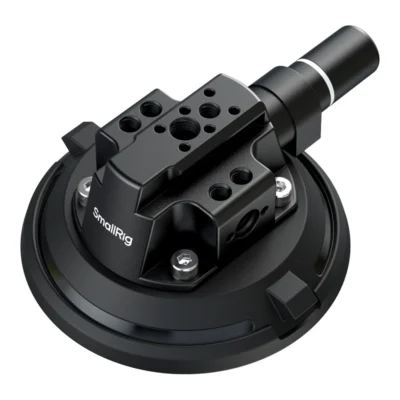
Suction cup mounts go on cars, windows and other smooth surfaces. The load limit is often given as a static load, meaning everything standing still. In a moving car the forces are higher, so stay well below the limit and add a safety line if you can.
Monitor and sun hood
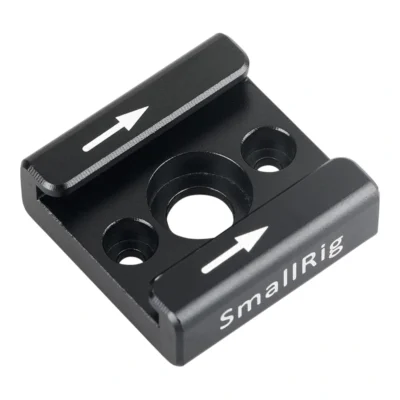
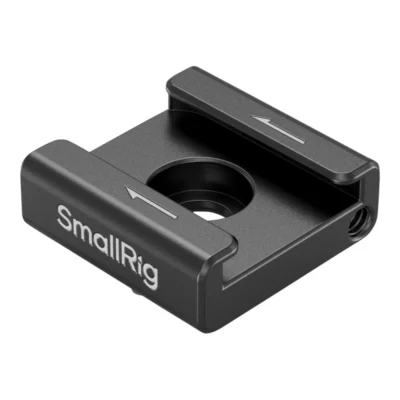
An external monitor usually sits on a monitor mount in a cold shoe, on a NATO rail or on the top handle. Mounts that both swivel and tilt make the screen easier to see when you shoot low or hold the rig above your head.
In daylight, a sun hood is often the cheapest way to actually see the picture. Hoods are made for a given screen size or monitor model. There are also monitor cages that protect the screen and add mounting points around it.
Power for the whole rig
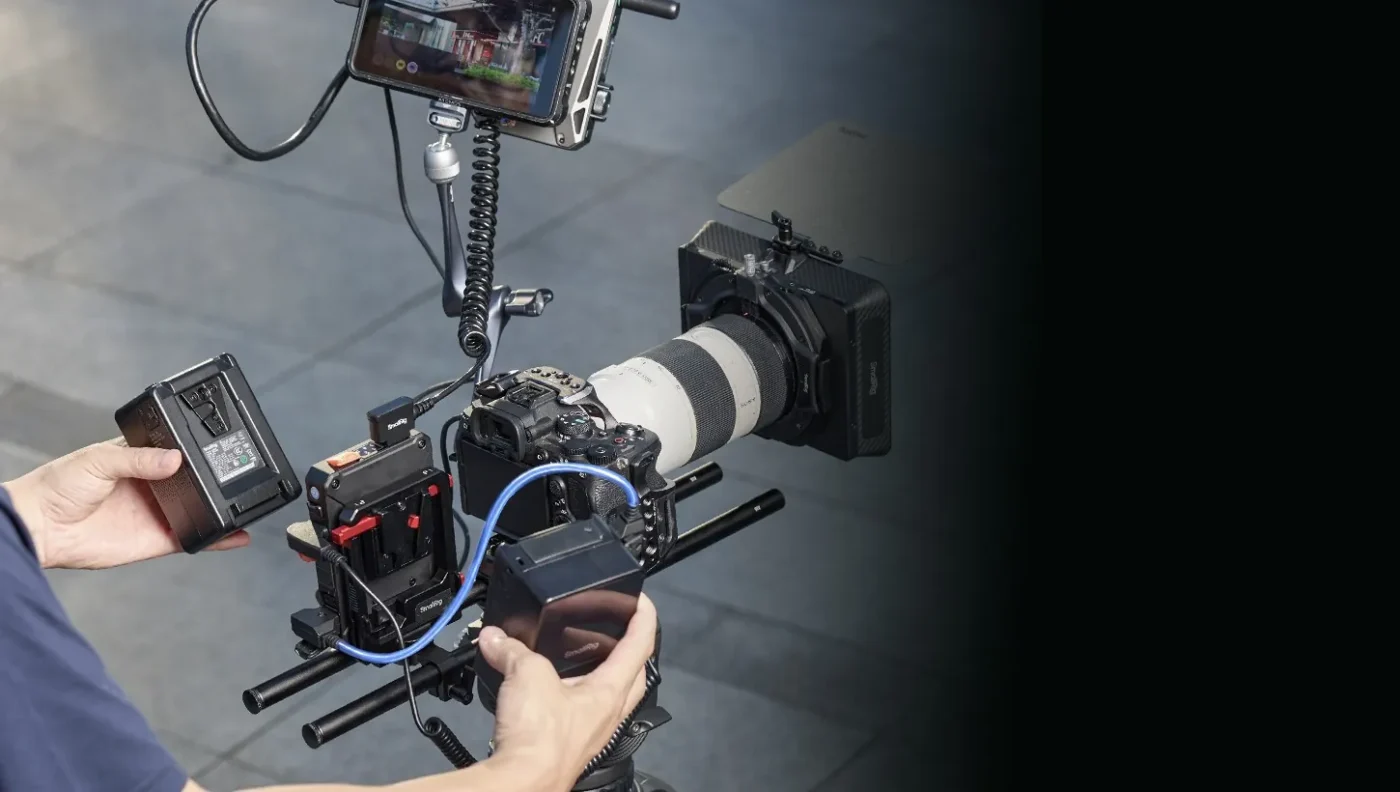
The camera's own battery rarely lasts a full day with a monitor and a wireless transmitter running. A battery plate lets you put a large battery at the back of the rig and power several things from it.
- V-mount plates take large batteries and usually have several outputs, such as D-Tap and USB-C. Some let you swap the battery without the rig shutting down.
- Plates for NP-F batteries are smaller and lighter, and enough for a monitor and a light.
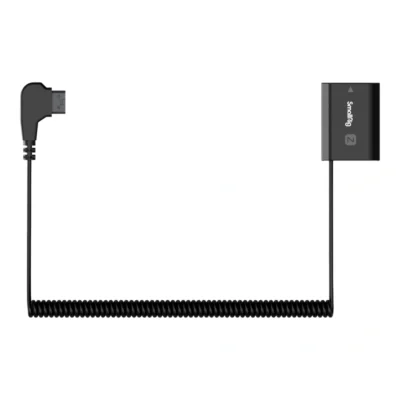
- A dummy battery sits in the camera's battery compartment and draws power from the large battery through a cable.
Check the voltage each output gives and what the monitor, light or camera needs. Both the plate and the accessory state it, and a cable with the wrong voltage is not something to find out by trial.
A heavy battery at the back of a shoulder rig also works as a counterweight. On a light handheld rig it quickly becomes too much, and an NP-F plate goes a long way there.
Follow focus and matte box
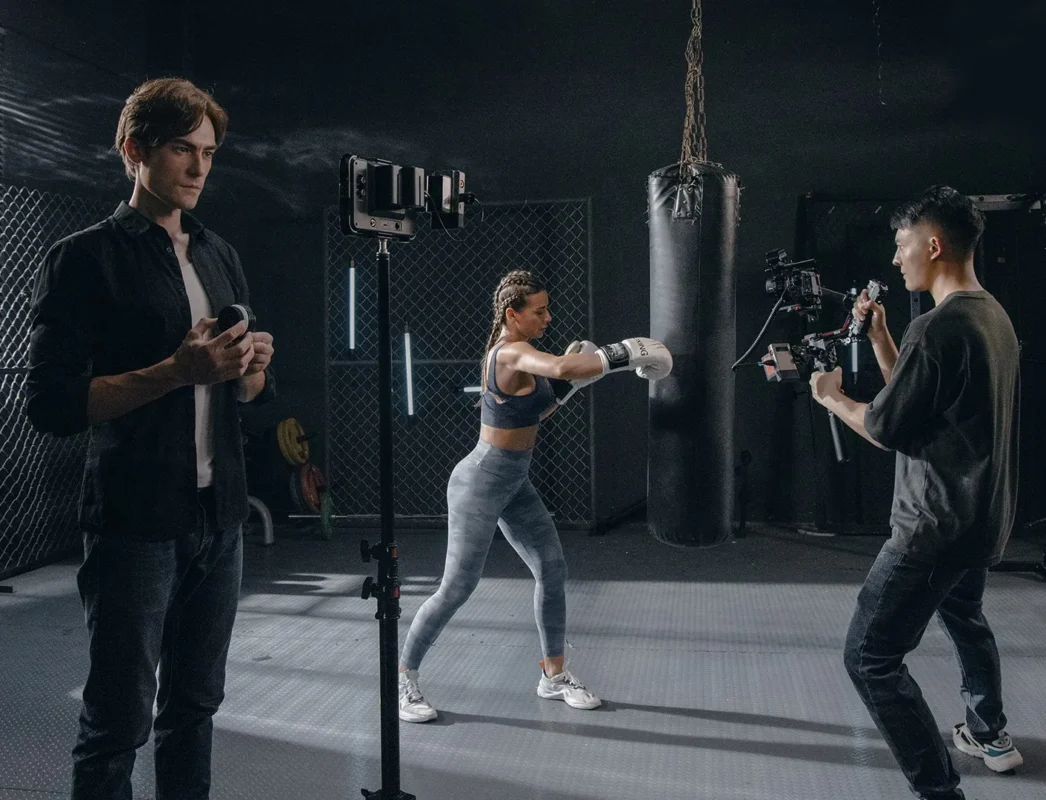
A follow focus turns the lens focus ring through a gear or a rubber ring. You get a large wheel at the side of the lens and can mark focus points on a disc, so focus moves the same way on every take. Cinema lenses often have gears in the 0.8 MOD standard. Photo lenses without gears need a gear ring around the focus ring, or a follow focus that grips by friction.
Wireless systems put a motor at the lens and a handle or wheel somewhere else. That lets a second person pull focus while you operate the camera.
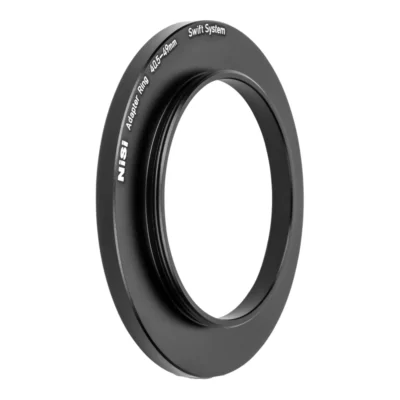
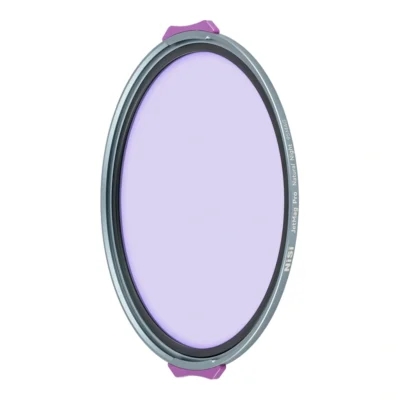
A matte box shades the lens from side light and holds rectangular filters in front of it. Small matte boxes mount straight on the lens with an adapter ring, larger ones go on 15 mm rods. SmallRig and NiSi both make matte boxes.
Cables and small parts
Loose cables are the most common reason a take gets cut short. A cable clamp that locks the HDMI or USB-C cable to the cage protects the camera's ports. Short, thin cables of the right length do not hang and snag.
Check which HDMI connector your camera has. Mini HDMI and micro HDMI look alike in photos but do not fit each other.
A small multi-tool with the right bits in your camera bag solves more than you would think. Rig screws are often hex, and a loose screw in the middle of a shoot is annoying when the tool is at home. This group also covers clamps for an external SSD, hot shoe covers and cooling fans for cameras that run warm.
Shooting from the car and in the field
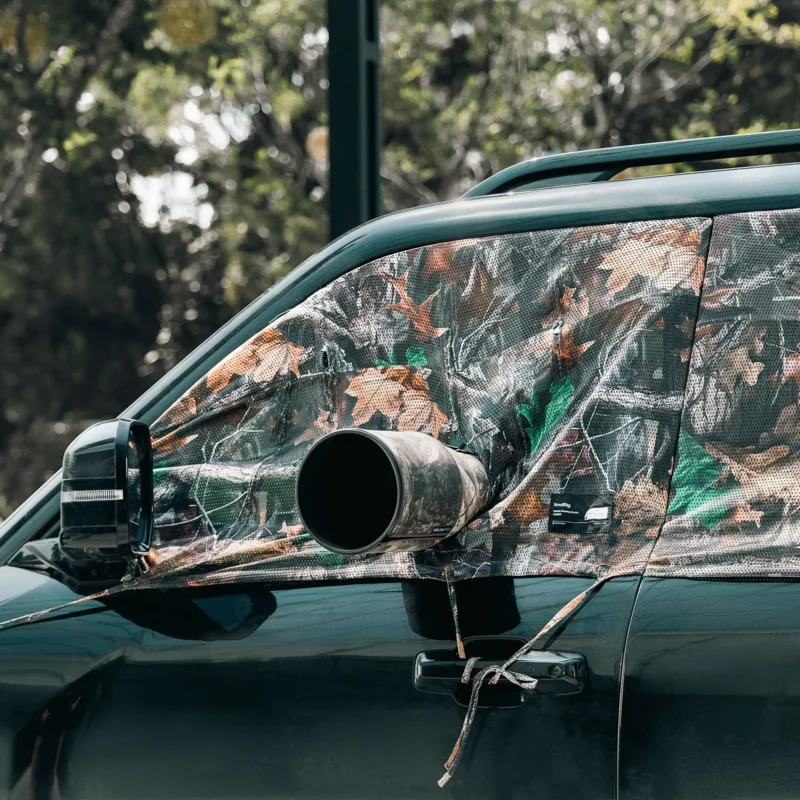
Wildlife photographers who shoot from a car can hang a camouflage curtain in the window. It hides you inside the car, has an opening for the lens and is made of water-repellent fabric. The curtains come for the right and the left side, so check which side you sit on.
For long telephoto lenses there are lens supports on rods that carry the lens and take the strain off the camera mount. They make the biggest difference when a heavy lens sits on the camera with a quick release plate right under it.
Frequently asked questions about rig accessories
What is a magic arm?
A magic arm is an articulating arm that locks at the angle you want with one knob. It is used to put a monitor, light or microphone on the rig or on a clamp. Short arms are steadier than long ones.
How do I power the monitor and the camera from one battery?
With a V-mount or NP-F battery plate mounted on the rig. The plate has outputs like D-Tap and USB-C, and the camera can be powered through a dummy battery. Check that each output gives the right voltage for what you plug in.
What does a follow focus do?
A follow focus turns the lens focus ring through a gear, so you can move focus smoothly and precisely. It has a large wheel and a disc where you mark focus points. Lenses without gears need a gear ring or a follow focus that grips by friction.
Do I need a matte box?
You need one if you film against strong side light or want to use rectangular filters in front of the lens. For everyday handheld filming a lens hood is often enough. A mini matte box that mounts straight on the lens is an easy place to start.
What is a cable clamp for a cage?
It is a small clamp that locks the HDMI or USB-C cable to the cage. It absorbs tugs on the cable so the camera's port is not damaged. The clamp is often made for a particular cage or camera.