
















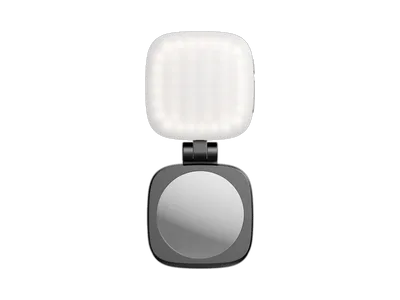
A small LED light lights up a face when you film and goes in the camera shoe or on a rig. Lights with adjustable colour temperature can be matched to daylight or indoor light, and RGB lights also give coloured light. Look at CRI, which tells how accurately colours are rendered, and at how long the battery lasts.
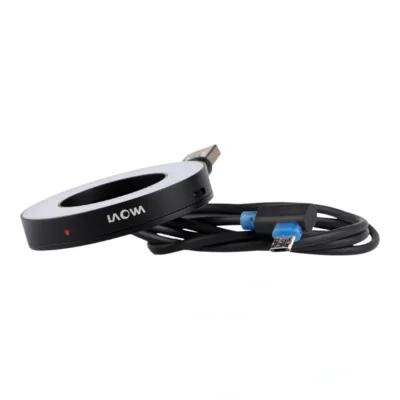
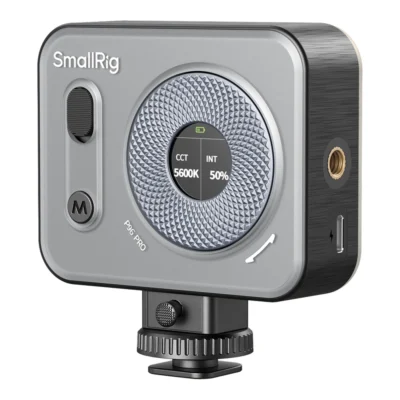

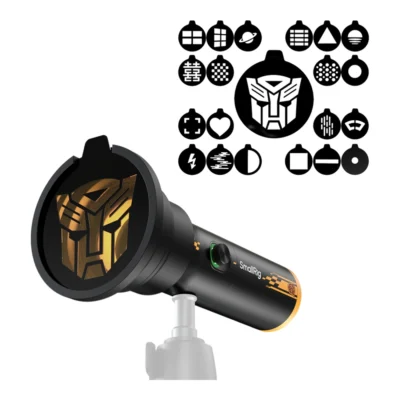


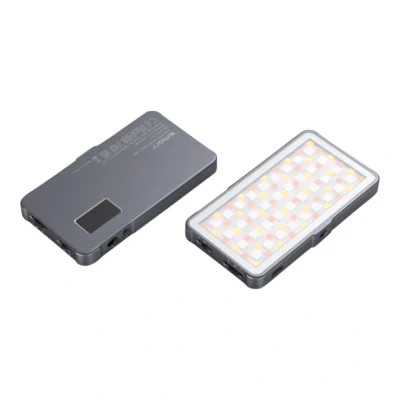


LED has almost completely taken over on-camera lighting. The lights are small, barely get warm, draw little power and dim without much colour shift. What separates them is size, the colour of the light and how the light can be shaped.
Types of LED camera lights
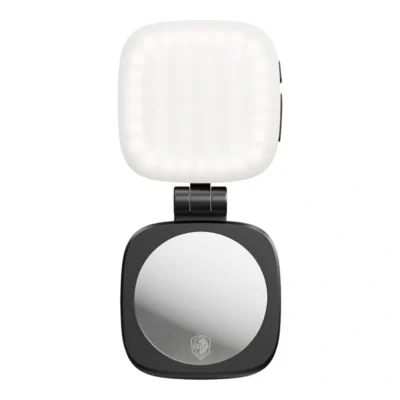
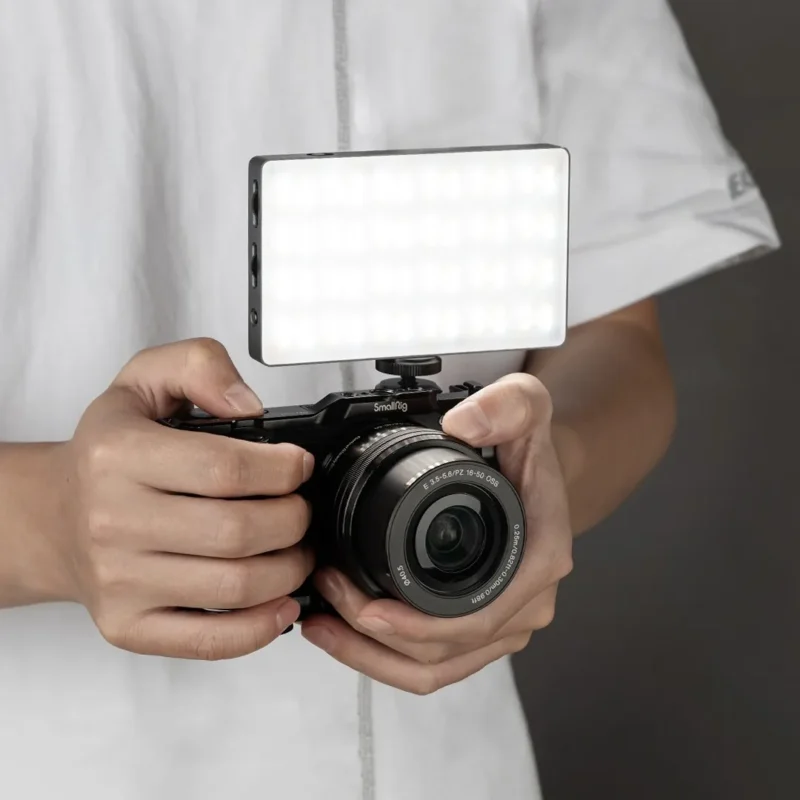
The most common is the flat pocket-sized panel. It goes in the camera's shoe, on a rig or on a small stand and gives a broad, fairly even light. Panels are light enough to carry all the time, and most have a built-in battery.
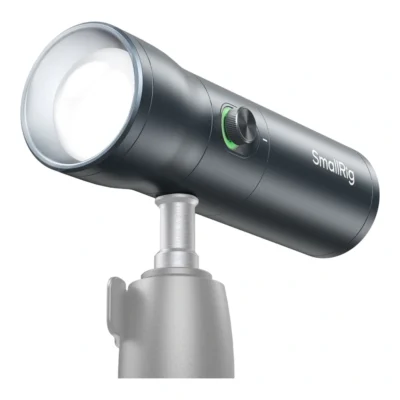
Focusable lights look more like a small torch. A zoom ring takes the beam from a wide cone to a narrow spot, much like a stage spotlight. They are used where light should land on one point, such as a face in a dark room or a detail in the background.
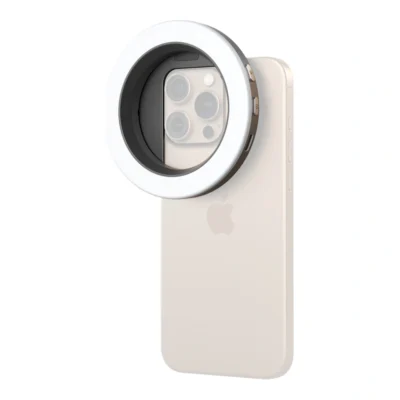
Then there is the ring light, which sits around the lens, and lights made for one job, such as macro lights. If the light is going on a phone, there are dedicated models under Phone lights. For more output, say for an interview through a softbox, look at studio lights.
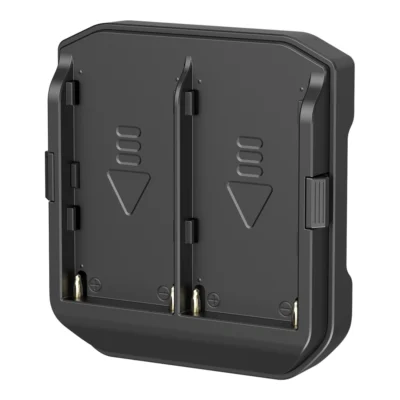
The category also has battery plates. With one, a larger light can run on a V-mount battery or NP-F type batteries instead of mains power.
Colour temperature and CRI
Colour temperature is given in kelvin. Low values are warm, yellowish light. High values are cool and blue. A camera can set its white balance for almost any colour, but only one at a time. So every light in the shot should have the same colour, ideally matching the rest of the light in the room.
| Light source | Approximate colour temperature |
|---|---|
| Candle | 1900 K |
| Warm household lamp | 2700 K |
| Halogen and traditional studio tungsten | 3200 K |
| Midday daylight, flash | 5500 to 5600 K |
| Overcast sky and open shade | 6500 K and up |
A bi-colour light has both warm and cool diodes and blends them steplessly. That covers most people who film indoors.
CRI tells you how accurately colours are rendered compared with an ideal light source, on a scale up to 100. Below 90, skin starts to look grey or greenish, and that is hard to fix afterwards. Aim for 95 or above. For video you will sometimes see TLCI as well, a measure built around how a video camera sees the light. High numbers on both are a good sign.
RGB lights and coloured light
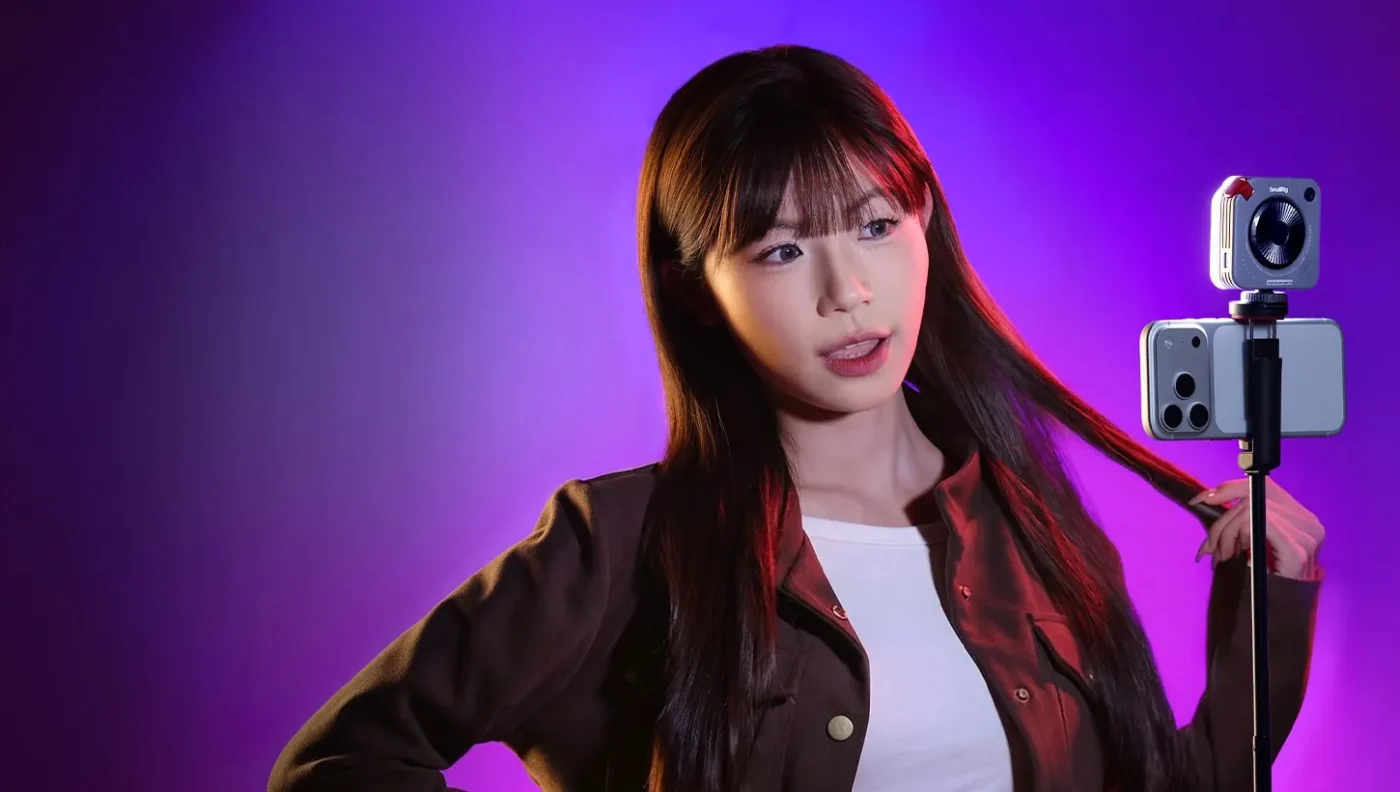
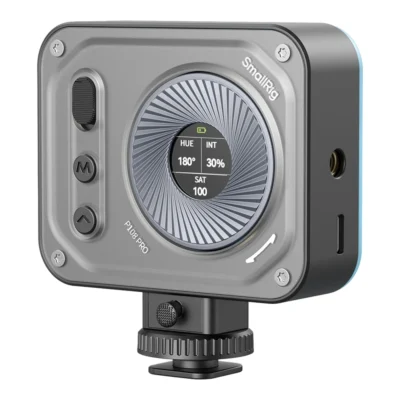
An RGB light has red, green and blue diodes on top of the white ones and can produce almost any colour. Many also have built-in effects such as police lights, flickering fire or a TV glow.
Use the colour on the background, not the face. A blue or purple wash on the wall behind someone talking adds depth, while coloured light on a face nearly always looks odd. Music videos and effect scenes are the exception, since that is the point there.
In our view an RGB light makes a good second purchase. The first light should give good white light.
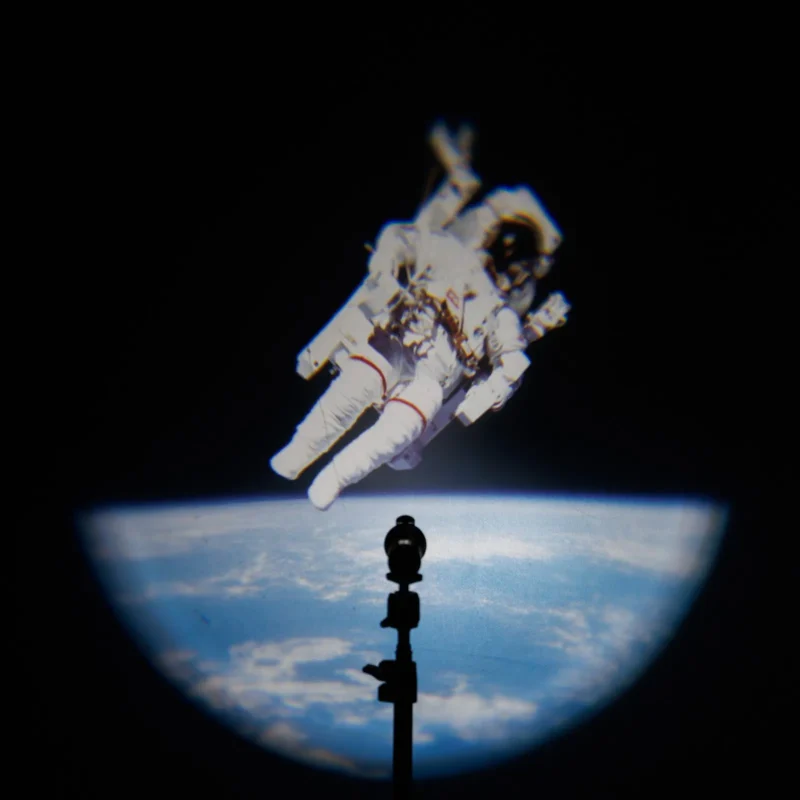
Focusable lights and projection
A zoomable light gathers its output into a cone with a clear edge. At a narrow angle, low power reaches a long way while the rest of the room stays dark. That gives a kind of drama a panel can't.
Several of these lights can also project patterns or pictures onto a wall with attachments placed in front of the lens. It might be a window frame, a moon or a logo. The distance to the wall and the zoom setting decide how large and sharp it gets.
Ring lights for macro and portraits
A ring light sits around the lens, so the light comes from almost the same direction the camera looks. It leaves hardly any shadows. In the eyes it shows up as a ring, which many people like in portraits and beauty shots.
It is especially useful for macro. When the lens is a few centimetres from the subject, it often blocks light from an ordinary lamp. An LED ring that screws into the filter thread or fits the front of a macro lens lights the subject evenly even at very close range. Check the thread diameter before you buy.
Large ring lights on stands, the ones with a phone holder in the middle, are mostly used for selfies and live streams. The light is flat but flattering, because shadows under the eyes disappear.
Brightness, battery and power
Brightness is usually given in lux at a stated distance. Only compare figures measured at the same distance. Light falls off with the square of the distance, so a light giving 1500 lux at 30 centimetres gives roughly a quarter of that at 60 centimetres. Wattage says more about how much power the light draws than about how bright it is.
Built-in batteries almost always charge over USB-C. The stated run time applies to a certain brightness, and at full power it can be a fraction of that. For long recordings, choose a light that can run from a power bank over USB-C while it is on, or a bigger light on a battery plate.

Softer light from a small lamp
A small light gives hard light with crisp shadows. That is physics, not a quality problem. Light gets softer the larger the source is relative to the subject, so what you want is to make the light bigger.
The easiest way is to bounce it. Aim the light at a white wall or ceiling and let the surface become the source. Another is a diffuser or a small softbox in front of the panel. You lose some brightness, but skin looks smoother.
Take the light off the camera when you can. A panel in the shoe gives the same flat light as a built-in flash. On a small arm or a mini tripod half a metre to the side, the difference is big.
Frequently asked questions about LED lights
Which camera light works best for video?
Start with a small bi-colour LED panel with a CRI of 95 or higher and a built-in battery. It can sit in the camera's shoe but does more good off to one side on an arm or a small stand. If you need more light than a panel gives, the next step is a studio light with a softbox.
What is a ring light good for?
A ring light around the lens gives almost shadowless light and a ring reflection in the eyes. It is used for portraits, beauty shots and selfie video. Small LED rings mounted at the front of the lens are also handy for macro, where ordinary lights are blocked by the lens.
What does CRI mean on an LED light?
CRI tells you how accurately a light renders colours, on a scale up to 100. Lights below 90 can give grey or greenish skin that is hard to correct later. For photo and video, choose 95 or higher.
What is the difference between bi-colour and RGB?
A bi-colour light gives white light that can be set from warm to cool. An RGB light can also produce colours and often has built-in effects. Use white light on faces and save the colours for the background.
Can LED lights be used for photography?
Yes. The advantage over flash is that you see the light before you take the picture. The drawback is that a small LED gives far less light than a flash, so you may need a slower shutter speed or a higher ISO. For still life, products and macro it works well.