


















A charger is made for a specific battery type, so check the code on the battery before you buy. Dual chargers charge two batteries at once, and chargers with USB-C can run from a power bank or laptop when you are out. Chargers with interchangeable plates work with several battery types. For rigs there are chargers for V-mount batteries and mains adapters with several ports.
Read more about chargers & power banks

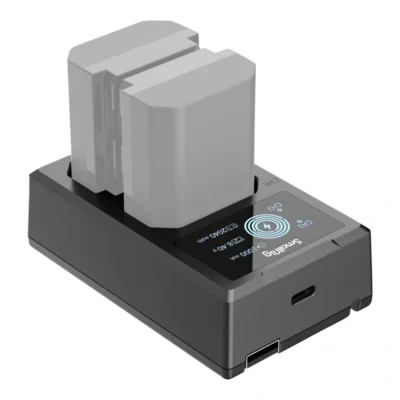


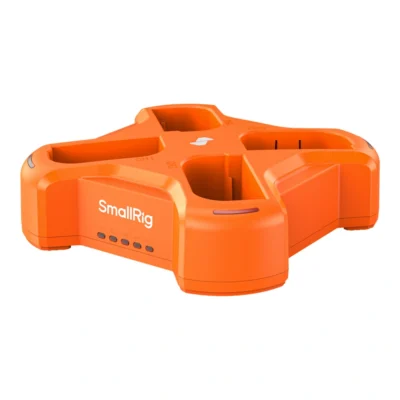

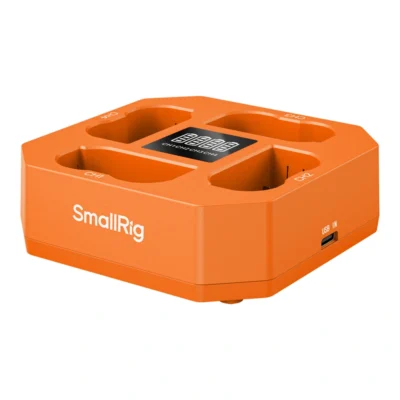

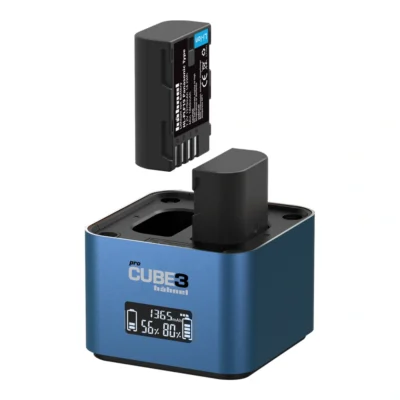




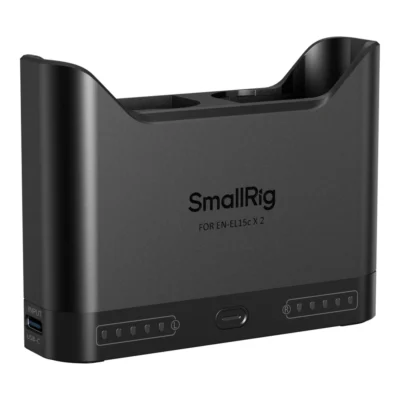
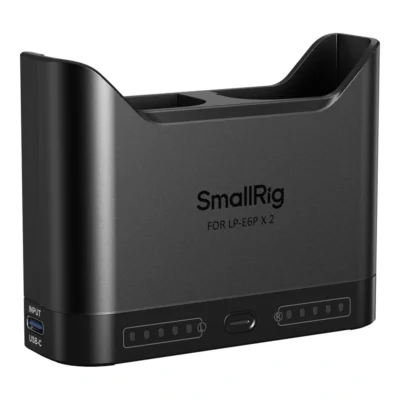
One, two or four batteries at a time
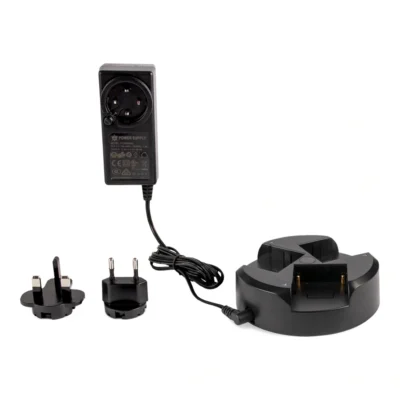
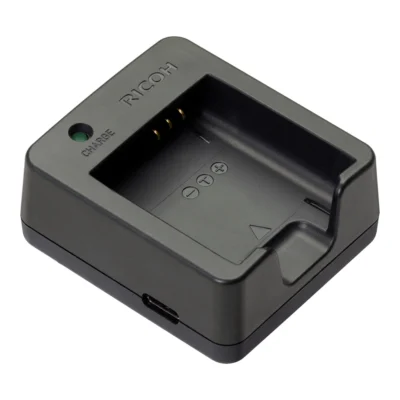
The simplest charger takes one battery. That is fine if you own a single spare and charge at home in the evening. With three or more batteries it soon turns into a queue, and a charger with more slots pays off.
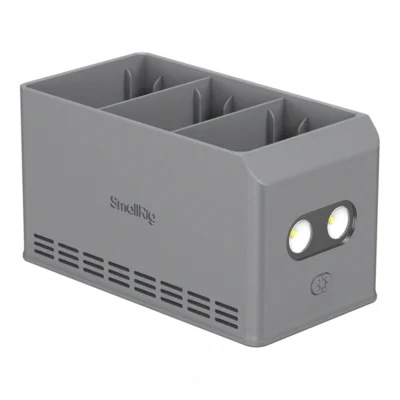
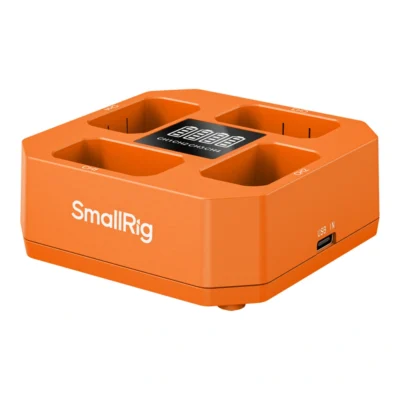
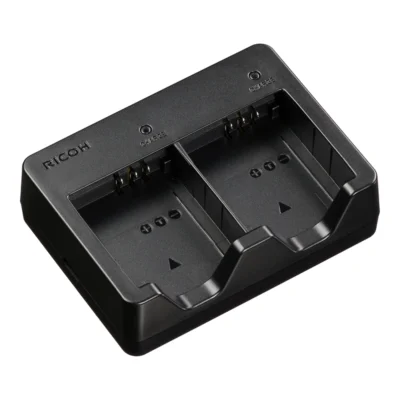
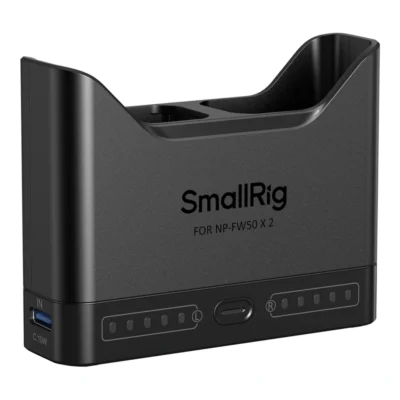
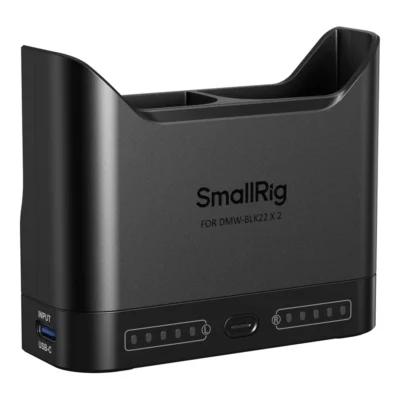
Twin chargers such as Hähnel's ProCube 3 and SmallRig's chargers for a given battery type have two slots. You can charge one or two, and each slot works independently. For video and weddings, where four batteries must be ready by the next day, SmallRig makes four-channel chargers for NP-FZ100, LP-E6NH, EN-EL15c and NP-FW50 among others. For the big NP-F batteries in Sony's L series, Hähnel has a triple charger that keeps the same charging time with one or three batteries inside.
Look for a display or lights showing how far each battery has come. It sounds like a detail. It is not, when you are standing with six batteries and need to know which ones are full.
Plate systems and universal chargers
If you change cameras now and then, or shoot with several brands, a charger with swappable plates is a good buy. Hähnel's ProCUBE 2 plates exist for Canon, Nikon, Sony, Fujifilm, Panasonic and Olympus batteries, and they fit both the ProCube 2 and ProCube 3. When you switch camera you buy a new plate instead of a new charger.
Universal chargers such as Hähnel's Unipal follow the same idea without plates. They take batteries from the major camera brands, and the larger model charges both 7.2 V and 3.7 V lithium-ion batteries plus AA cells. That makes it useful in a bag shared by several photographers.
Charging cases for the bag
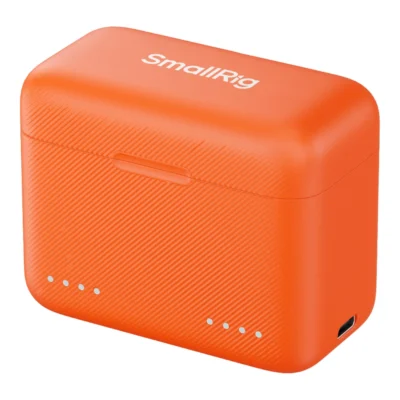
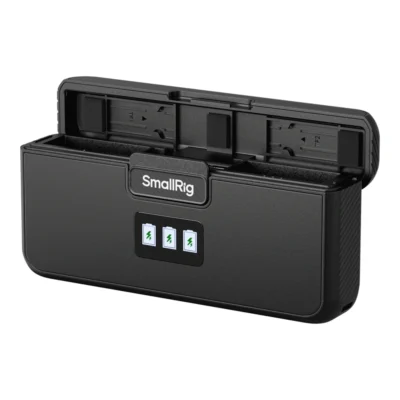
A charging case sits somewhere between a charger and storage. SmallRig's cases hold two batteries, for example LP-E6P, NP-FZ100 or EN-EL15c, and charge them when you plug in a USB-C cable. The batteries stay protected in the meantime, and the case works with original batteries as well as other brands.
Some cases also have a built-in battery of their own. Then the case charges your camera batteries while you are out, with no wall socket. That is the version we would pick ourselves for long travel days or events.
Power in: USB-C and watts
Most new chargers take power through USB-C, and how fast they work depends on the adapter at the other end. An old 5 W phone charger gives long charging times or is not enough at all. Use a USB-C PD adapter that can deliver the power the charger asks for.
If many of your devices charge over USB-C, a multi-port mains adapter can replace a whole pile of chargers. SmallRig's adapters with four USB-C ports come in 145 W and 240 W versions, with up to 140 W from a single port. An adapter like that can run a laptop and several chargers at the same time.
Cameras that run on external power through a dummy battery, and the cables for that, are covered under cables.
Power banks for camera, phone and rig
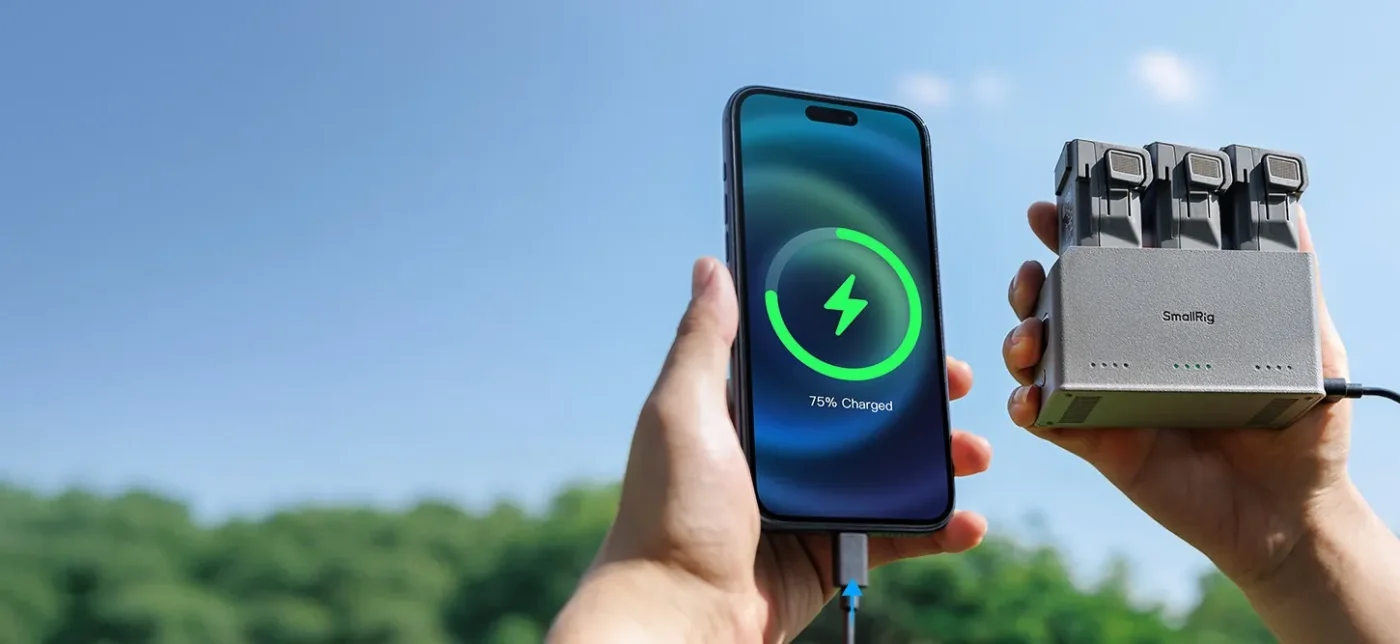
A power bank is a battery with USB outputs. With a USB-C charger for camera batteries, or a camera that charges over USB-C, you can top up anywhere. Check the camera manual to see whether it charges or runs on USB-C, because not all cameras do.
SmallRig makes several power banks built for camera work. A 99 Wh handle has two USB-C outputs, one of them 100 W, plus a D-Tap port. A flat battery unit with 1/4" threads on top and bottom mounts directly on the camera or rig and holds 73.8 Wh. For larger rigs there is a V-Mount power bank of just under 99 Wh with USB-C, USB-A, D-Tap and BP outputs. For action cameras and phones there is a power bank shaped as a grip.
Watt-hours decide how much you get out of it. A camera battery of about 16 Wh could in theory be charged five or six times from a 99 Wh power bank, but some energy is lost in conversion, so expect a little less.
Chargers for drones and action cameras
Drone and action camera batteries have their own formats and their own chargers. SmallRig makes chargers that take several batteries for the DJI Mini series, DJI Action, Insta360 and GoPro. The drone charger takes up to 65 W over USB-C, so it can run from a power bank in the car or out in the field.
One tip from us: do not charge an ice-cold battery. Lithium-ion batteries should be above freezing when charged. Bring them inside and let them reach room temperature first.
Frequently asked questions about chargers & power banks
Which charger fits my camera battery?
One that lists the same code printed on the battery, such as NP-FZ100 or LP-E6NH. With a plate system like Hähnel ProCube you choose the plate that fits the battery instead. Universal chargers take many battery types, though not all.
Can I charge camera batteries from a power bank?
Yes, if the charger or the camera takes power over USB-C. Many new chargers and charging cases do. Cameras that charge over USB-C themselves can be plugged in directly, but check the manual that your model supports it.
How many times can a power bank charge a camera battery?
Divide the power bank's watt-hours by the battery's. A 99 Wh power bank could in theory fill five or six 16 Wh camera batteries. Some energy is lost, so in practice you get a little less.
Is a twin charger worth it?
If you own two or more batteries, yes. Both are ready at the same time and each slot charges on its own. For video with many batteries a four-channel charger is even more convenient.
Why does my USB-C charger charge so slowly?
Usually the adapter is too weak. An old phone charger delivers little power, while a USB-C PD adapter gives the charger what it needs. The cable can also be a limit.