
















First choose the format by your camera: 35 mm for ordinary cameras, medium format for larger cameras and sheet film for large format. Then the type: colour negative is the easiest to expose, slide film gives finished positives but needs more careful metering, and black and white film can be developed at home. The film speed, ISO, is chosen by the light you shoot in.

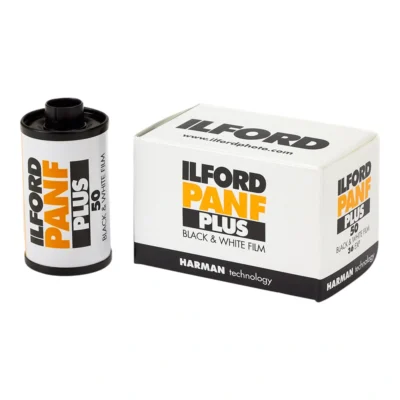
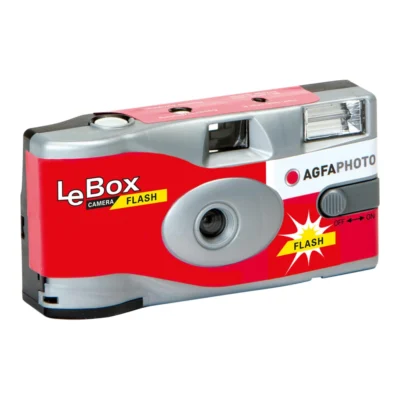
We stock camera film from Kodak, Ilford, Kentmere and AgfaPhoto, in 35 mm, medium format and sheet film. Brand and film line are largely a matter of taste, and most people find their favourite after a few rolls. Format is not a choice, though. The camera decides it.
Film formats: 135, 120 and sheet film
Film in the wrong format cannot be used, even if the sizes look close. Check inside the camera back or in the manual if you are unsure.
| Format | Also called | Used in | Pictures |
|---|---|---|---|
| 135 | 35 mm, small format | Compact cameras, film SLRs, reusable cameras | 24 or 36 per roll, double in half-frame |
| 120 | Medium format, roll film | Medium format cameras | Depends on the camera, often 10 to 16 per roll |
| Sheet film | Large format, 4x5 and 8x10 | Large format cameras, pinhole cameras | One sheet per picture |
135 sits in a light-tight metal cassette and is wound back into it after the last frame. It is the format most people start with, and the one every lab takes without asking.
120 has no cassette. The film is rolled up with a backing paper on a spool. How many pictures you get depends on the camera's frame: 6x4.5 gives 15 or 16, 6x6 gives 12 and 6x7 gives 10. The negatives are much larger than 135 and show a clear difference in detail and tonal gradation.
Sheet film is single sheets loaded into film holders in the dark, usually two sheets per holder. 4x5 inches is the most common size. It is slow, careful work, and each sheet can be developed on its own.
Colour or black and white film
Colour negative is what we usually suggest for travel, family and everyday pictures, and for anyone who hands film to a lab and wants scans. Slide film suits people who want to show pictures on a light box or projector and are prepared to meter carefully. The differences and the choice of speed are covered under colour film.
Many choose black and white for the look, and because it is the natural way into home developing. It comes in more varieties than colour, from very fine-grained to extremely fast, and there is even black and white film for the colour process. That is all sorted out under black and white film.
Which processing the film needs
Each film type has its own process, and that decides where you can hand in the roll or whether you can develop it yourself. Look for the process on the box before buying a film you have not tried.
| Film type | Process | Where |
|---|---|---|
| Colour negative | C-41 | Almost every photo lab |
| Colour slide | E-6 | Fewer labs, often a longer wait |
| Classic black and white | Black and white chemistry | At home in a tank, or a lab that does black and white |
| Black and white for C-41 | C-41 | Almost every photo lab |
If you are handing in sheet film or 120, ask the lab first. Not every lab takes every format.
ISO, exposures and pack sizes
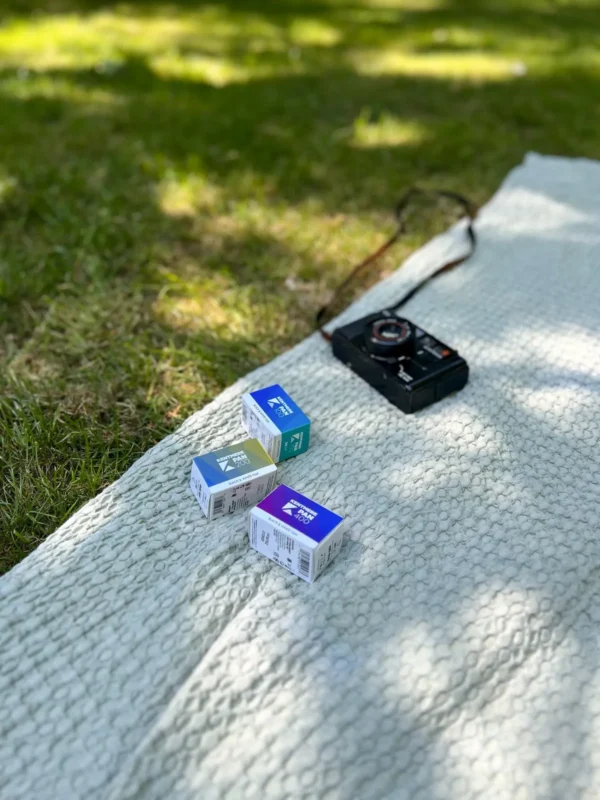
The ISO number is printed on the box and the cassette. It tells you how sensitive the film is, and the camera needs to know it. Many 135 cameras read a code on the cassette automatically. Others are set by hand, and simple fixed-exposure cameras are built for one speed, usually around ISO 400.
135 film is sold with 24 or 36 exposures. 36 gives more film for the money, 24 is easier to finish in a weekend. Professional film in 120 and 135 often comes in 5-packs, and several everyday films come in 3-packs. Black and white is also sold as 30 metre bulk film that you load into cassettes yourself.
Storage and travel
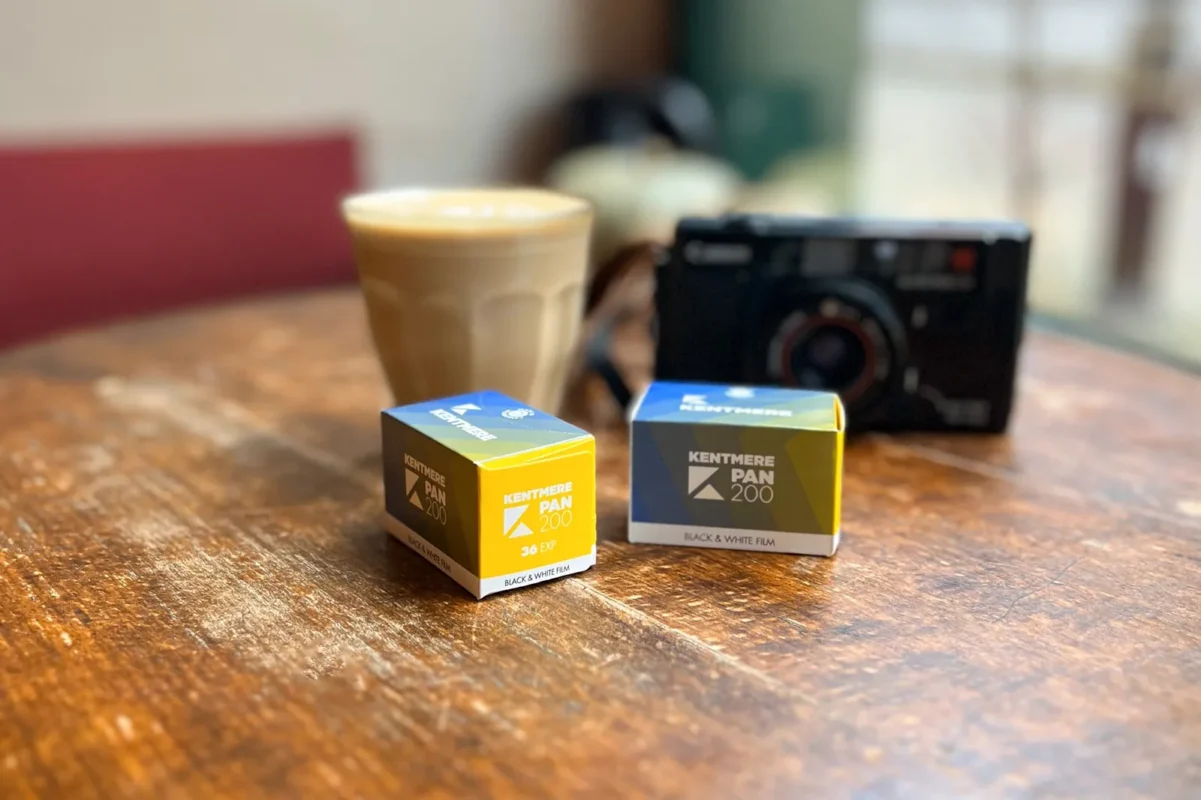
Film ages, and heat speeds it up. Unexposed film keeps best in the fridge. For long storage, or for very fast film, the freezer is an option. Let the film sit at room temperature for a couple of hours before opening the pack, or condensation forms on it.
The expiry date is on the box. Expired film is not ruined, but it loses speed and contrast, and colour film can shift in colour. Film that has been kept hot, in a car in summer for instance, shows it more than plain age does.
Exposed film should be developed within a reasonable time. Do not leave a finished roll in the camera or a pocket for months.
When flying, film belongs in your hand luggage, with a request for a hand check. The higher the ISO, the more sensitive it is to X-rays. Bring more film than you think you need, too. Ordinary 135 is easy to find in many places, but a specific film line or 120 can be hard to get at your destination.
Frequently asked questions about film
Which film fits my camera?
Check which format the camera takes: most compacts and older SLRs take 135, also called 35 mm. Medium format cameras take 120 and large format cameras sheet film. The format is often marked inside the back or in the manual.
What is the difference between 135 film and 35 mm film?
They are the same thing. 135 is the name of the format and 35 mm is the width of the film. It comes in a metal cassette with 24 or 36 exposures.
How many pictures do you get on a 120 roll?
It depends on the camera. A 6x4.5 camera gives 15 or 16 frames, 6x6 gives 12 and 6x7 gives 10. The film is the same; the camera's frame size decides.
Should film be stored in the fridge?
Yes, unexposed film lasts longer when cool, and the fridge is the easiest place. Let the film reach room temperature for a couple of hours before opening the pack so no condensation forms.
How long does a roll of film last?
The expiry date on the box applies to film stored properly. Film can be used after that date, but it gradually loses speed and contrast. Exposed film should be developed within a few weeks or months.