
















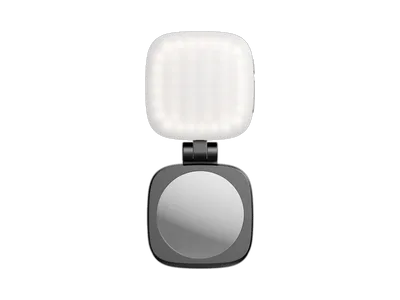
A light modifier changes the light from the lamp. A softbox makes the light larger and softer, a lantern spreads it in all directions, and a spotlight gathers it into a sharp cone. A larger softbox gives softer shadows but takes more space. Check that the mount fits your light.
Read more about light modifiers & softboxes
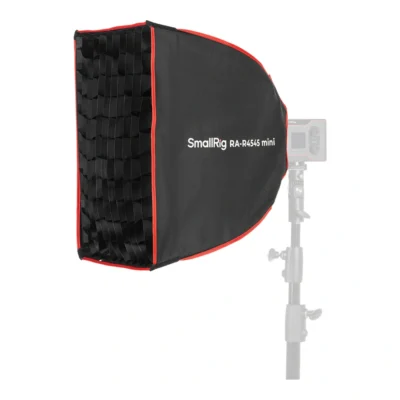

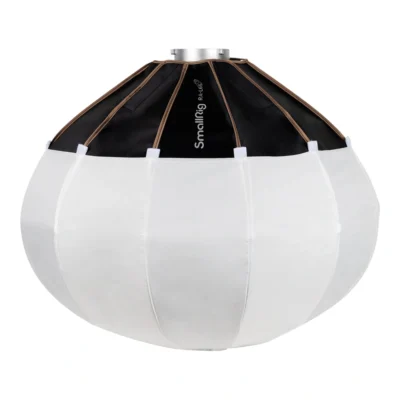
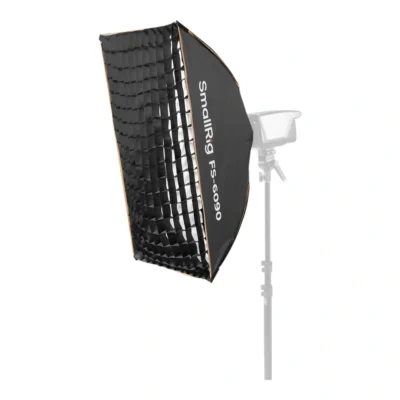



The light decides how much you have. The modifier decides what it looks like. The same light can give a sharp, dramatic spot or soft window light, depending on what you put in front of it.
Size decides how soft the light is
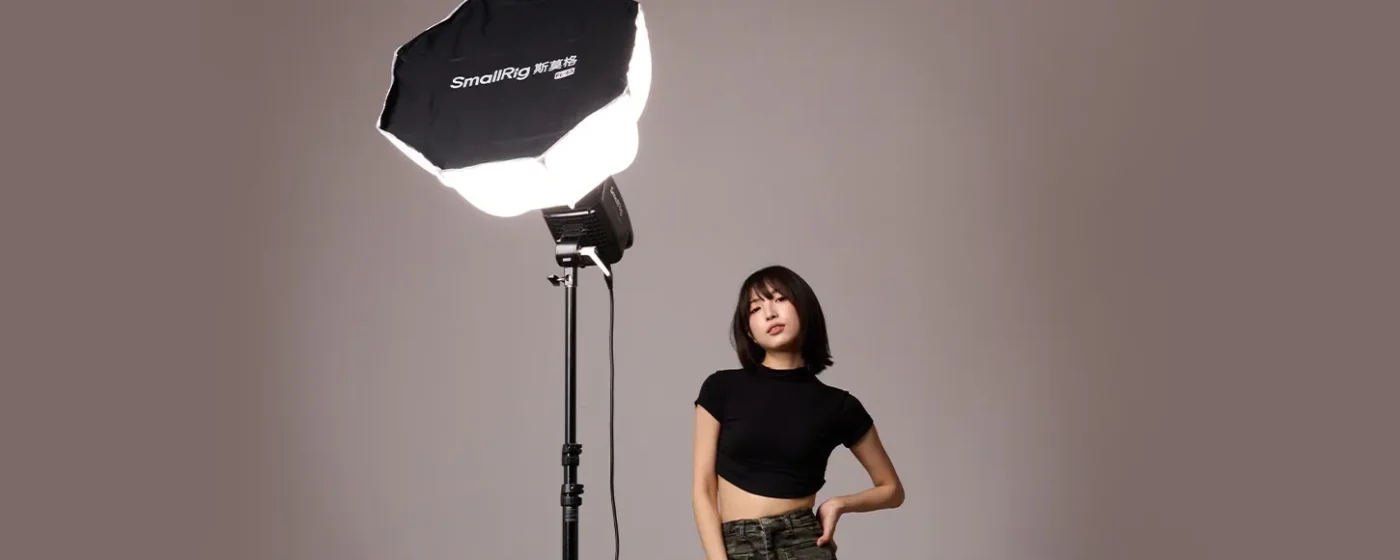
Soft light comes from a source that is large relative to the subject. Shadows get gentle transitions and skin looks smoother. A small source gives hard shadows with crisp edges. A softbox works by turning a tiny LED into a large, evenly lit surface.
Distance counts too. The same softbox effectively shrinks the further away it is. Move it as close to the person as the framing allows, often just out of shot, and you get the softest light that softbox can give. The light also falls off faster then, which darkens the background.
As a rule of thumb, a softbox for portraits should be at least as wide as the shoulders. Full-length shots need something bigger or a tall strip.
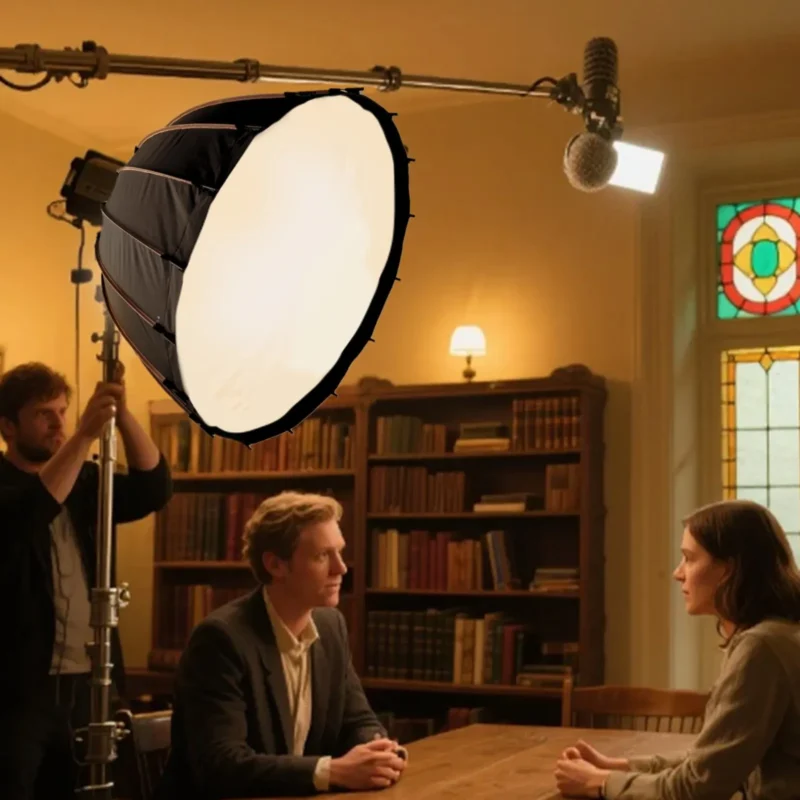
Softbox types and what they suit
The shape affects the light and how it shows up in eyes and glossy surfaces.
| Type | Light | Reflection in the eyes | Mostly used for |
|---|---|---|---|
| Square and rectangular | Even, like a window | A bright square | Product photos, interviews |
| Octagonal | Soft and round | A round highlight | Portraits, single-person video |
| Parabolic | More directional, reaches further | A round highlight | Portraits with more contrast, larger areas |
| Strip | A narrow band of soft light | A bright line | Rim light, full length, bottles and glossy products |
| Lantern | In all directions | A round, dimmer highlight | Groups, room light, film scenes |
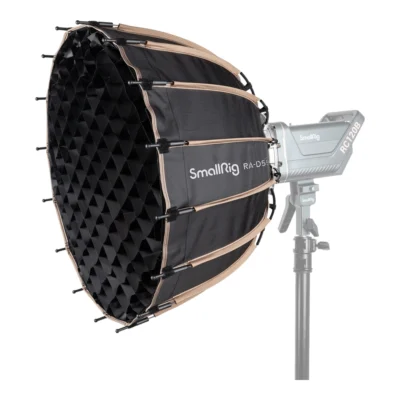
A parabolic softbox is deeper than a standard one. Light bounces off the reflective inside and leaves more concentrated, so it holds up over a longer distance. Many come with two diffusers, inner and outer. With both fitted the light is most even. Remove the outer one and it gets crisper and brighter.
Quick-setup softboxes open like an umbrella. They are worth it if you set up often, since a traditional softbox with loose rods takes much longer to assemble.
Lanterns: light in every direction
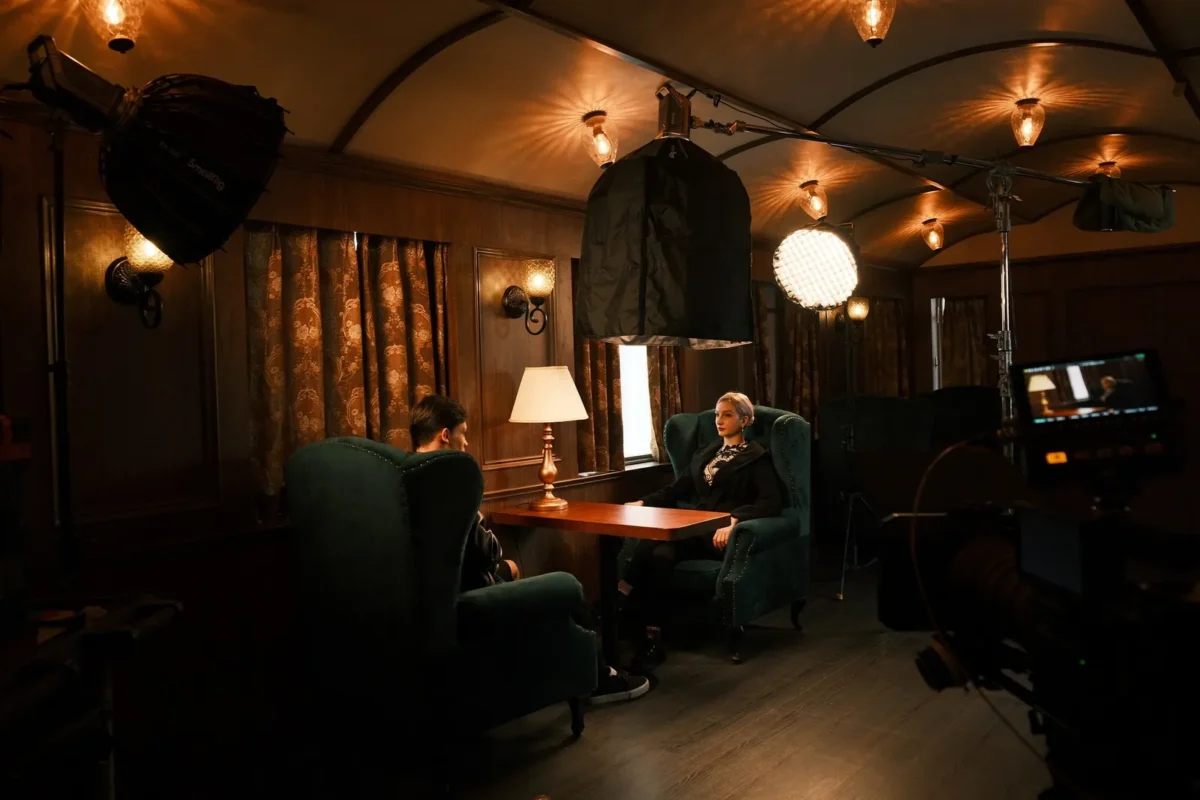
A lantern is a round softbox that spreads light all around it instead of forward. It is often hung over a table or a set and gives an even base light across the room. On film it looks natural, rather like a ceiling lamp.
The downside is that light goes everywhere, including walls and ceiling where you don't want it. Most lanterns have a skirt, a piece of fabric pulled down on one or more sides to block light in that direction. Use it. A lantern is a poor substitute for a softbox when you want contrast on a face.
Grids, diffusers and barn doors
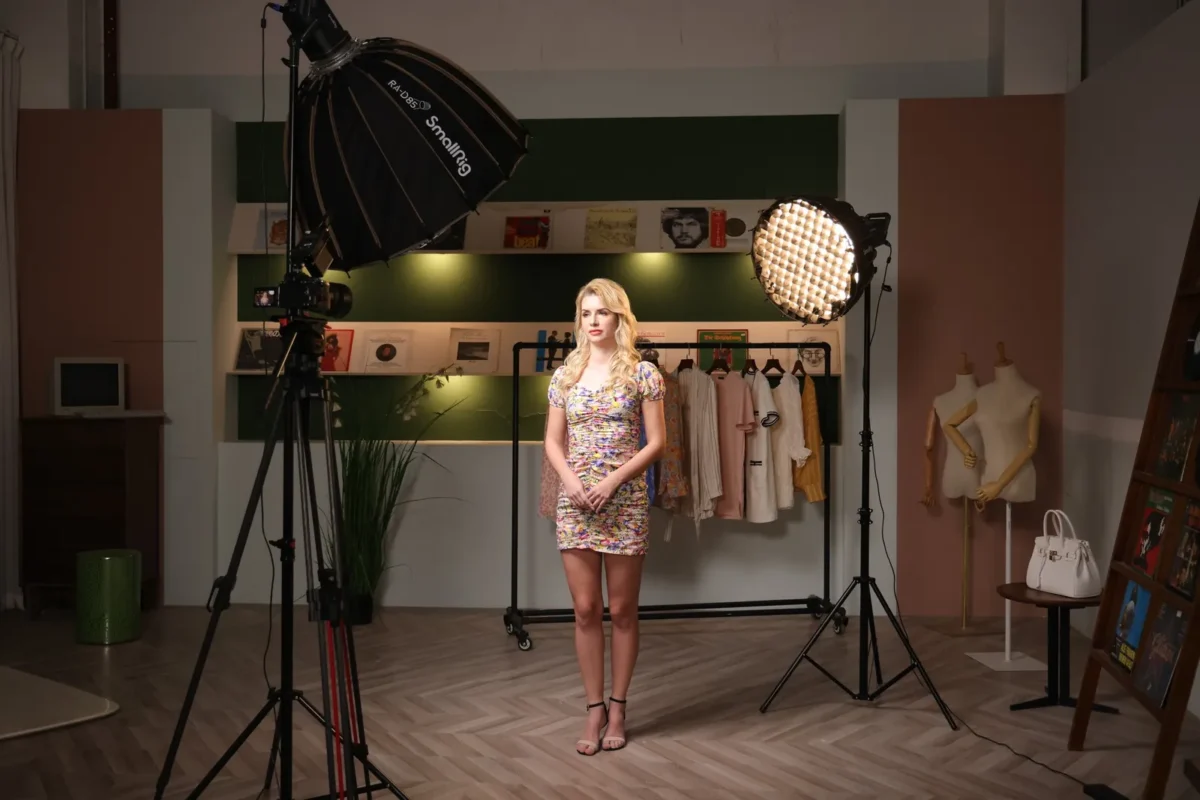
A grid, often called a honeycomb, fits in front of the softbox and stops light from spilling sideways. The light stays just as soft but only hits what you aim at. It is the easiest way to keep the background dark. Grids are rated in degrees, with 45 degrees being common. A lower number means a narrower beam.
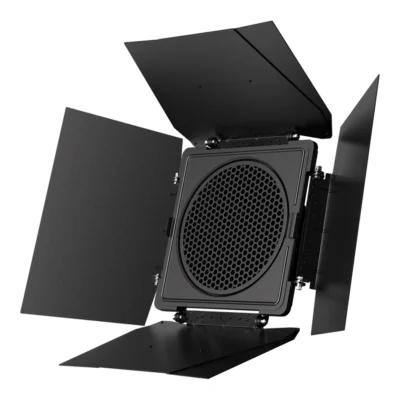
Barn doors are hinged flaps around a reflector or light. They let you cut light from one edge, for example to keep it off the wall behind. Some also have a frame for gels, so you can put coloured filter in front of the light.
A simple diffuser that slips straight over the light softens it a little without taking up space. It doesn't replace a softbox, but it helps when you are in a hurry or short on room.
Fresnel and spotlight: hard light with control
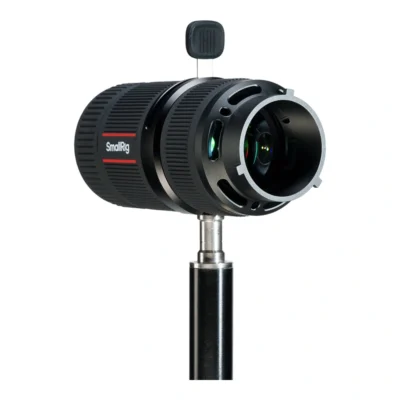
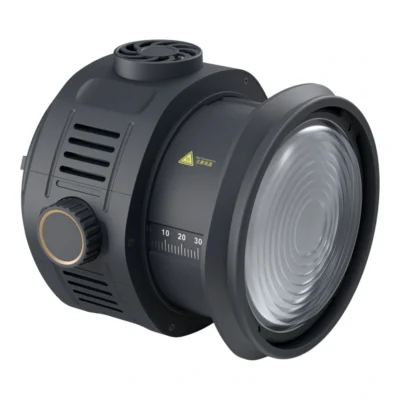
Sometimes the light should be hard. A Fresnel lens in front of a COB light gathers the output into a cone, and the zoom sets how wide it is. That is how sunlight through a window or a single spotlight is imitated on film.
An optical spot goes further. Its lens gives the beam a sharp edge, and with pattern plates it can project shapes onto a wall, like window frames or leaves. It costs a lot of light, so plan on a powerful lamp behind it.
The reflector
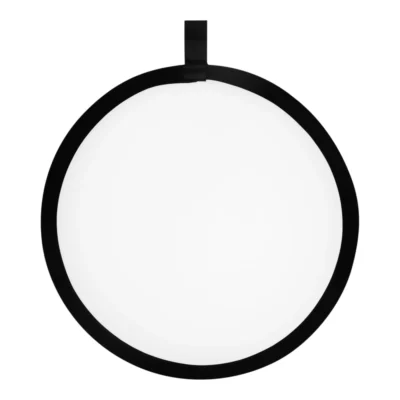
A reflector is the cheapest modifier there is and often the most underrated. It bounces light from the lamp or the sun back into the shadows. A collapsible 5-in-1 reflector has several surfaces on one frame:
- White gives soft, neutral fill.
- Silver reflects more and gives a stronger, cooler light.
- Gold warms skin tones, though it easily overdoes it.
- Black removes light and deepens the shadow side.
- The diffusion fabric is held between the sun and the person to soften harsh sunlight.
Outdoors with the sun behind the person, a white or silver reflector is often all you need to lift the face.
Mounts and setup
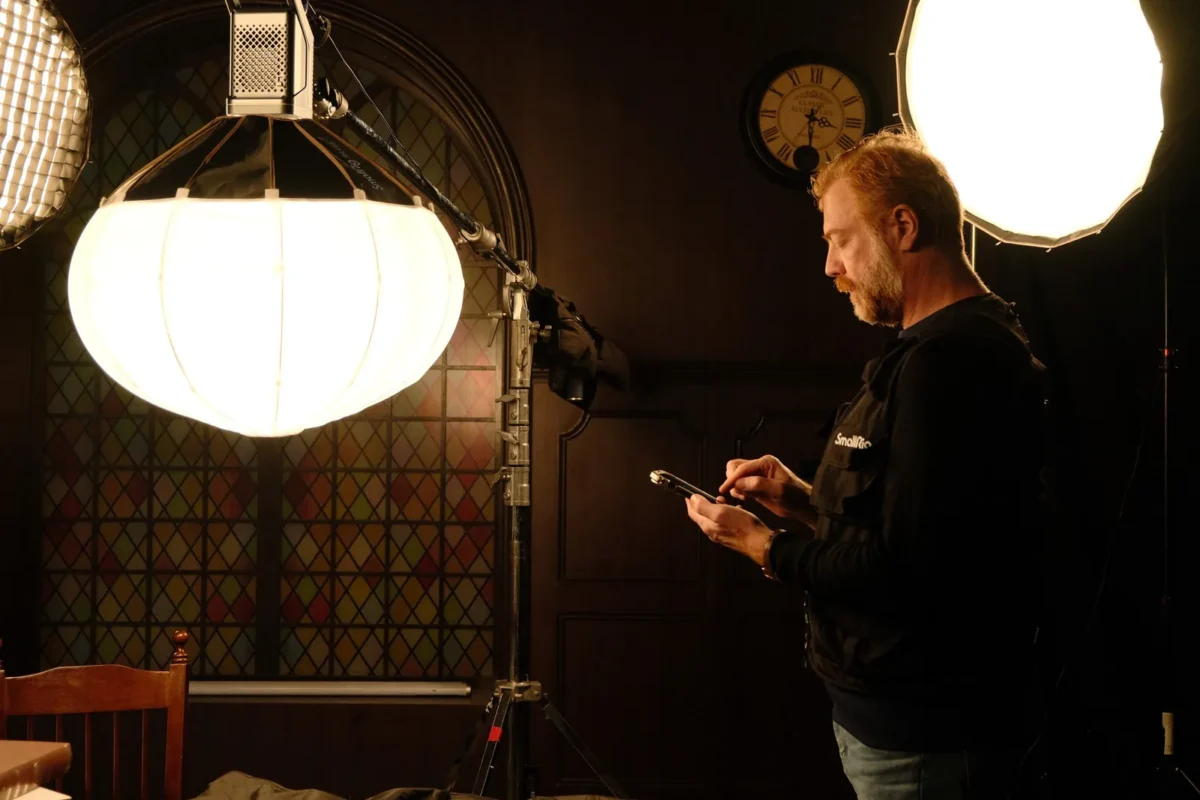
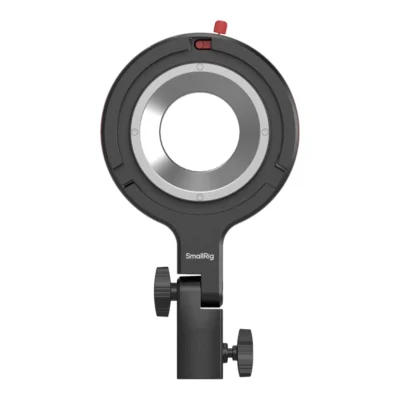
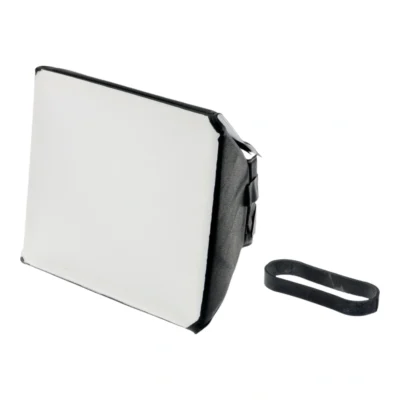
Most larger modifiers use a Bowens mount. Smaller lights often have their own mount, and then you need a Bowens adapter. Always check which mount your light has before choosing a softbox. There are also small softboxes that clamp straight onto a compact LED light and take up almost no room in the bag. Speedlights have their own modifiers, which you will find under Flashes and accessories.
Mind the balance. A big softbox far out on the light makes the stand front-heavy. Turn the stand so one leg points the same way as the softbox, and put a sandbag on the legs.
COB lights get warm. Use modifiers made for the light's power, and don't leave them folded against a light that is switched on.
Frequently asked questions about light modifiers & softboxes
Which softbox should I choose for portraits and video?
An octagonal or parabolic softbox of around 60 to 90 cm suits one person in an ordinary room. It gives soft light and a round highlight in the eyes. Check that the mount fits your light, usually Bowens or the light's own mount.
What is a parabolic softbox?
A deep, round softbox with a reflective interior that concentrates light more than a shallow one. The light reaches further and has more contrast. With the diffusers fitted it is soft; without the outer one it gets crisper.
What is a reflector used for?
It bounces light back into the shadows and works as fill light without power. White gives neutral light, silver stronger, gold warmer, and black removes light. The diffusion fabric softens harsh sunlight.
What does a grid do on a softbox?
The grid, or honeycomb, stops light from spreading sideways. The light stays just as soft but only hits the subject, and the background stays darker. 45 degrees is a common rating.
Does a Bowens softbox fit every light?
No. Bowens is standard on larger studio lights, but smaller LED lights often have their own mount. Then you need a Bowens adapter, and the light has to carry the softbox's weight.