
















A remote release lets you take the picture without touching the camera, which gives sharper pictures on a tripod and in long exposures. Cable releases connect to the port of the camera, while wireless ones use radio, infrared or Bluetooth. Some can also start video and have a timer. Check which cameras the release is made for.
Read more about remote controls
When you need a remote release
The camera's self-timer goes a long way. A two-second delay removes the shake from your finger, and for a single landscape shot on a tripod that is often enough. Still, there are situations where it falls short.
The clearest is exposures longer than 30 seconds. Most cameras go no further in their normal modes, and for longer times you use Bulb, where the shutter stays open as long as the button is held down. With a remote that locks in the pressed position, you can expose for several minutes without standing there holding it. That covers star trails, night scenes and strong ND filters in daylight.
The second is timing. The self-timer does not choose the moment for you. When a wave breaks, a bird lands at a feeder or a group must be caught at the right second, you want to press the button yourself without touching the camera. In macro and product work on a tripod you also avoid nudging the framing when you press.
Cable releases
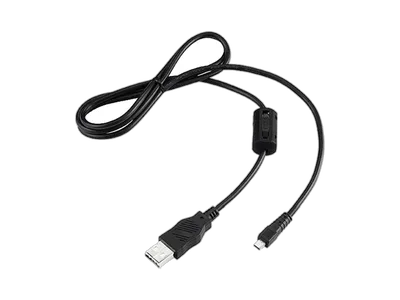
A cable release is the simplest and most reliable option. Most need no battery that can die in the cold, and there is no wireless link to drop. The button works like the camera's own: half-press to focus, full press to take the picture. Most have a lock that holds the button down for Bulb and burst shooting.
The port on the camera differs between brands and sometimes between camera lines from the same brand. Hähnel's cable releases come for Canon, Fujifilm, Nikon, Olympus and Panasonic, and Sony, with interchangeable connectors for several models from the same maker and a 2 metre locking extension cable. For Pentax and Ricoh there are cable releases from Pentax, one that plugs into the port on certain Pentax cameras and one for the Ricoh GR and Theta that connects through the USB cable and runs on an AAA battery.
Check in the camera manual or the product description that your model is listed.
Wireless by radio or Bluetooth
A wireless remote lets you stand away from the camera, or be in the picture yourself. Hähnel's Captur works by 2.4 GHz radio with a range of up to 100 metres. Radio needs no line of sight to the camera, so it works even if the camera is behind a hide or round a corner. Focus, shutter, burst and Bulb are all controlled from the transmitter.
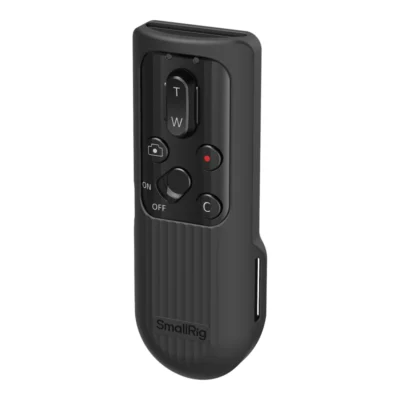
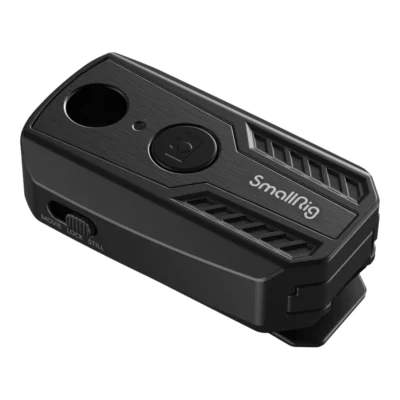
Bluetooth remotes pair with the camera much as headphones pair with a phone, and reach about 10 metres. SmallRig's remotes for Sony, Canon and Nikon can take pictures as well as start and stop video. The simpler one mounts in the camera's accessory shoe or on a handle with a 1/4" screw, while the more advanced model also controls focus and zoom and charges over USB-C. That is handy if you film yourself.
Infrared remotes need the transmitter pointed at the camera's sensor and work poorly in strong sunlight. That is why most people now choose radio or Bluetooth.
Remotes that do more
Some remotes take on more jobs. Hähnel's Captur also works as a flash trigger, and with extra receivers you can fire several flashes or cameras at once. Cable sets connect it to different camera brands, and the transmitter module can also sit directly on the camera.
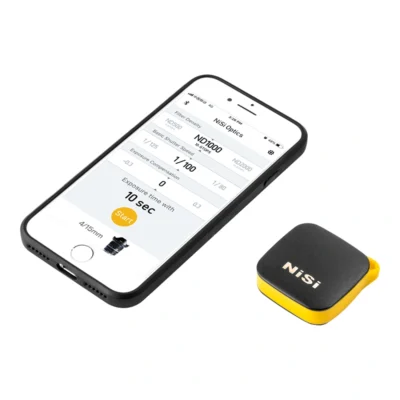
NiSi's Bluetooth remote is built for shooting with ND filters. It pairs with NiSi's ND calculator app, which works out the exposure time for the filter you have fitted and then fires the shutter. It connects to the camera with a cable in the 3.5 mm socket, and the cable for your camera brand is sold separately.
Getting the most from a remote
A remote removes the shake from your hand, but not from everything else. On a DSLR the mirror itself can cause a slight vibration. Use mirror lock-up or electronic first curtain if the camera has it. A steady tripod, not standing on a jetty that sways, also makes a difference.
For really long Bulb exposures, cover the viewfinder, since light leaking in through the eyepiece can cause haze in the picture on cameras with an optical viewfinder.
Frequently asked questions about remote controls
What is the difference between a cable release and a wireless remote?
A cable release is attached to the camera by a cable, while a wireless remote uses radio, Bluetooth or infrared. The cable is the simplest and needs no battery. Wireless lets you stand far from the camera or be in the picture yourself.
Which remote release fits Canon?
It depends on the camera's port, since Canon uses different ports across its camera lines. Hähnel's Canon cable release has interchangeable connectors for several models, and SmallRig's Bluetooth remotes work with many Canon cameras. Check that your model is listed in the description.
Which remote release fits Nikon?
Choose one that lists your Nikon model. Hähnel's cable release comes in a Nikon version with several connectors, and SmallRig's wireless remotes support compatible Nikon cameras over Bluetooth.
Do I need a remote for long exposures?
For exposures up to 30 seconds the self-timer is usually enough. For longer times in Bulb you need a remote that locks in the pressed position, or one that times the exposure for you.
Can a remote start video recording?
Some can. SmallRig's Bluetooth remotes start and stop video on compatible Sony, Canon and Nikon cameras. Simple cable releases only take stills.