
















Sound from the built-in microphone of the camera often turns out thin and picks up a lot of room. A wireless microphone goes on the person speaking and gives clear speech even at a distance, while a microphone in the camera shoe moves with the camera. Check that the output fits your camera or phone.
Read more about microphones & audio
Viewers forgive a picture that is a little dark or slightly soft. Bad sound makes them leave. The built-in microphone on a camera or phone sits far from the speaker and picks up the room's echo as much as the voice. An external microphone close to the mouth changes that more than any other upgrade.
Wireless microphone or camera-mounted microphone
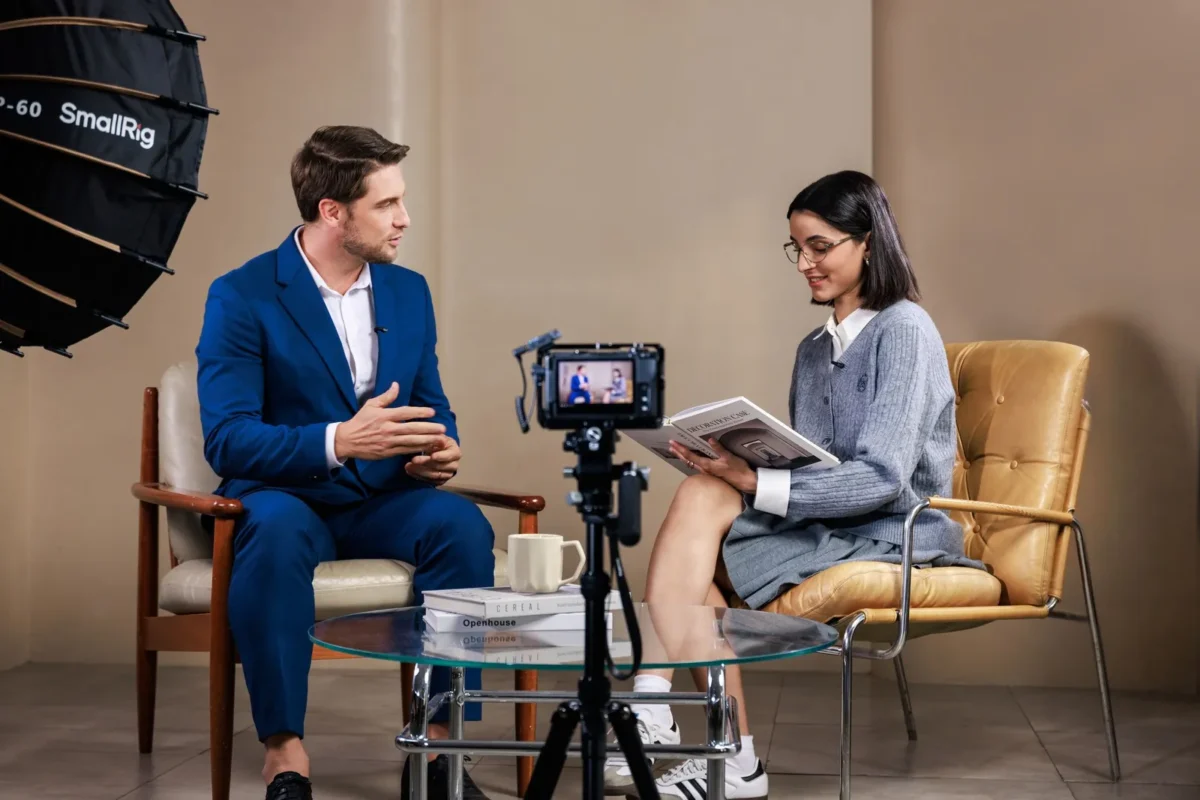
The choice comes down to where the microphone sits relative to the person talking.
| Wireless microphone | On-camera microphone | |
|---|---|---|
| Sits | On the person, usually on the collar | In the camera's shoe or on the rig |
| Distance to the mouth | Always short | Same as the camera's distance |
| Suits | Interviews, vlogging at a distance, presentations | Arm's-length vlogging, ambient sound, quick clips |
| Number of voices | One per transmitter, often two in a set | Whatever is in front of the camera |
| Watch out for | Charging, clothing rustle | Loses clarity quickly with distance |
For most people filming themselves or others, a wireless system is the best first buy. An on-camera mic is simpler and has no transmitters to charge, but it hears everything in front of the camera along with the voice.
How a wireless microphone system works
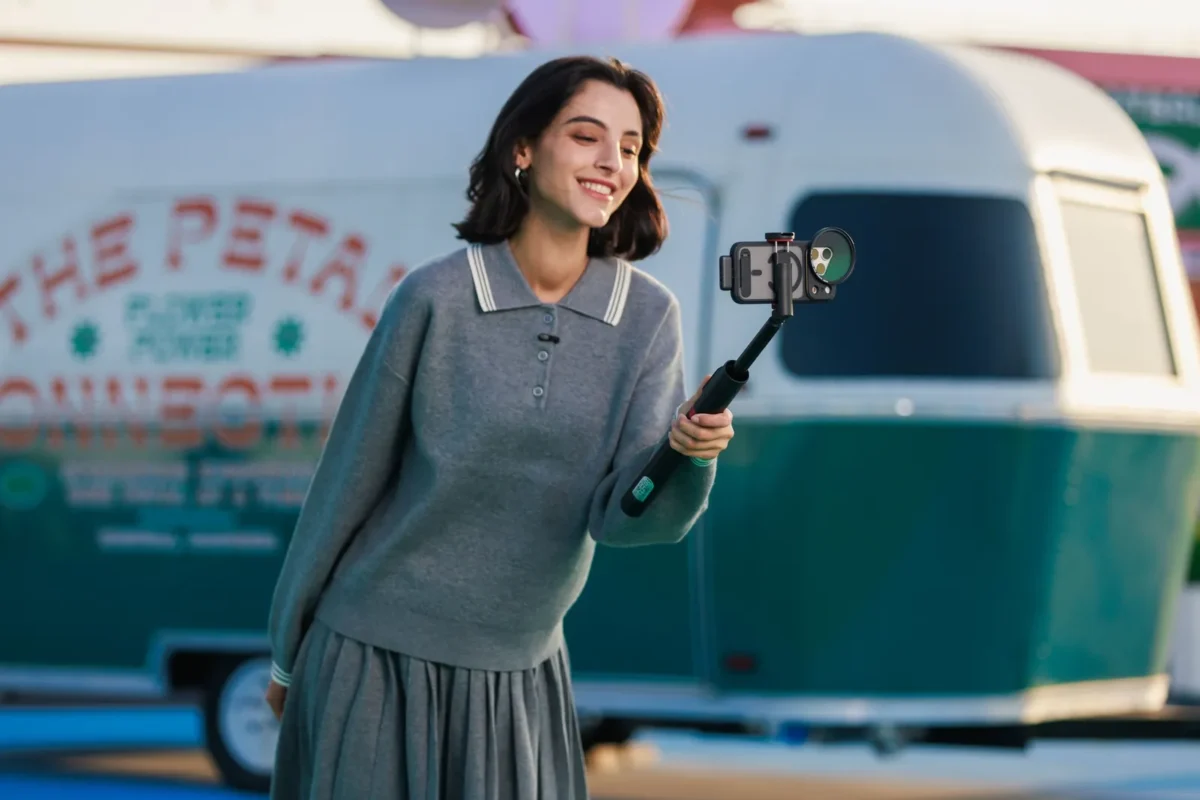
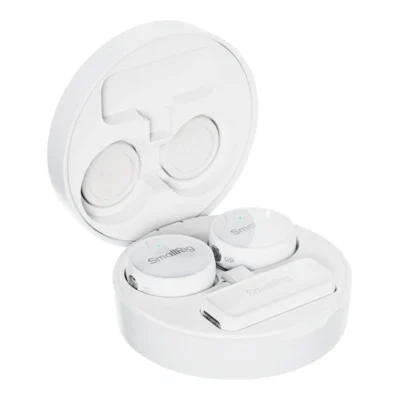
A wireless set has one or two transmitters and a receiver. The transmitter is the microphone. It is about the size of a matchbox or a button and clips or attaches magnetically to clothing. The receiver sits on the camera or in the phone and picks up the sound over radio.
A set with two transmitters lets you record two people at once, which is what you want for interviews and podcasts. You can often choose whether the voices go on separate channels or are mixed together.
Transmitters and receiver usually charge in a charging case that doubles as storage. A full case holds several charges, so the system lasts through a long shooting day.
The stated range assumes clear line of sight. Bodies, walls and cars dampen the radio signal, and in practice the range is shorter. If the person turns their back to the camera with the transmitter on their chest, the audio can start dropping out at a moderate distance.
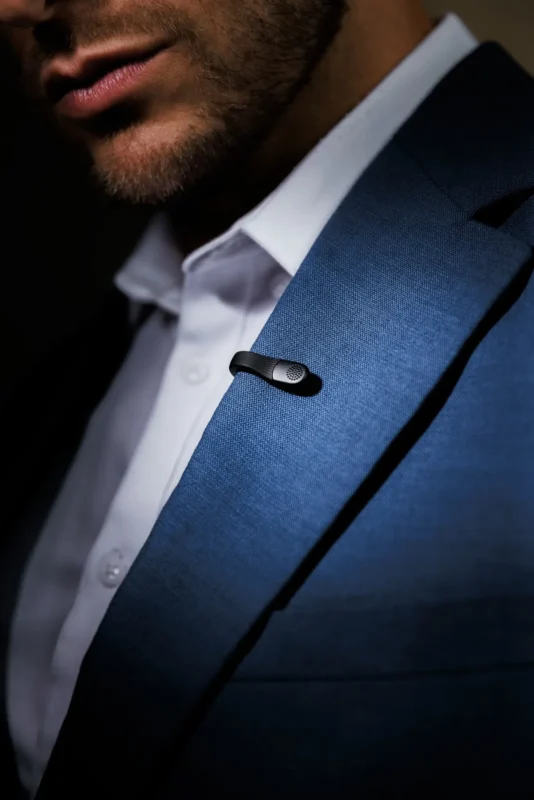
Where the microphone should sit
Place the transmitter in the middle of the chest, about a hand's width below the chin. Higher up, the voice gets boomy and every head turn is audible. Lower down, it gets thinner. If the mic sits on one side of the collar, put it on the side the person mostly turns towards.
Clothing is the most common sound that shouldn't be there. A transmitter rubbing against a jacket or a necklace causes rustle that is hard to remove afterwards. Listen on headphones for a moment before recording and ask the person to move a little.
To keep the mic as discreet as possible, a cover in the same colour as the clothes helps. Silicone covers in different colours also make it easier to tell the transmitters apart when recording two people.
Wind and rustle outdoors
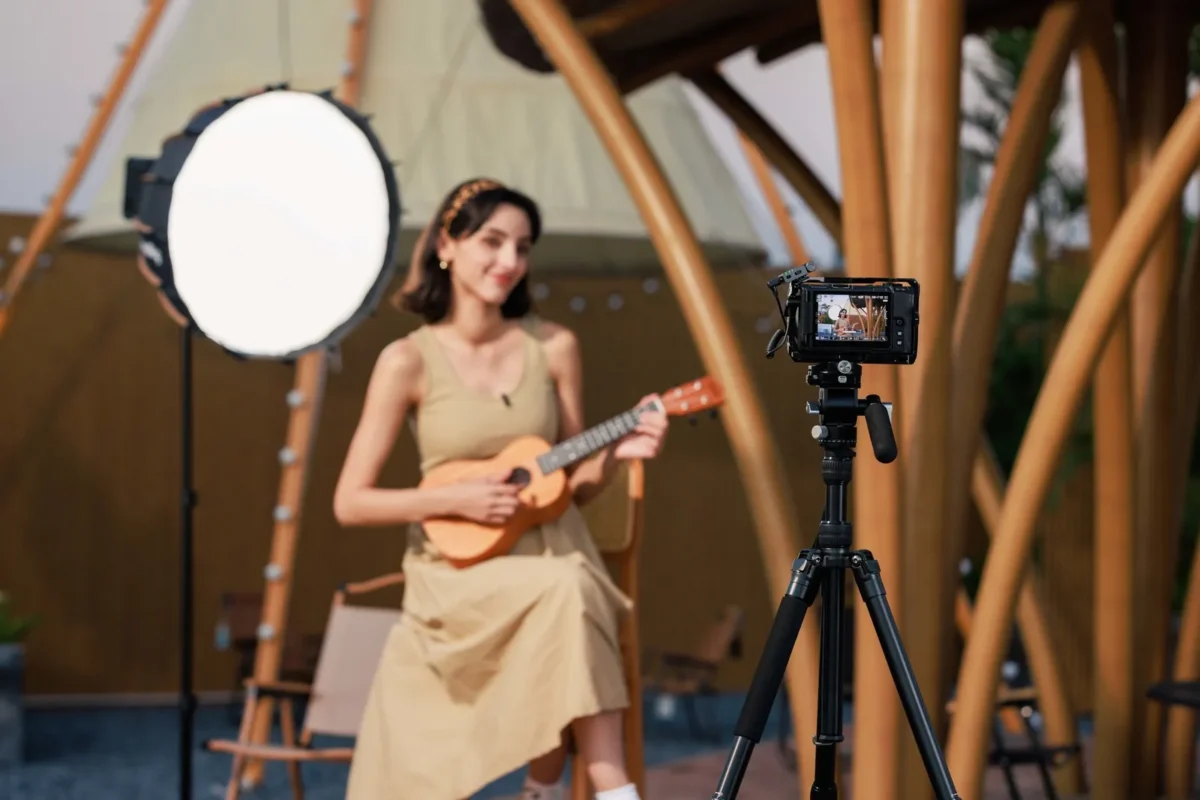
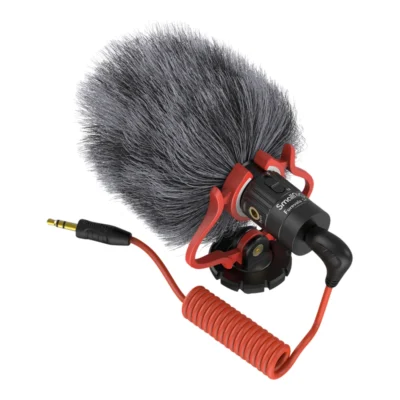
Even a light breeze on the microphone gives a low rumble that buries the voice. A foam windscreen is enough indoors and in still weather. Outdoors you need a furry windscreen, sometimes called a dead cat, pushed over the transmitter or microphone.
If the system has noise reduction, try recording with it on and off. It removes steady noise like fans and traffic, but can make the voice sound metallic if set too high.
Microphones on the camera
A camera microphone sits in the camera's shoe and plugs into the mic input. It usually has a directional pattern, cardioid or narrower, picking up most sound from the front and less from the sides and back. That helps, but it can't work miracles. Two metres from the speaker it sounds far more like the room than a transmitter on the collar.
So it works best when the camera is close, as in arm's-length vlogging, or when you want to capture ambient sound. A shock mount keeps handling noise and lens motor sound out.
For phone or camera
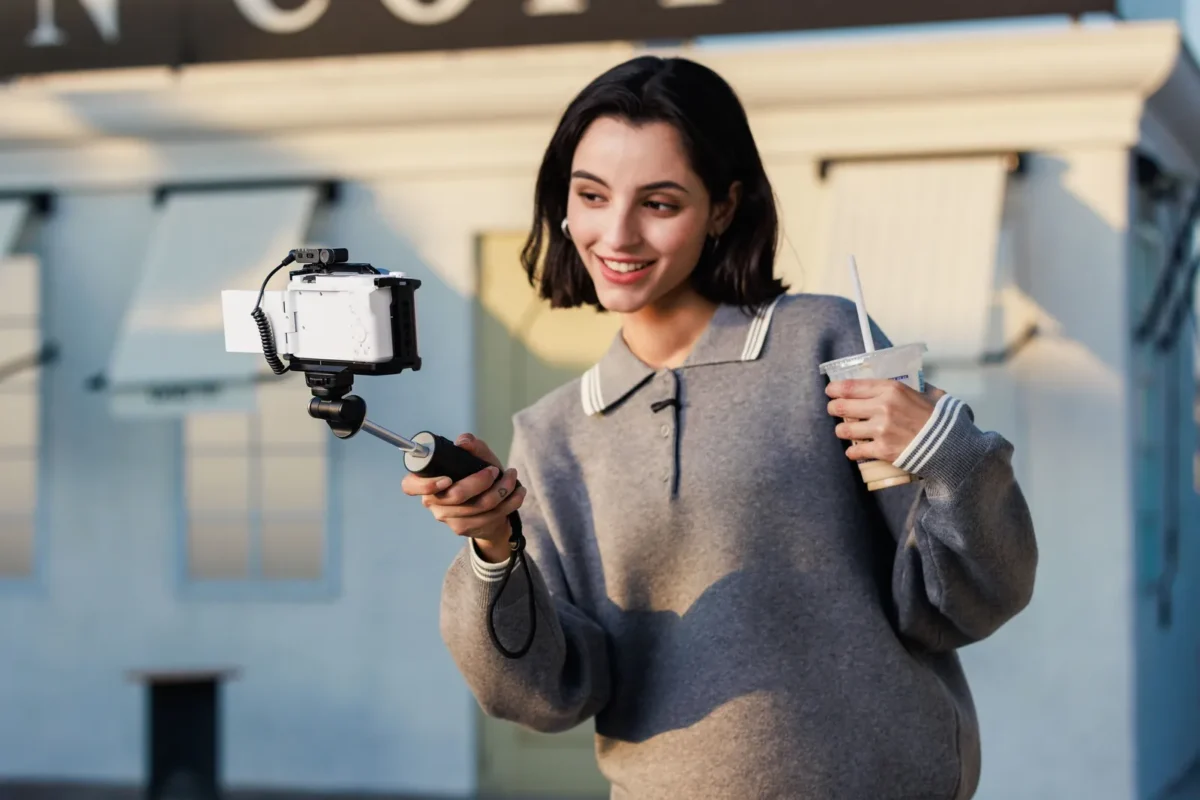
Check which output the receiver has. Cameras almost always use a 3.5 mm plug into the camera's mic input. For phones, the receiver plugs straight into the charging port, and most recent phones use USB-C. If one set has to serve both camera and phone, check that it has connections for both.
Some cameras have no microphone input, and then no external mic will help. That mainly applies to simpler compact cameras. Check your camera before you buy.
Levels and common mistakes
Turn off the camera's automatic level control if you can. It raises the noise when nobody speaks and lowers it when someone does, and the result pumps. Set the level manually so speech sits around minus 12 dB, leaving room for laughter and shouts.
The camera's own preamp is often noisier than the microphone's. So lower the camera's input level and raise the receiver's output instead for cleaner sound.
The most common mistake is simpler still: not listening. Wear headphones while recording. A loose cable or a flat transmitter is obvious within seconds in the headphones, and only discovered afterwards without them.
Frequently asked questions about microphones & audio
Which wireless microphone suits my camera?
A set with two transmitters and a receiver with a 3.5 mm output to the camera's mic input. That lets you record one or two people, with the mic always close to the mouth. Check that your camera has a microphone input.
Do wireless microphones work with a phone?
Yes, if the receiver has the right connector. Many sets include a receiver that plugs straight into the phone's USB-C port, and the phone then takes sound from the mic instead of its built-in one.
Is a wireless microphone better than an on-camera mic?
For speech almost always, because the transmitter sits close to the mouth however far away the camera is. An on-camera mic works well at arm's length and for ambient sound, but loses clarity quickly when the camera is further away.
How far does a wireless microphone reach?
The stated range assumes clear line of sight and is shorter in real life. Bodies, walls and cars dampen the signal. Keep transmitter and receiver within sight of each other if the audio starts dropping out.
Where should a lavalier mic go?
In the middle of the chest, about a hand's width below the chin, on the side the person mostly turns towards. Make sure it doesn't rub against clothes or jewellery, and listen on headphones before you start recording.