
















A filter changes the light before it reaches the sensor, in a way that is hard to recreate afterwards. ND filters give longer shutter speeds, polarising filters remove reflections from water and glass, and GND filters hold back a bright sky against a darker foreground. Round filters screw onto the lens and are bought by filter diameter, which is printed on the lens or its cap. Square filters sit in a holder and can be moved between lenses with adapter rings.


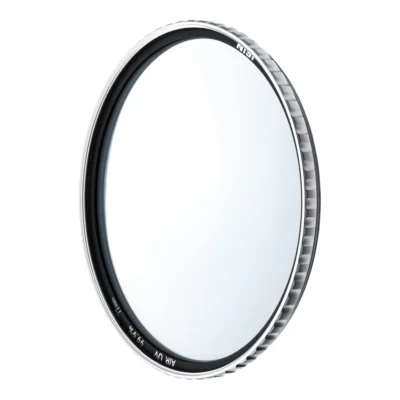
A filter changes the light before it reaches the sensor. Plenty can be adjusted later in editing, but a reflection in a shop window, a burnt-out sky or a waterfall that should have looked smooth can't be fixed there. That is why filters still earn a place in the camera bag.

The main filter types
Protection and UV filters
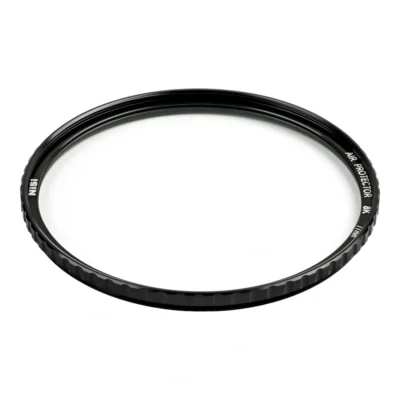
Clear glass that stays on the lens all the time. On a digital camera a UV filter and a clear protection filter do much the same job: they take the knocks, the sand and the fingerprints instead of the front element. The difference between the two is covered on the UV filter page.
Polarizing filters
The polarizer, usually called a CPL, is the filter that shows the clearest change right in the viewfinder. Turn it and watch reflections on water and glass disappear while a blue sky gets deeper. The effect is strongest with the sun at roughly a right angle to where you are shooting. It costs some light, so it doesn't stay on permanently.
ND filters
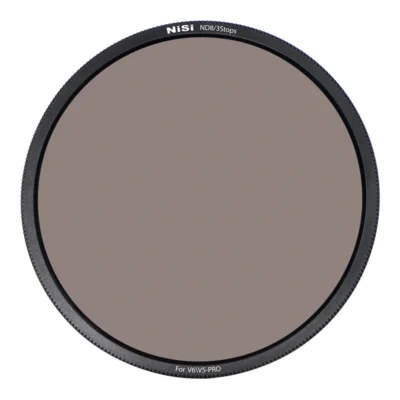
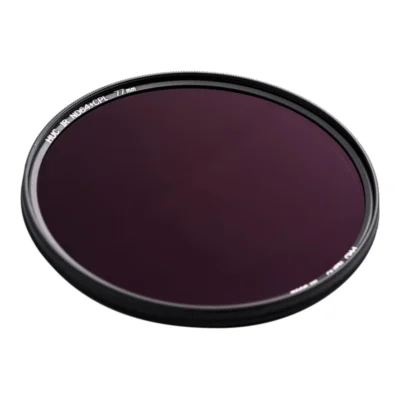
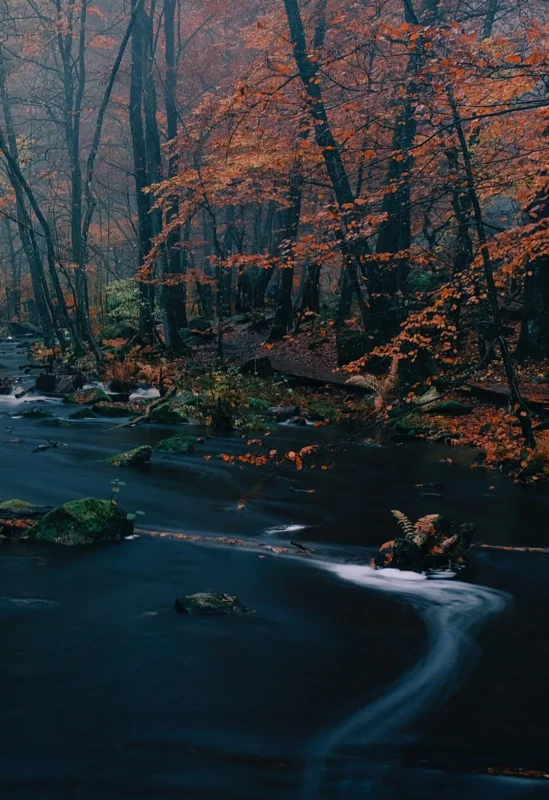
An ND filter is neutral grey and only makes the picture darker. Strength is given as ND8, ND64 or ND1000, which means 3, 6 and 10 stops less light. That lets you use a long shutter speed in daylight, so water turns smooth and clouds streak across the sky. Video shooters use ND to keep a normal shutter speed and a wide aperture in sunshine. A variable ND turns between two strengths and is the usual choice for filming.
Graduated ND filters
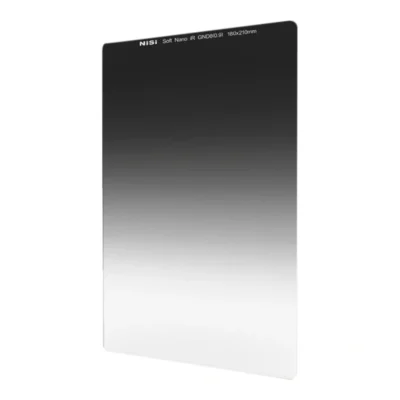
A GND filter is dark at the top and clear at the bottom. It evens out a bright sky against a darker foreground, which is the everyday problem of landscape work at sunrise and sunset. The transition can be soft, medium or hard. Most GND filters are square and sit in a holder, so you can slide the transition up or down until it lines up with the horizon.
Filters for night, soft looks and close-ups
Night filters
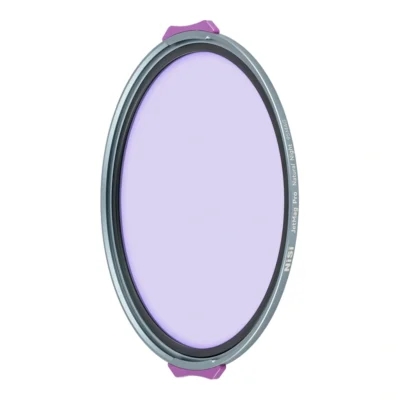
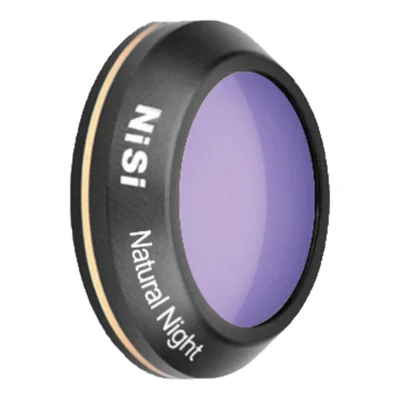
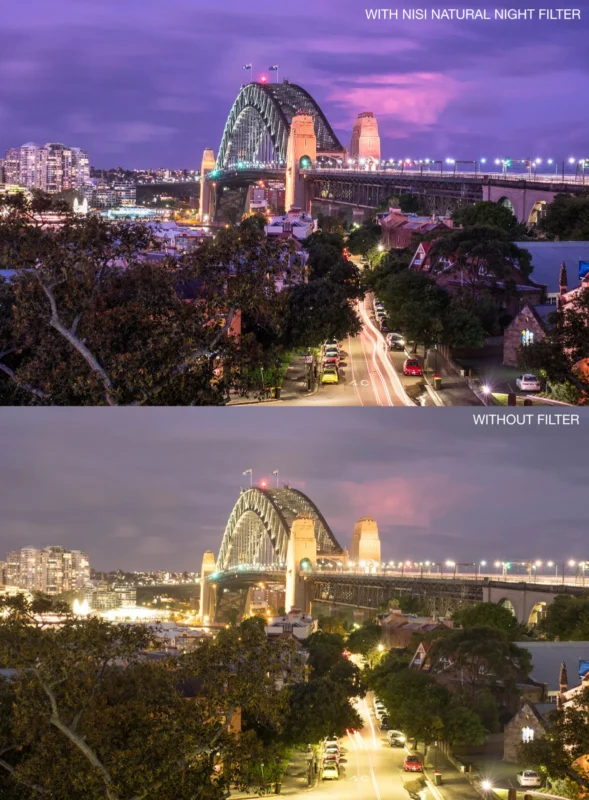
A night filter such as NiSi Natural Night cuts the yellow-orange light from street lighting. City shots at dusk and stars near built-up areas get more natural colours and less orange haze in the sky. It works best where the street lamps are still sodium lamps.
Soft and mist filters
Mist filters like Black Mist lower contrast in the highlights and put a soft glow around light sources. Video gets a more filmic feel and skin looks less harsh in portraits. Strength is given as a fraction, where 1/8 is subtle and higher values are obvious. This one is about taste, so start weak.
Close-up lenses
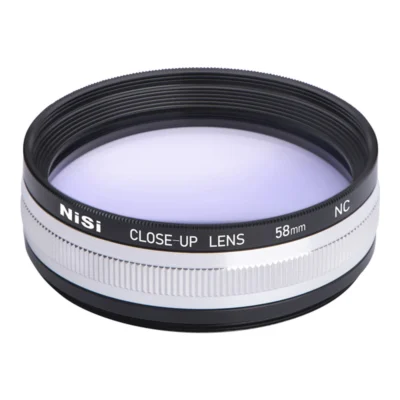
A close-up lens screws on like a filter but works like a magnifying glass. The lens can then focus closer, which gives you macro shots without buying a macro lens. Results are best on normal to telephoto lenses.
Round, magnetic or square filters

The classic round filter screws into the thread at the front of the lens. It is compact, survives a jacket pocket and fits exactly one thread size.
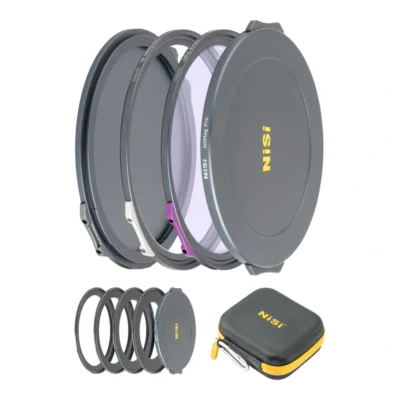
Magnetic filters, such as NiSi JetMag Pro and SmallRig MagEase, sit on a thin adapter ring that stays on the lens. The filter clicks onto the ring and comes off in one move. You notice the gain when you swap filters often, wear gloves or stand in wind. JetMag Pro also has a lock that keeps the filters in place when several are stacked.
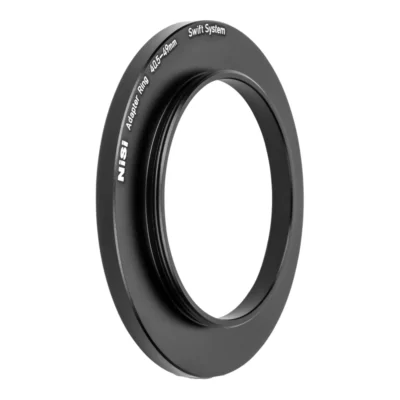
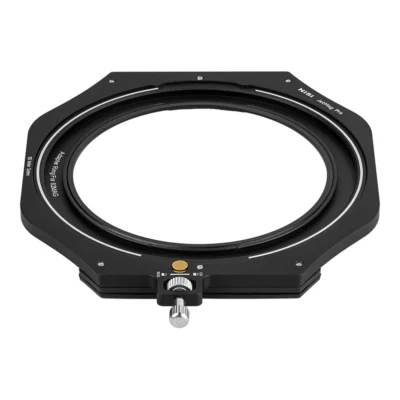
Square filters go in a filter holder that mounts with an adapter ring. Systems come in 75, 100, 150 and 180 mm widths. 100 mm is the most common, and the larger ones are made for wide-angle lenses with a bulging front element. A holder system costs more to start with. In return you can combine polarizer, ND and GND freely and move the same filters between lenses with different threads. How holders and adapter rings fit together is explained under Filter holders and adapters.
Filters for phones, action cameras and drones
Small cameras have the same problems as big ones: too much light for a calm shutter speed, reflections on water and a sky that goes white. Most of them also have a fixed aperture, so an ND filter is often the only way to bring the shutter speed down in bright sun.
These filters are built for one camera or one mount. Phones use clips, cases and rigs with a filter mount. Action camera and drone filters are made for the exact model, and drone filters are kept light so the gimbal isn't strained. Always check which model and generation a filter is made for.
Getting the size right and stacking filters

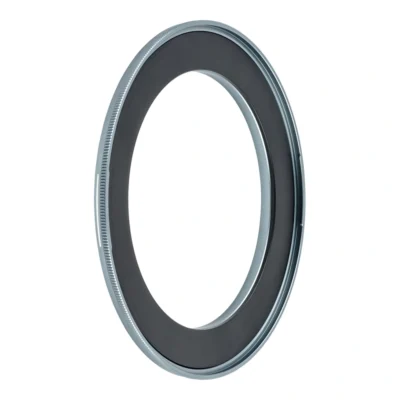
The thread size is marked on the lens after the ø symbol, and a round filter has to match it exactly. With several lenses of different sizes you can buy filters for the largest one and put a step-up ring on the smaller lenses. That works well for polarizers and ND filters, which get moved around anyway.
Two or three filters on top of each other is fine, for example ND plus polarizer. Every extra glass adds surfaces that can reflect, and on a wide angle the stacked frames can show as dark corners. So take the protection filter off before putting something else on.
Glass, coatings and care

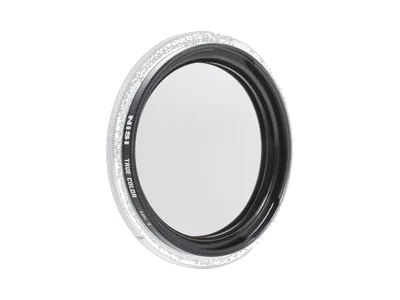
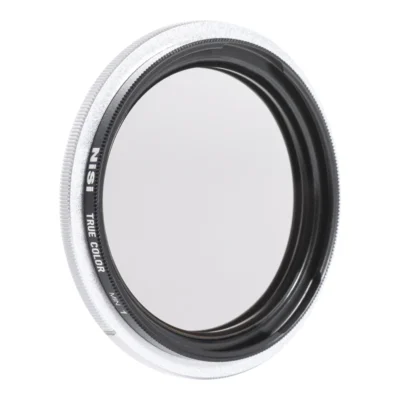
A filter is only as good as its glass. Cheap glass with weak coatings lowers contrast and causes ghosting into the light, and strong ND filters and polarizers can push the image towards blue or green. Brands such as NiSi and ZEISS put a lot of work into colour neutrality, and at NiSi that line is called True Color. A water and oil repellent coating makes rain bead up and lets fingerprints wipe off with a cloth.
Blow sand away before you wipe, or you will scratch the coating. Keep filters in a filter pouch or the kit's case rather than loose in the bag. A scratched filter can be replaced, but it hurts when it's an expensive polarizer.
Frequently asked questions about filters
Which filter should I buy first?
For most people a polarizer makes the biggest visible difference, especially for landscapes, water and sky. If protecting the front element is the main goal, a protection or UV filter is the better first buy. ND filters usually come second or third, once you want long exposures or to film in sunshine.
Does a digital camera need filters?
No filter is required, but some effects can't be created afterwards. A polarizer removes reflections, and editing can't bring back the detail hidden behind them; an ND filter gives a long shutter speed in daylight. Colour filters for black and white or for correcting colour temperature are rarely needed with digital.
What is the difference between round and square filters?
Round filters screw or attach magnetically straight onto the lens and are compact. Square filters sit in a filter holder, which lets you move the transition of a graduated filter and combine several filters freely. The holder system is bulkier but fits several lenses through different adapter rings.
Can I use the same filter on several lenses?
Yes, if you buy the filter in your largest thread size and use step-up rings on the lenses with smaller threads. Magnetic systems and filter holders work the same way, with one adapter ring per lens. A protection filter that stays on all the time is easiest to have one of per lens.
Which filters do I need for landscape photography?
A common starting set is a polarizer, a 6 or 10 stop ND filter and a graduated ND for the sky. Many landscape photographers use square filters in a holder to place the transition exactly. Ready-made filter kits often contain exactly that combination.