
















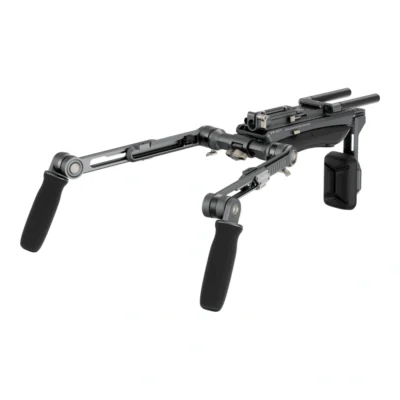
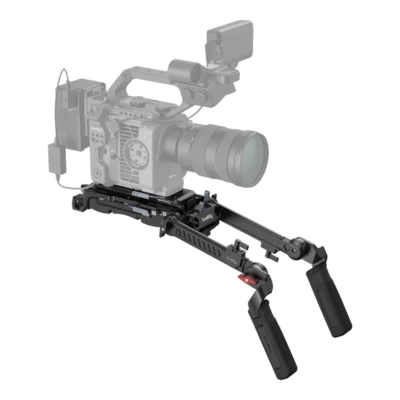
A shoulder rig puts the weight of the camera on your shoulder and gives you two handles in front of the body, which makes it easier to film steadily for a long time. The rig is built on rods that also carry the follow focus, monitor and battery. Start with a baseplate that fits your camera and build out with a shoulder pad, handles and rods of the right length. A ready kit gathers the parts in one purchase.
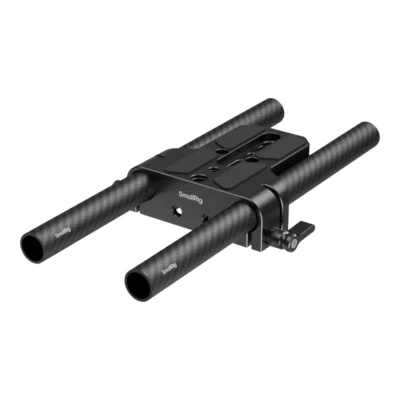
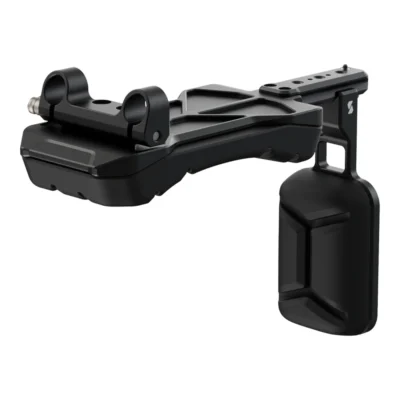
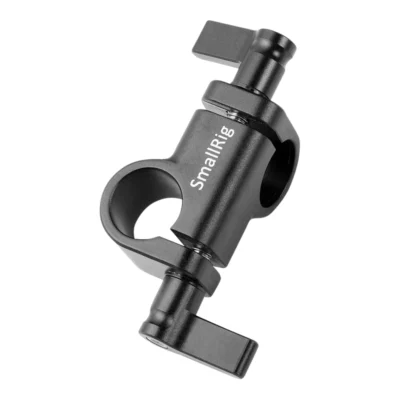

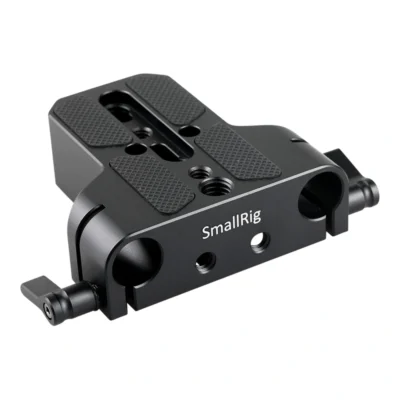


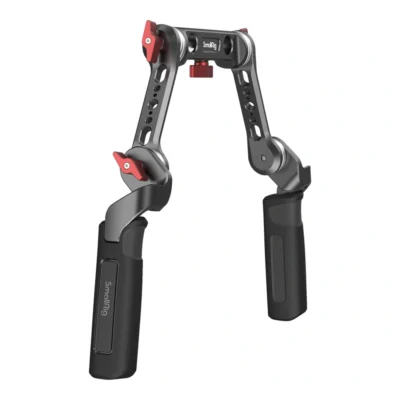
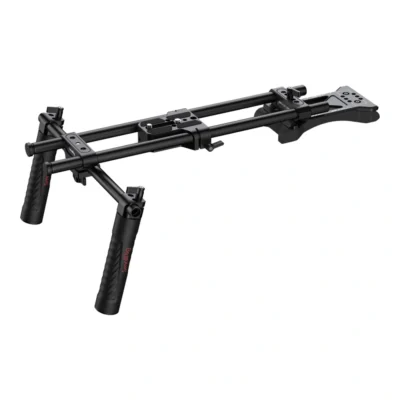
A shoulder rig is not a stabiliser in the way a gimbal is. The picture still moves with you. The difference is that the movement becomes calm and human instead of shaky, and that you can keep filming for an hour without your arms giving up.
When a shoulder rig is worth it

The shoulder rig belongs where you stand still or move a little for a long time. Interviews, talks, weddings, events and documentaries are typical. The camera is ready all the time, and you can follow what happens without setting up a tripod.
A gimbal gives smoother movement when you walk and run, but it is heavier to hold out in front of you and takes time to balance. For short handheld clips, a cage with a good handle is enough. The shoulder rig fills the gap between the two.
With a light mirrorless camera, the rig often ends up weighing more than the camera. That is the point. The mass means small jolts from your hands show less in the picture.
When you walk with the rig, technique matters as much as the gear. Walk with slightly bent knees and short steps, and let your upper body move rather than your arms. With a wide lens your steps barely show. With a telephoto everything shows, and standing still is the better option.
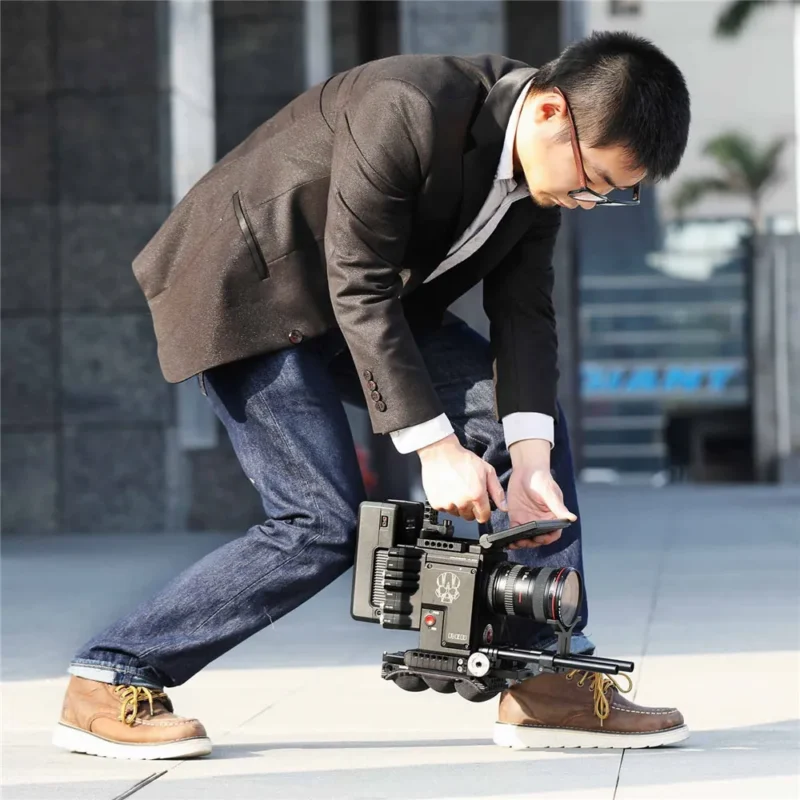
The parts of a shoulder rig
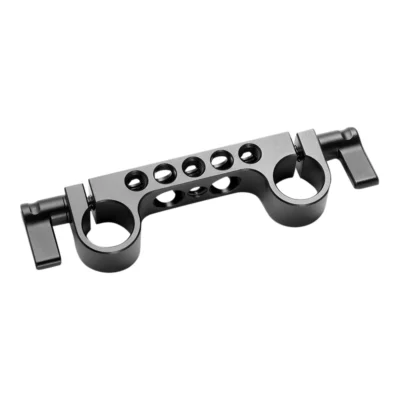
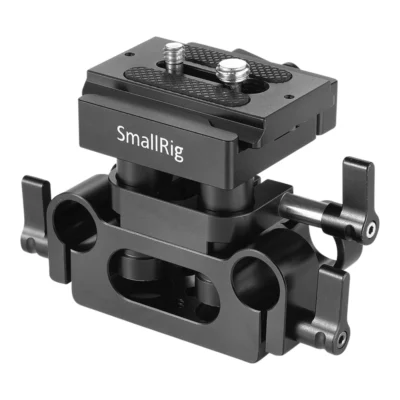
Almost every shoulder rig is built on two rods, 15 mm thick and 60 mm apart. Follow focus units, matte boxes and battery plates use the same system, so parts move between rigs.
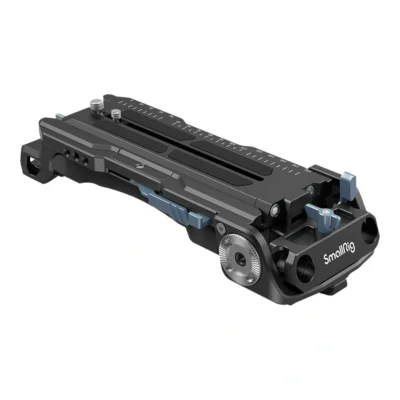
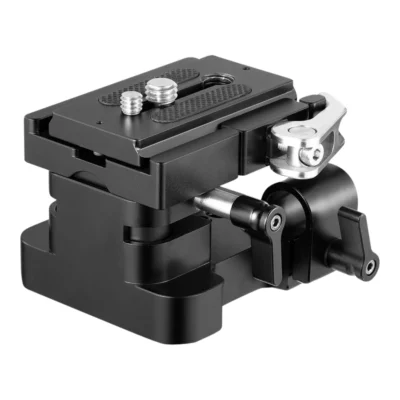
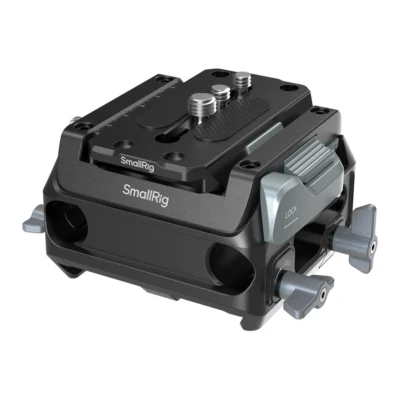
- A base plate with a rod clamp. It holds the camera or cage and grips the rods. Many have a quick release plate so the camera lifts off.
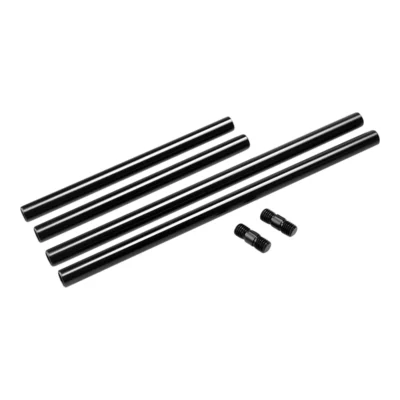
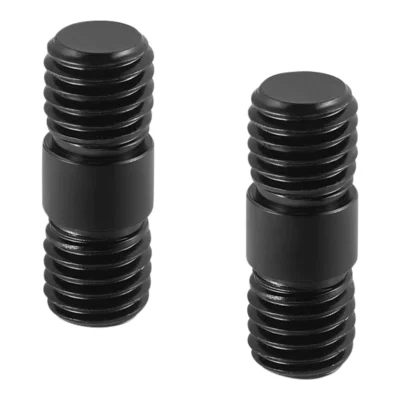
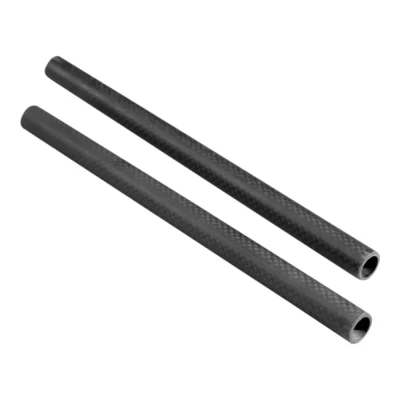
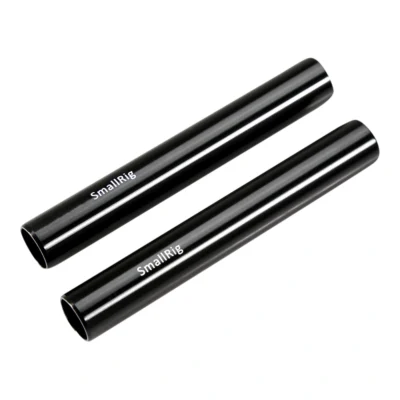
- Rods in different lengths, from a couple of decimetres up to around 40 cm. A connector joins two rods into one.
- A shoulder pad. A padded plate that rests on your shoulder and clamps onto the rods.
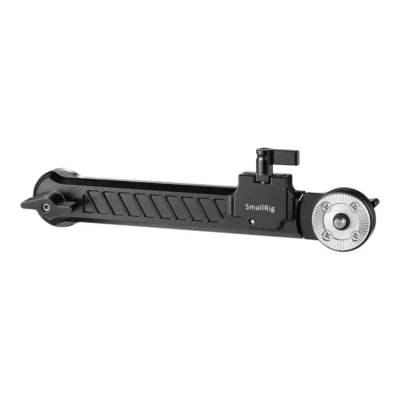
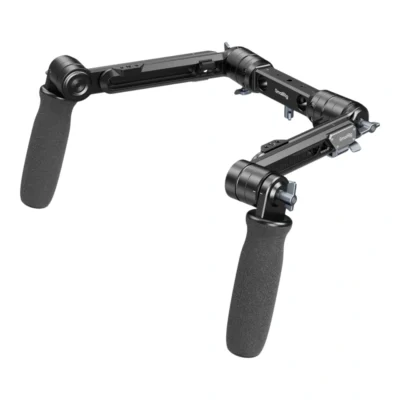
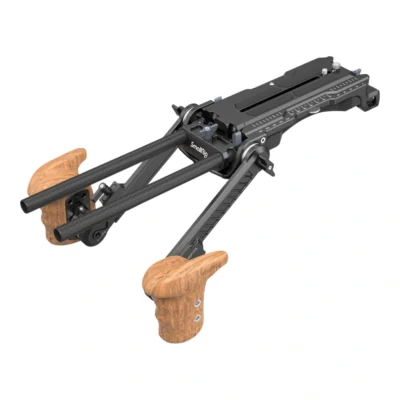
- Handles. Usually two, on an arm in front of you. Many attach with an ARRI rosette, a toothed disc that locks the angle.
- Rod caps, which cover sharp ends and stop parts from sliding off.
Balance is everything
A shoulder rig that is front-heavy wears out your arms, and then the whole point is gone. The goal is to get the rig's centre of gravity roughly above your shoulder, so it almost stands by itself and your hands only steer.
There are three ways to get there. Slide the camera back on the rods. Move the shoulder pad forward. Or add weight behind the shoulder, ideally a V-mount battery that has to power the monitor and camera anyway. The battery then becomes a counterweight that earns its place.
The screen sometimes gets in the way. When the camera sits far back for the balance to work, its own screen ends up too close to your eye or behind your head. An external monitor on an arm in front of you solves that, and it is why most shoulder rigs get a monitor sooner or later.
Ready-made kit or your own build
A shoulder rig kit has a base plate, rods, shoulder pad and handles made to work together. It is the easiest route, and SmallRig makes both universal kits and kits for specific cinema cameras from Sony, Canon and Blackmagic. A kit for one camera fits closer around the body, while a universal kit comes along when you change cameras.
Building your own takes longer but does not have to cost more. If you already own a cage, rods or rosette handles, buy only the parts that are missing. Check that the rod spacing is 60 mm on everything you buy.
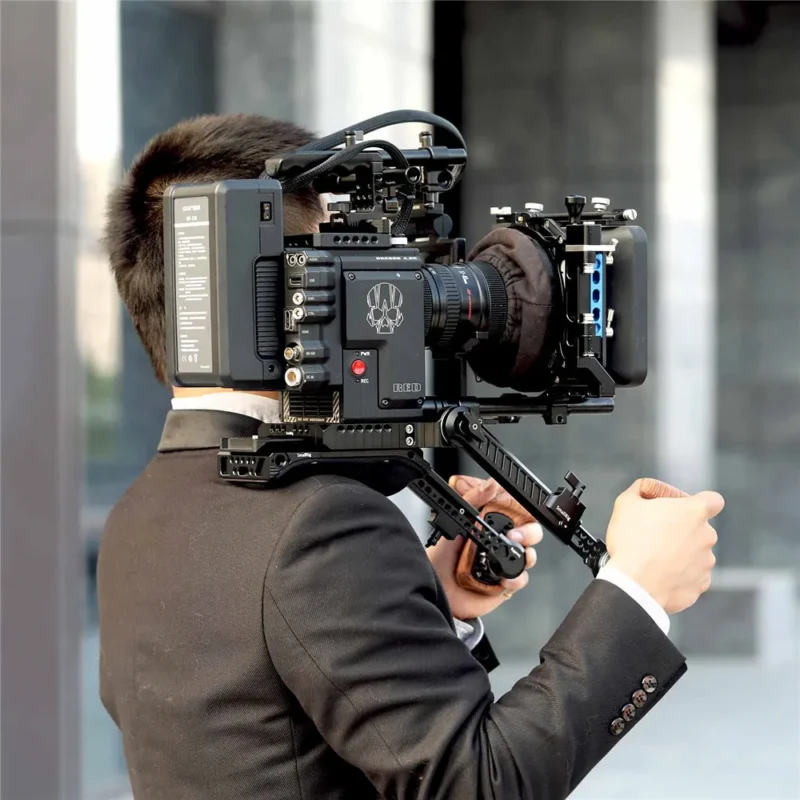
Building out on the rods
The rods are also where the next upgrades go. A follow focus clamps on beside the lens, a matte box at the very front and a battery plate at the back. You can read more about those parts under rig accessories.
Think about length. Short rods keep the rig compact but leave no room for a matte box. Long rods at the front give room but shift the weight forward again. Start with the length you need today and buy longer rods when the rig grows.
Common mistakes
Rosettes that do not mesh properly slip under load. The teeth should sit fully against each other before you tighten.
Rod clamps loosen over time. Check them before every shoot, especially after the rig has travelled in a car or a bag.
Handles often end up too far forward. With your arms almost straight you tire quickly. Pull the handles in until your elbows are bent and close to your body.
If you often move the camera between the shoulder rig and a tripod, a quick release plate under the camera pays off. A Manfrotto-type base plate goes straight into the video heads that take that plate. Otherwise half the break goes to screwing.
Frequently asked questions about shoulder rigs
What is a shoulder rig?
A shoulder rig is a camera rig that rests on your shoulder and is steered with handles in front of you. It is built on two 15 mm rods with a base plate, shoulder pad and handles. It makes steady handheld filming over long periods much easier.
Shoulder rig or gimbal, which should I choose?
A gimbal gives the smoothest picture when you walk or run. A shoulder rig suits long takes in roughly the same place, like interviews and events. It is also quicker to get going with, since there is no electronic balancing.
How do I balance a shoulder rig?
The centre of gravity should sit roughly above your shoulder. Slide the camera back, move the shoulder pad forward or add a counterweight, ideally a battery, behind the shoulder. The rig should almost stand on its own so your hands only steer.
Which rods fit a shoulder rig?
Most shoulder rigs use 15 mm rods spaced 60 mm apart. Pick the length for what has to go on the rods, and two rods can be joined. Check that every clamp is made for the same rod spacing.
Does a shoulder rig work with a small mirrorless camera?
Yes. The camera goes on a base plate or in a cage on the rods. With a light camera you often need a counterweight at the back for the rig to balance on your shoulder.