










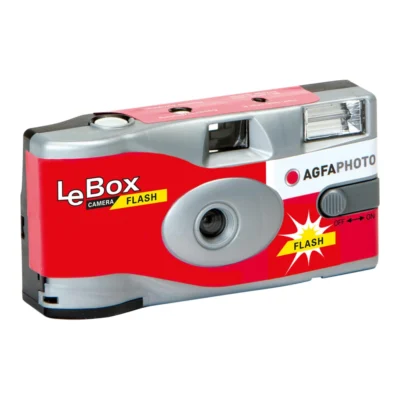






Here you will find analogue cameras that you load with film yourself and use again and again. Most take ordinary 35 mm film, and a half-frame camera gives twice as many shots per roll because each picture only uses half the frame. An instant camera instead gives you the picture straight away on its own photo paper, so check which paper it uses. Compare whether the camera has a flash, how the viewfinder and focusing work and which battery it needs. If you would rather have film and camera in one and hand in the whole camera for developing, disposable cameras have their own category.

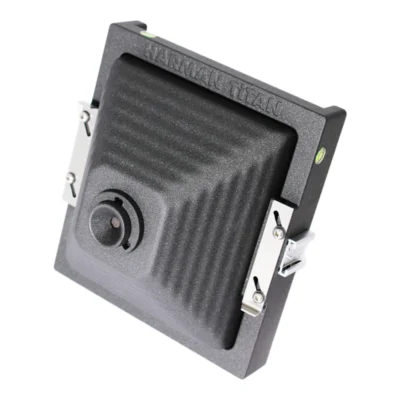
The cameras here are new, simple and made to be used for years. None of them are system cameras with interchangeable lenses. Most are compact film cameras from Kodak and AgfaPhoto, joined by a pinhole camera from Ilford and instant cameras that print the picture on the spot.
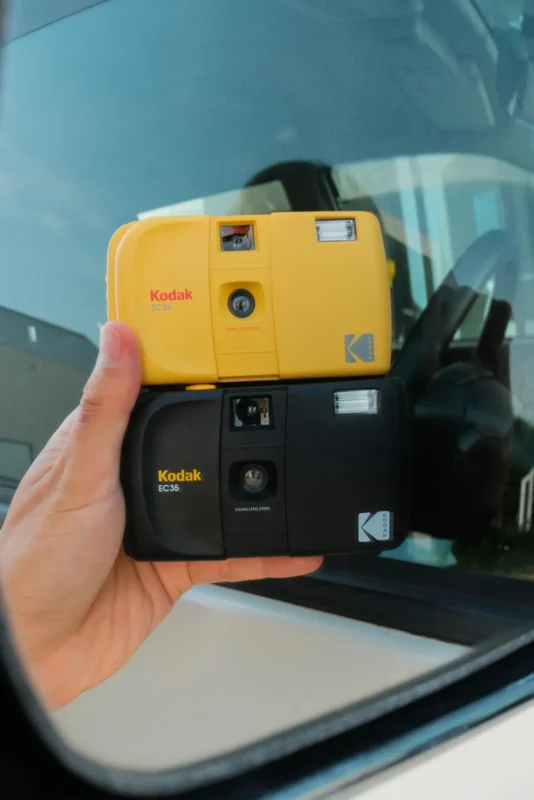
Simple reusable camera
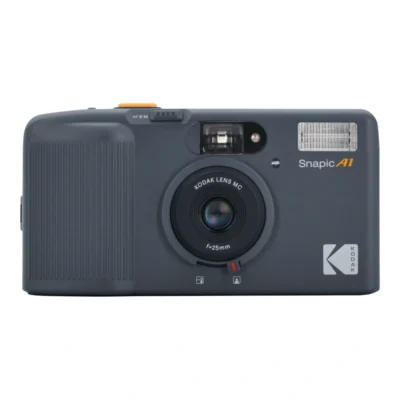
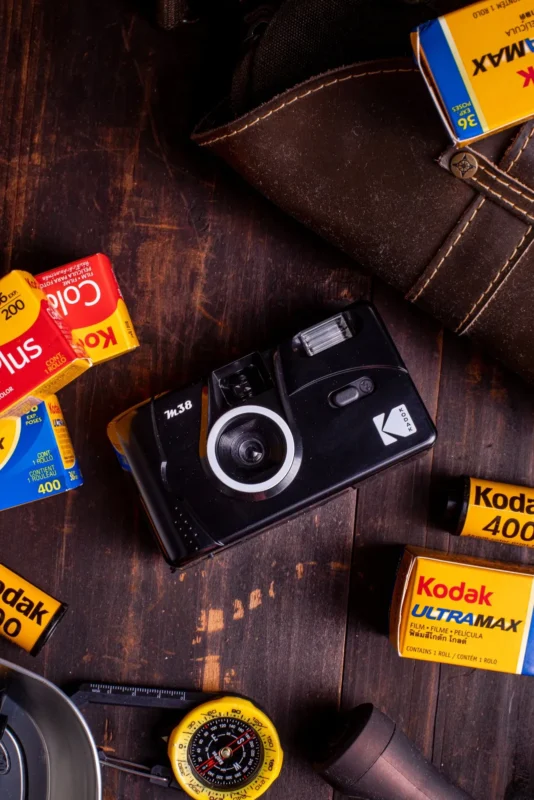
The simplest type is built like a disposable camera, but with a door for the film. The lens has fixed focus and a fixed aperture, and the shutter has one speed. You wind on by hand after each shot and rewind the film yourself when the roll is finished.
It works best in daylight, and with flash indoors. Since the camera cannot change exposure, the film carries the result. An ISO 400 colour negative is the safe pick, as it copes with both sun and cloud. ISO 400 black and white works just as well.
The lenses on these cameras are usually wide, around 25 to 31 mm. Step a little closer to your subject than you think, but not closer than roughly a metre.
The flash is switched on with a button or a ring around the lens. Turn it off outdoors in daylight and the battery lasts longer.
Zone focus and motor drive
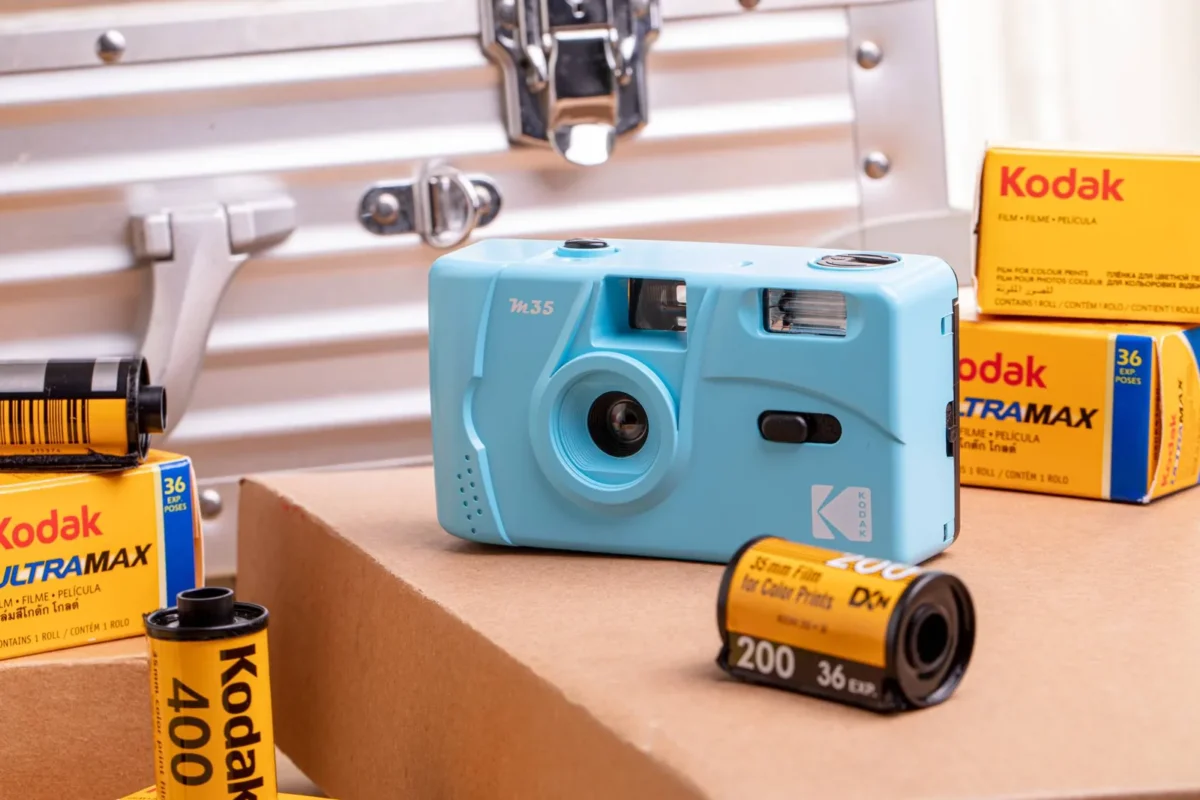
One step up are cameras with a glass lens, motorised film advance and a digital frame counter. Some have two focus settings: one for close shots at half a metre to a metre and a half, and one for everything further away. Portraits and pictures across a table come out much sharper than with fixed focus.
The motor also rewinds the film automatically at the end of the roll, so there is less risk of someone opening the back too early. A few models can make double exposures, two pictures on one frame.
The cost of convenience is batteries. Check which type the camera takes and bring a spare on a trip. Several of these cameras run on ordinary AA or AAA batteries, sold separately.
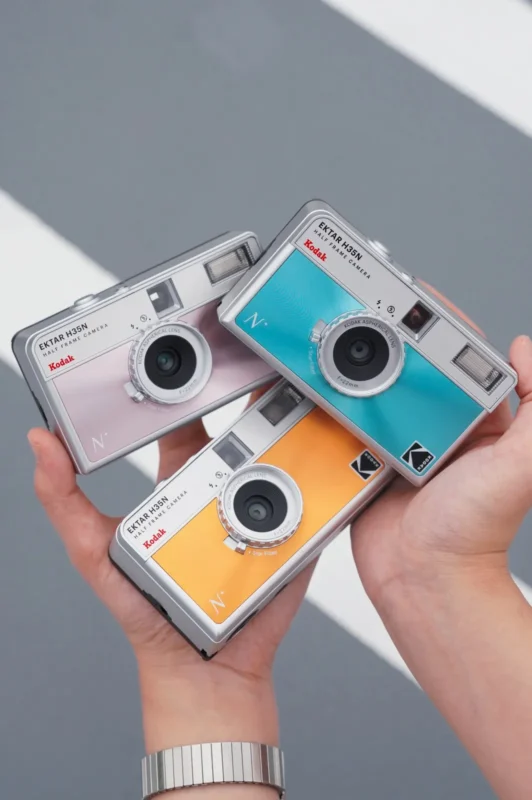
Half-frame camera
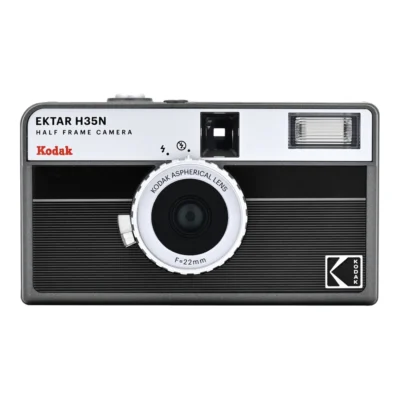
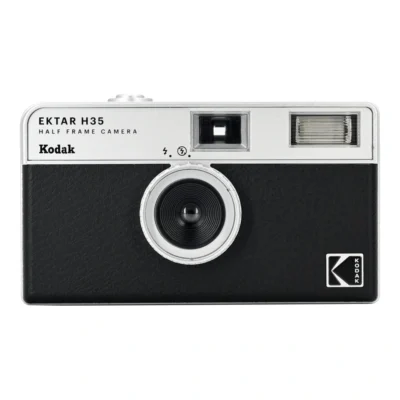
A half-frame camera fits two pictures where a normal camera fits one. A 36-exposure roll gives about 72 frames, and a 24-exposure roll about 48. Kodak's Ektar cameras work this way.
The frame sits upright on the film. Hold the camera normally and you get a vertical picture, which the viewfinder shows. Turn the camera for a horizontal one. It takes a few rolls to get used to.
The negatives are smaller, so the pictures will not enlarge as far as a full 35 mm frame. For screens and standard prints it is plenty. Tell the lab the film is half-frame when you drop it off, or the scans may come back with two pictures per file.
Some half-frame cameras add a bulb mode for long exposures, a tripod socket and a built-in star filter. Check the product page if you want to shoot at night.
Pinhole camera for sheet film and paper
A pinhole camera has no lens at all. Light passes through a tiny hole and draws the image on film or paper. Sharpness is soft but depth of field is almost endless, and exposures are measured in seconds or minutes, so you need a tripod or a steady surface.
Ilford's pinhole camera takes 4x5 inch sheets, either sheet film or direct positive paper that gives a finished picture with no negative. The kit includes an exposure calculator to help you work out the time. Each sheet is loaded in the dark, so you need a changing bag or a dark room, and both paper and film are developed in black and white chemistry.
Instant camera that prints on the spot
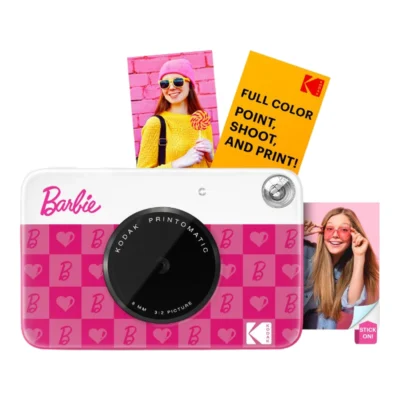
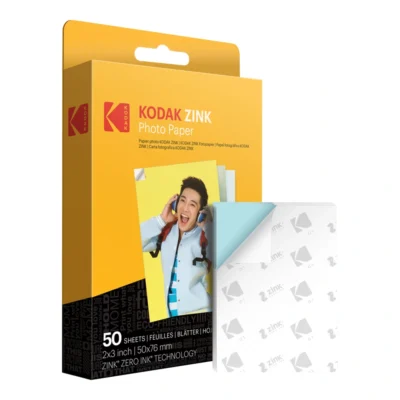
Kodak's Printomatic cameras are digital inside. A sensor takes the picture and a printer in the camera puts it on Zink paper, with no ink and no developing. The print comes out a few seconds later at 2x3 inches, about 5x7.6 cm, with a sticky back.
The camera only takes Zink paper in the right size, so buy paper along with the camera. Pictures can also be saved to a microSD card. Colours are softer than on a regular photo print. It suits children's parties, guest books and journals better than big framed prints.
Loading and unloading film
Load film in the shade, not in direct sun. Pull the film leader across to the take-up spool, close the back and wind on a few blank frames until the counter reads one. If the camera has a rewind knob, it should turn as you wind on. That tells you the film has caught.
The most common mistake is opening the back before the film is rewound. Light then ruins the last pictures on the roll. On manual cameras, keep rewinding until you feel the film come free of the spool.
Take the battery out if the camera will sit unused for a long time, and do not leave a half-shot roll inside it in a hot car.
Frequently asked questions about cameras
What is a reusable film camera?
A reusable camera is a simple film camera that you load with ordinary 35 mm film and use again after each roll. You rewind and remove the film yourself and only hand in the roll for developing. It is as easy to use as a disposable camera.
Which film fits an analogue compact camera?
Most take ordinary 35 mm film, also called 135. In a camera with a fixed shutter speed and aperture, ISO 400 is the safest choice, in colour or black and white. Check the product page to confirm the camera takes 135 film.
How many pictures does a half-frame camera give?
Roughly twice the number on the box. A 36-exposure roll gives about 72 pictures and a 24-exposure roll about 48. Tell the lab the film was shot half-frame.
Does the Kodak Printomatic need film?
No. The Printomatic prints on 2x3 inch Zink paper, with no ink and no film. Pictures can also be saved to a microSD card. Use only paper in the size the camera takes.
What if I open the camera with film inside?
Close the back straight away. The frames nearest the opening are lost to light, but film already wound tightly on the spool or in the cassette often survives. Rewind and hand the roll in as usual.