
















Black and white film is easy to develop at home and tolerates both over and underexposure. The film speed guides the choice: low ISO gives fine grain and suits good light, while high ISO copes with indoors and dusk but gives coarser grain. Choose the format by your camera: 35 mm, medium format or sheet film.
Read more about black & white film
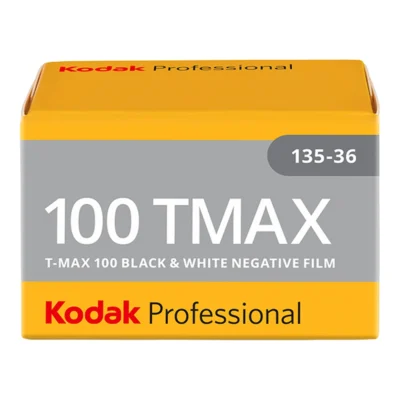
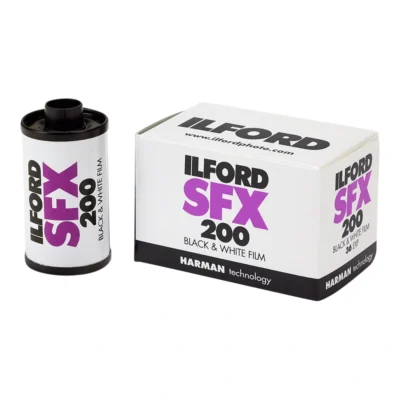
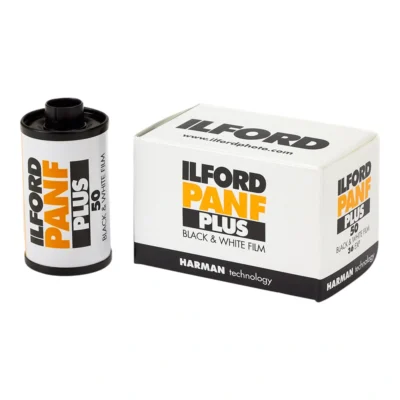


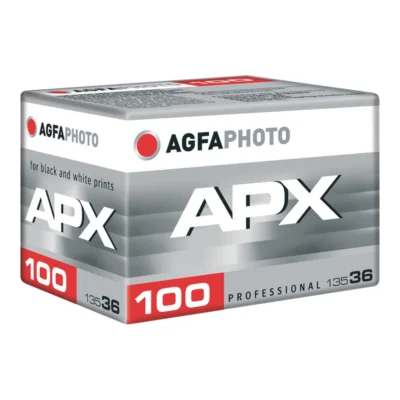

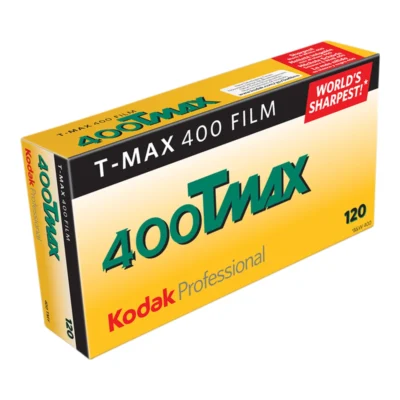
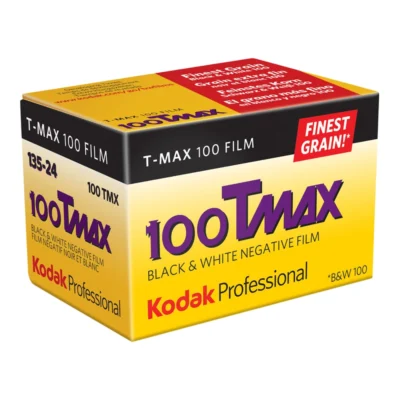

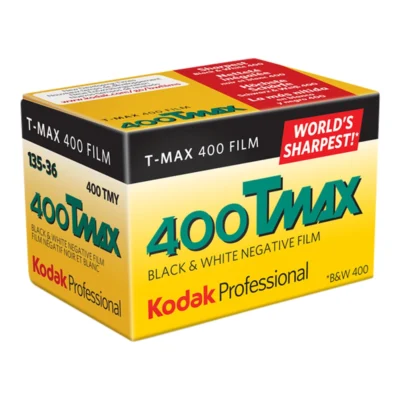
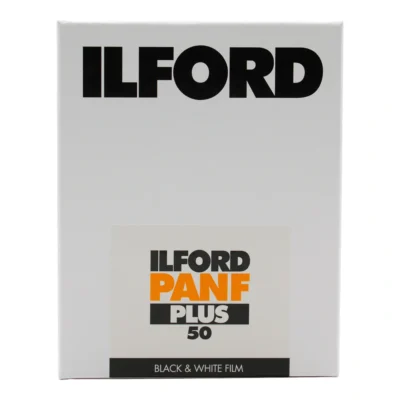


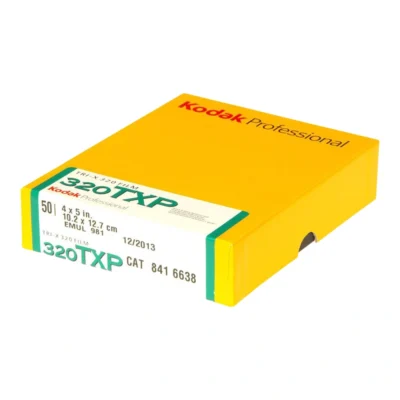
Our black and white film comes from Ilford, Kentmere, Kodak and AgfaPhoto. These are brands with a long history, and several of the films have stayed much the same for decades. That makes it easy to find development times and other people's experience with the exact film you pick.
Classic black and white or C-41 black and white
Ordinary black and white film builds its image from silver. It is developed in black and white chemistry, either at home in a tank or at a lab that offers black and white processing. Not every lab does, and then the film is sent on.
Ilford XP2 is the exception. It is black and white but made for the colour process C-41, so any lab can handle it. The image is formed by dyes instead of silver, which gives very fine grain and smooth tones, and it copes with a wide range of exposure. It is designed for C-41 and should be processed there, not in standard black and white chemistry.
If you plan to develop yourself, choose a classic film. If you just want to drop off the roll without asking the lab first, C-41 black and white is the easier route.
Speed, grain and push processing
Black and white film runs from ISO 50 to 3200. The lower the number, the finer the grain and the more light it needs. An ISO 50 film wants sun or a tripod. An ISO 3200 film handles a concert or a street at night, with visible grain as part of the look.
| ISO | Typical use | Grain |
|---|---|---|
| 50 to 80 | Landscape and architecture in good light, tripod | Very fine |
| 100 to 125 | Daylight, portraits, large prints | Fine |
| 200 | Daylight with some margin | Fine to medium |
| 400 | All-round, street, overcast days, indoors by a window | Visible but soft |
| 3200 | Evenings, concerts, indoors without flash | Coarse |
An ISO 400 film can be pushed. You shoot the whole roll as if it were ISO 800 or 1600 and then extend the development time. Contrast goes up and shadows get thinner, but you get pictures where it would otherwise have been too dark. The whole roll has to be shot the same way, since it is developed in one go.
Traditional grain or T-grain
Ilford HP5 and FP4, Kodak Tri-X and the Kentmere films have traditional grain. It is soft and slightly irregular, it forgives small variations in development, and it looks good in most developers. Tri-X and HP5 are among the most widely used black and white films there are.
Ilford Delta and Kodak T-Max use flat crystals, often called T-grain. You get sharper detail and finer grain at the same speed. They are more sensitive to temperature and time in the developer, though, so follow the data sheet closely.
Kentmere is made by the same company as Ilford and is the budget choice. It is a good film for practising development and for test rolls in a camera you have just bought.
Special films for a different look
Most black and white films are panchromatic. They react to all colours and render them as greys roughly the way the eye judges brightness.
Ilford Ortho Plus is orthochromatic and blind to red. Red lips and brick go dark, skies go light. Because it cannot see red it can be developed under a red safelight, which is why some people use it to watch the negative appear.
Ilford SFX has extended red sensitivity up to about 740 nm. With a deep red filter on the lens, foliage turns light and the sky close to black, an effect that resembles infrared. Expect long exposures with the filter in place.
Filters for black and white film
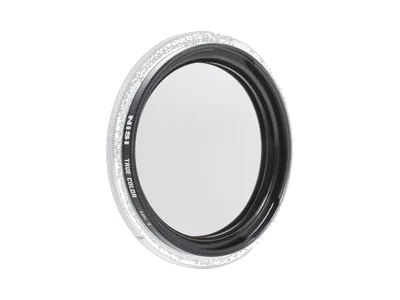
Colour filters work differently on black and white film. A filter passes its own colour and holds back the opposite one. A yellow filter darkens the sky a little so the clouds stand out. Orange makes it stronger, and a red filter gives a dramatic, almost black sky. A green filter lightens foliage and can even out skin tones.
Every colour filter costs light. Cameras that meter through the lens account for it; otherwise compensate using the filter factor. A polarizer works as usual and also darkens the sky.
Rolls, sheets and bulk film
Black and white film comes in 135 with 24 or 36 exposures, in 120 for medium format and as sheet film in several sizes. Several films are also sold as 30.5 metre bulk rolls. You load these yourself into empty cassettes with a bulk loader, which lowers the cost per roll and lets you make short rolls for tests.
We suggest ordinary 36-exposure rolls until you know you like a film. Bulk only pays off when you shoot the same film often. If you develop yourself, tanks and chemistry are in the chemicals and darkroom equipment categories.
Frequently asked questions about black & white film
Which black and white film is best for beginners?
An ISO 400 film with traditional grain, such as Ilford HP5, Kodak Tri-X or Kentmere 400, is the easiest to get right. It copes with changing light and forgives small development errors. If you want any lab to process it, Ilford XP2 is an alternative.
Can every lab develop black and white film?
No. Classic black and white film needs black and white chemistry, and not every lab has it, so the film may be sent on and take longer. Ilford XP2 is processed in C-41, so you can drop it off anywhere.
What is the difference between Ilford Delta and HP5?
HP5 has traditional grain that is soft and forgiving. Delta uses flat crystals that give finer grain and sharper detail at the same ISO. Delta is more sensitive to exact time and temperature in development.
What does pushing film mean?
You expose the film as if it were faster, for example an ISO 400 film at 1600, and extend development to compensate. The result has more contrast and more grain. The whole roll has to be shot at the same setting.
Which filter should I use with black and white film?
A yellow filter is a good first choice and darkens the sky slightly so clouds show up. Orange and red give a stronger effect. Every colour filter costs light, so adjust exposure if your camera does not meter through the lens.