
















A laser rangefinder sends a beam of light at the target and shows the distance, and the range is given in metres. Sights with zoom cover both short and long distances, and lower magnification gives a wider field of view for moving subjects. Check which mount the sight needs, since the mount is often sold separately.
Read more about rangefinders & sights
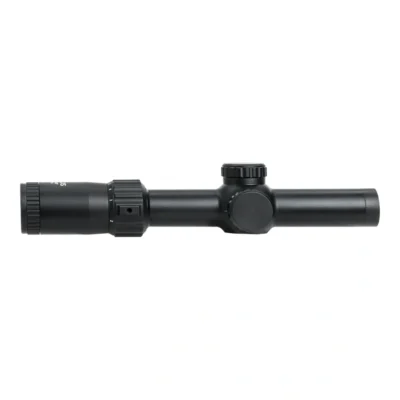
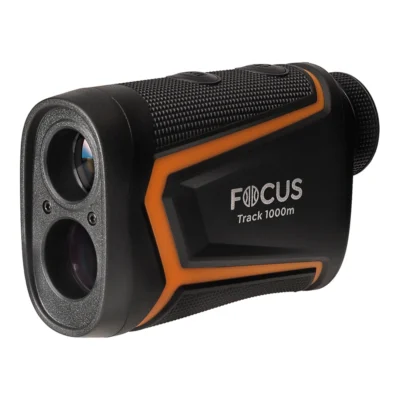
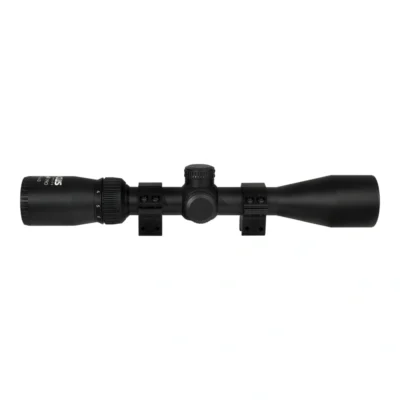
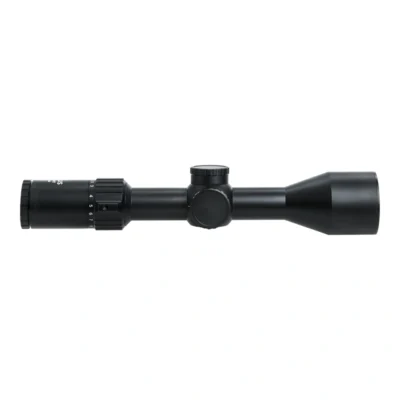
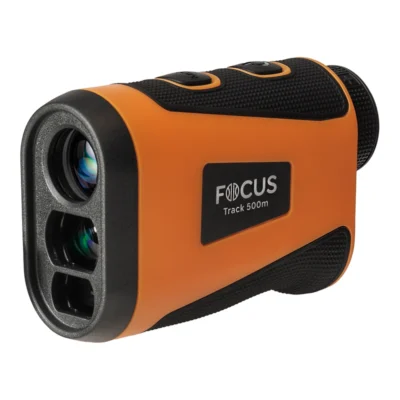
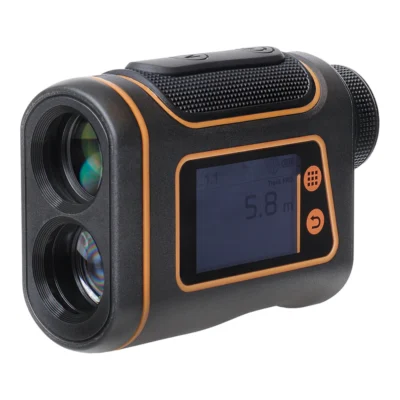
A rangefinder answers one question: how far away is that? For a hunter the answer decides whether to take the shot. For a golfer it decides the club. A riflescope belongs to the same family of optics but has another job, putting the shot where you aim. This guide covers both.
How a laser rangefinder works
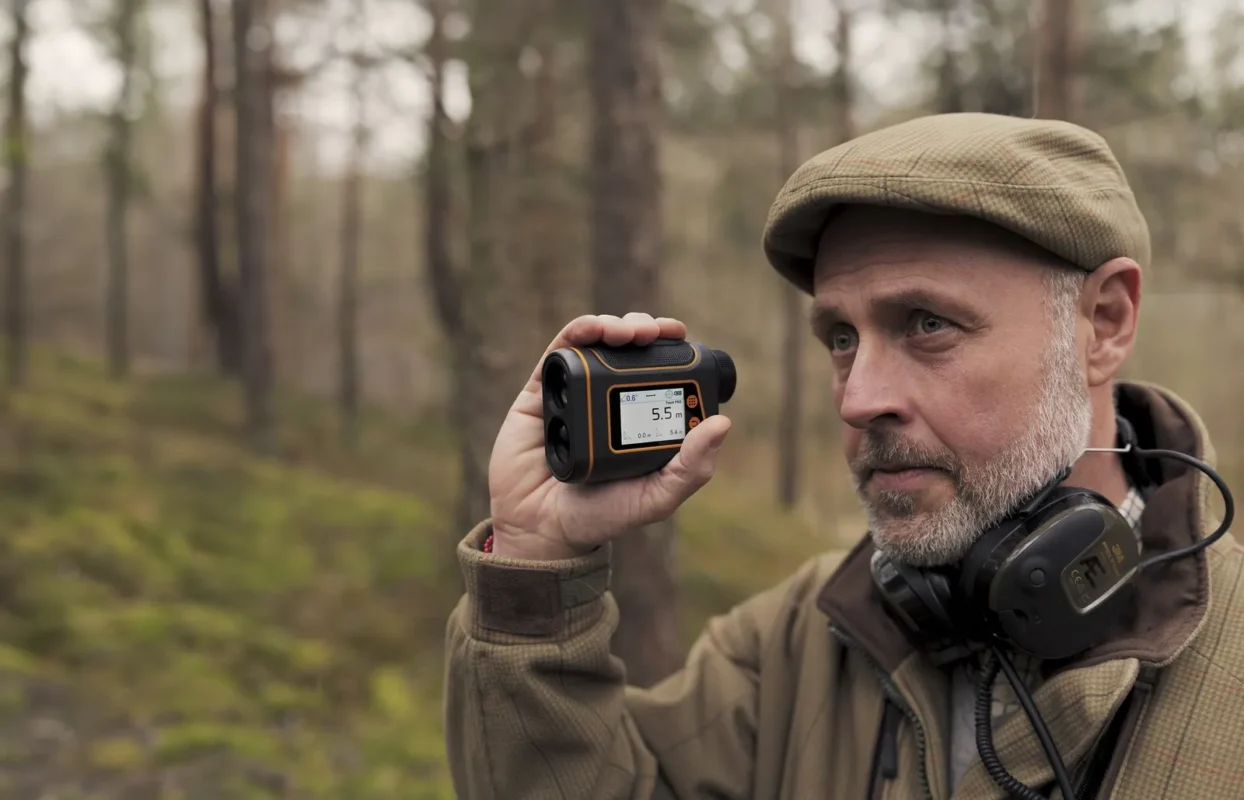
You aim through a small eyepiece, usually at 6x, and press the button. The unit sends out short pulses of invisible laser light and measures how long they take to bounce back. The distance shows in the view within a second or so.
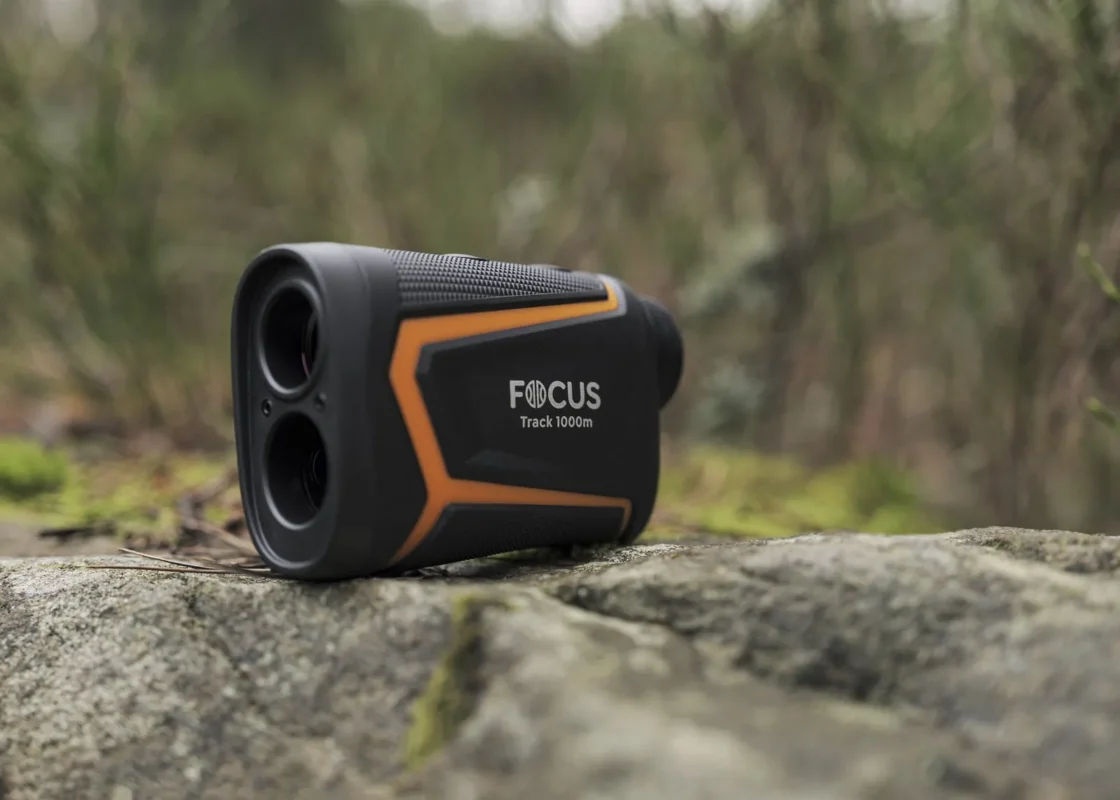
The maximum range in the specs applies to a large, reflective target such as a light-coloured wall. Against an animal, a dark tree trunk or in rain and fog the range is shorter, often much shorter. A 1000 metre unit therefore leaves a comfortable margin for hunting distances, which is why it is sensible not to pick the shortest one.
Rangefinders run on either a standard lithium battery or a built-in rechargeable one. If yours takes batteries, keep a spare in your pocket, as they often die in the cold.
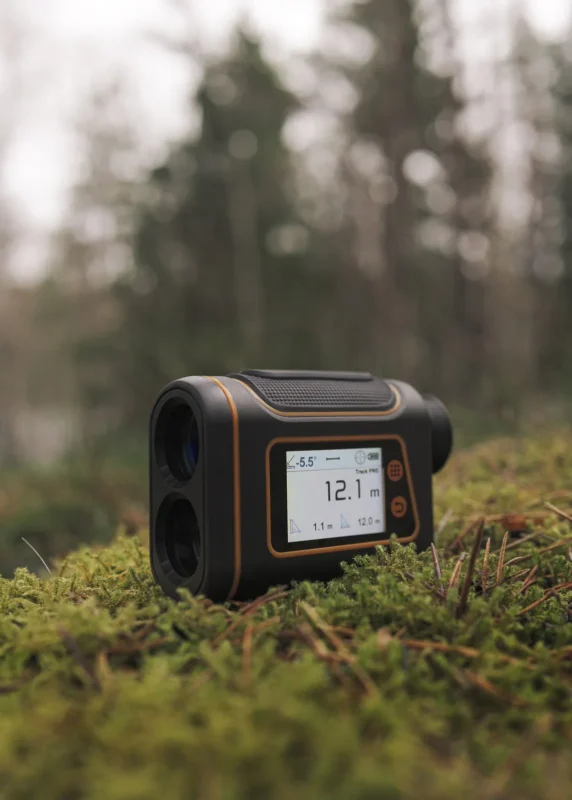
Measuring modes and what they are for
Most rangefinders have several programs. The names vary a little between models, but the functions are much the same.
| Mode | What it does | Used for |
|---|---|---|
| Standard | Shows the straight-line distance to the target | Most things |
| Scan | Measures continuously as you sweep | Following a moving target, mapping the terrain |
| Angle and horizontal distance | Recalculates the distance when you measure up or down | Hunting from a high seat or in hilly terrain |
| Golf | Gives the flag priority over the background | Measuring to the pin |
| Golf with slope | Adjusts for the height difference to the pin | Practice rounds |
| Fog | Ignores reflections from rain and fog close to you | Bad weather |
| Speed | Measures how fast an object is moving | Sport, vehicles |
Rangefinders for hunting
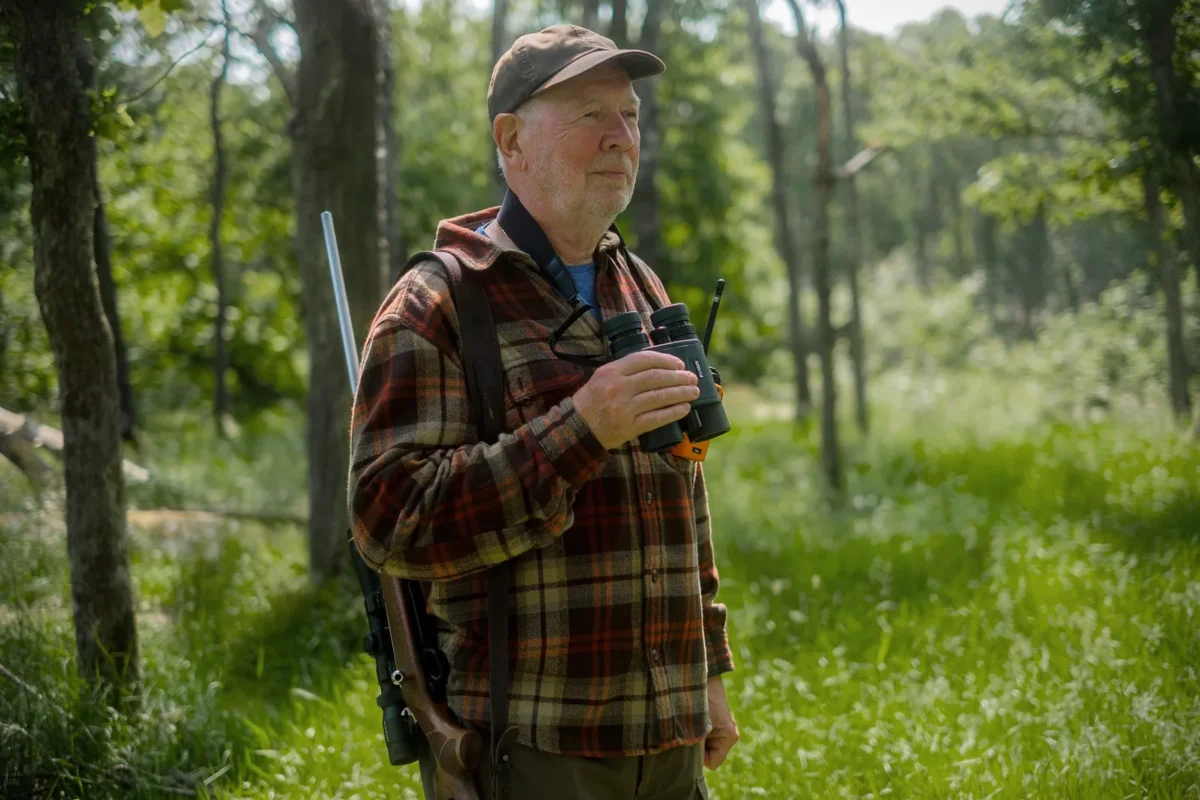
Judging distance by eye is harder than most people think, especially across open bogs, clear-cuts and fields. A rangefinder removes the guesswork. Range landmarks from your stand before the game arrives, and you already know where the limit for a safe shot lies.
If you shoot from a high seat or on steep ground, the horizontal distance is what affects the bullet's path, not the straight line. That is why many units have a mode that corrects the distance for the angle.
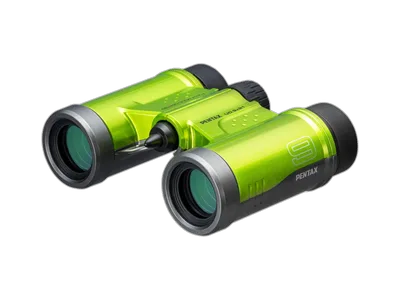
There are also binoculars with a built-in rangefinder. You get ordinary binoculars and a rangefinder in one instrument and carry one thing instead of two. They are heavier than a separate unit but handy for anyone who always brings binoculars anyway.
Rangefinders for golf
On the course the challenge is measuring to the flag and not the trees behind it. Golf mode solves that by showing the distance to the nearest of several objects in view, which is nearly always the flag. Some units vibrate or show a symbol once they have locked on.
Slope mode works out a playing distance when the green sits above or below you. In competition that function is usually not allowed, so switch it off when it counts. Check the rules of the event.
Riflescopes for different kinds of hunting
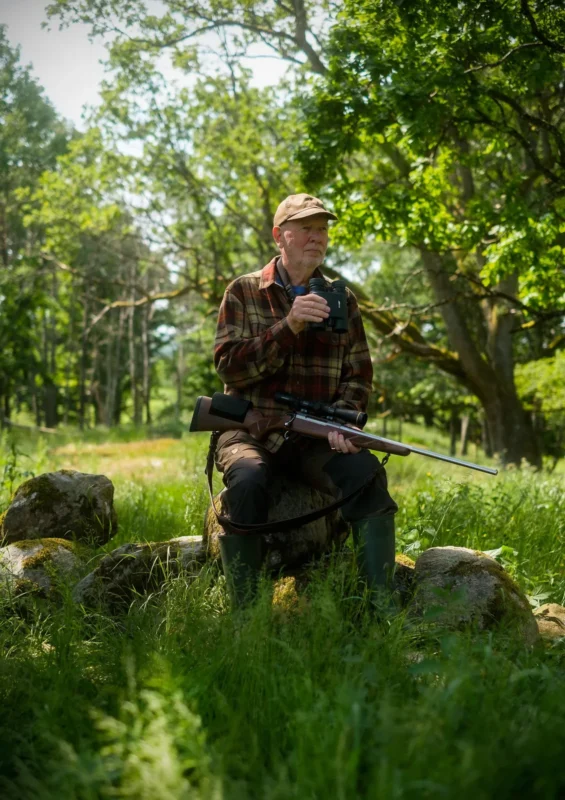
Choose a riflescope by how you hunt. On driven hunts game often comes fast and close. There you want the lowest power near 1x and a wide field, so you can keep both eyes open and pick up the animal at once. A 1-6x scope is made for that.
From a stand at dusk and at longer range you need more light and more magnification. A 2-12x scope with a 50 mm objective gives both. Between them sit all-round scopes around 2-10x for those who hunt several ways with the same rifle.
Keep the power low when you do not know where the game will appear. It is easier to turn it up once you have found the animal than to search in a narrow field.
Illuminated reticles, eye relief and mounting
An illuminated reticle has a dot or cross that glows at adjustable brightness. At dusk against a dark forest a black cross is hard to see, and the lit dot makes a big difference. Set it just bright enough to see, or it will dazzle you.
Eye relief on a riflescope is around 9 to 11 centimetres. That is longer than on binoculars so the scope does not hit your brow under recoil. Mount it so you see the full image when your cheek rests naturally on the stock.
The scope attaches to the rifle with a mount that must match both the rifle's rail and the scope's tube diameter. Have a gun shop or gunsmith mount it and zero it if you are unsure. A scope that sits loose will never shoot straight.
Frequently asked questions about rangefinders & sights
How far does a laser rangefinder measure?
It depends on the target. The stated range applies to large reflective surfaces. Against animals, dark trees and in bad weather it is shorter, so choose a unit with a good margin over the distances you need.
Which rangefinder suits hunting?
One with a range of several hundred metres on game, a mode for angle and horizontal distance and ideally a scan mode. It should be small enough for a pocket and handle rain.
Can you use a rangefinder in golf?
Rangefinders are allowed in many competitions, but usually for straight distance only. The slope function is generally not permitted in competition and has to be switched off. Always check the event's rules.
Which riflescope suits driven hunts?
A scope with lowest power near 1x and a wide field, for example 1-6x. It lets you keep both eyes open and pick up game coming close quickly.
What is an illuminated reticle?
It is a dot or cross in the riflescope that glows at adjustable brightness. It is far easier to see than a black cross at dusk against a dark background.