














A disposable camera is a film camera sold with the film already inside. You shoot the whole roll and then hand the camera in to a photo lab, which develops the film and gives you the pictures on paper or as files. It suits the trip, the party or the wedding, the kids and, in a waterproof version, the beach or the pool. Compare the number of shots, whether it has a flash, the ISO of the film, colour or black and white, and whether the body can take water.
Read more about disposable cameras





How a disposable camera works
Inside the plastic body there is a simple fixed-focus lens and a shutter with a single speed. There is nothing to set. It still works better than most people expect, because colour negative film handles fairly large exposure errors and the lab corrects the brightness when the pictures are scanned or printed.
After each shot you turn the wheel on the back until it stops. A small counter shows how many frames are left. Focus covers everything from a little over a metre out to the horizon, so close-ups of a flower or a plate of food come out blurred. Step back instead.
The viewfinder sits a little above the lens. Up close, the picture ends up slightly shifted from what you saw, so leave some room around your subject.
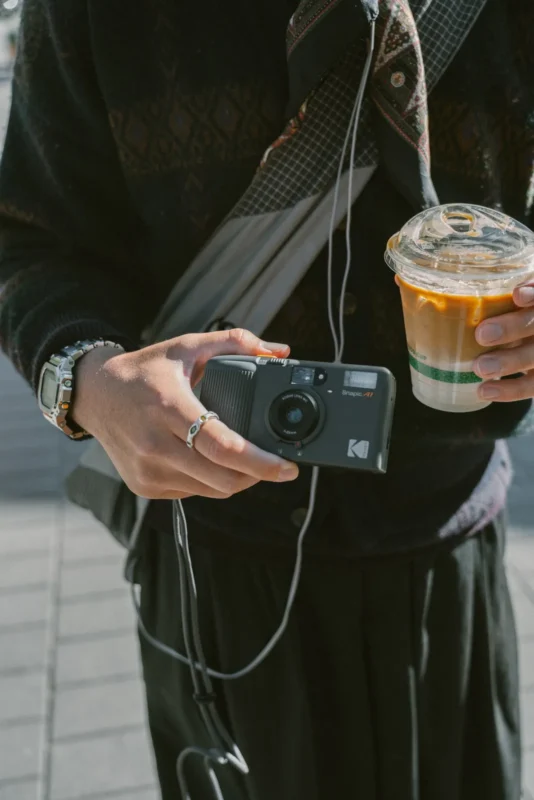
Flash, ISO and number of exposures
Three details decide how the camera will cope. The design of the box tells you far less.
With or without flash
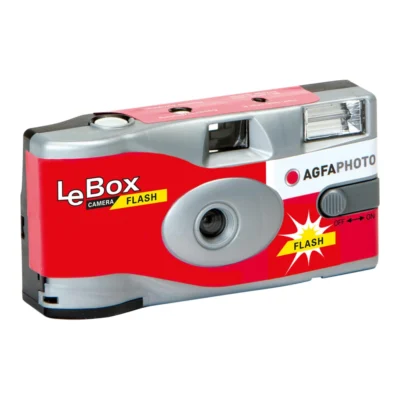
A camera without flash is made for daylight. Indoors, in the shade of a tree or on a grey November afternoon, the pictures turn out dark and grainy. A flash lets you shoot parties and evenings, but only at close range. The flash in a disposable camera reaches a few metres and no further. On most models you charge it with a button or slider and wait for the light before pressing the shutter.
ISO 400 or 800
Disposable cameras usually hold ISO 400 or 800 film. Higher ISO means more sensitive film that copes with less light, at the cost of a little more grain. Grain shows mostly in the shadows and is part of what makes film look like film. In a camera without flash, ISO 800 makes a real difference once the clouds roll in.
27 or 39 exposures
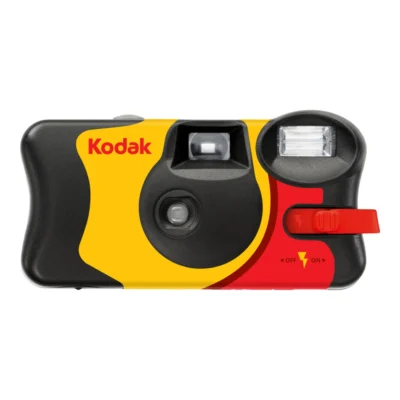
27 exposures is the most common. Kodak also makes cameras with 39, marked 27+12. That sounds like a small difference until day four of the holiday, when you have three frames left.
Colour or black and white
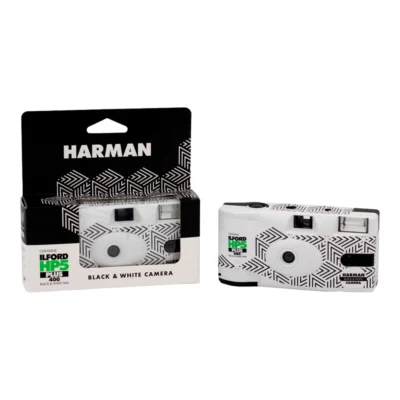
Most cameras are loaded with colour negative film. There are also black and white disposable cameras with classic Ilford and Kodak films. They give strong contrast and a timeless look, but they are developed differently from colour film.
| Type | Good for | Keep in mind |
|---|---|---|
| No flash | Travel, day trips and summer days | Too dark indoors and at dusk |
| With flash | Parties, dinners and evenings | The flash only reaches a few metres |
| Waterproof | Beach, pool, rain and snow | Never go deeper than the maker states |
| Black and white | Portraits, street pictures and a different mood | Needs a lab that develops black and white film |
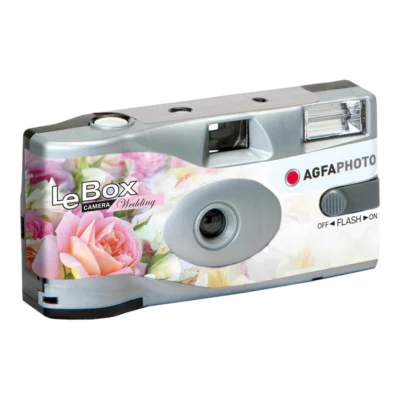
| Wedding theme | Guest photos at weddings and parties | Buy a few spare so every table gets one |
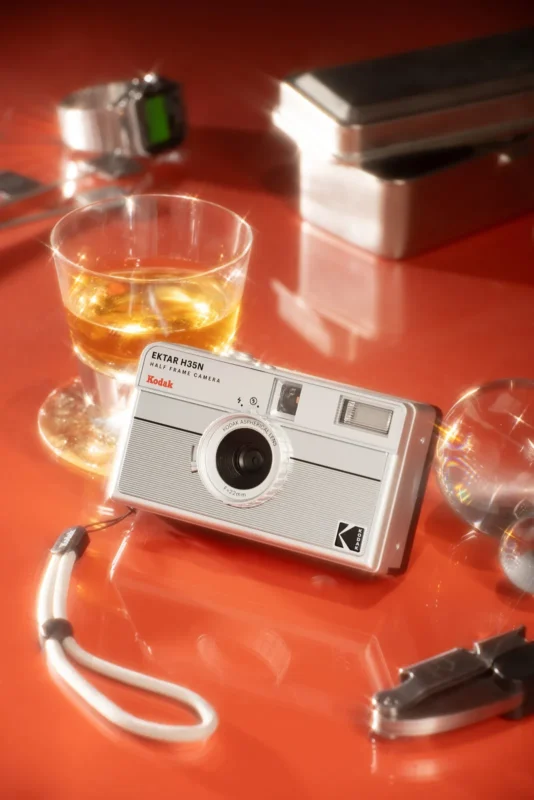
Disposable cameras at weddings and parties
The guests photograph each other, and you end up with pictures the photographer never takes: the cousins at the bar, grandma on the dance floor, the table that laughed all night. That is why disposable cameras are such a common sight at weddings.
In our experience one camera per table is usually enough, plus a couple for the dance floor and the bar. A multipack is easier than buying them one by one. Pick cameras with flash. Dinner and dancing happen indoors and in the evening, and without flash the roll comes back nearly empty.
Put a small note next to each camera: charge the flash, stay at least a metre away, wind on after every shot. Ask someone to collect the cameras before the guests leave, or they end up in handbags and jacket pockets.
Don't expect the pictures the next day. A pile of rolls takes the lab longer than one.
Waterproof disposable cameras
A waterproof housing keeps out water, sand and dirt. The camera survives a swim as well as an afternoon in the sandpit, which makes it a good choice for children who drop things. The packaging states how deep you can take it. Never go further down than that.
Below the surface, red light disappears quickly. Just a few metres down the pictures turn blue-green and dark. You get the best results close to the surface in bright sun, with the subject near you but not closer than a metre.
Rinse the camera in fresh water after a day in the sea, before the salt dries into the buttons and the wheel. Let it dry before you hand it in.
Developing and getting your pictures
You hand in the whole camera. The lab opens the body, takes out the film and develops it. Colour negative film uses a standard process called C-41, which practically every photo lab can run.
Black and white cameras with classic black and white film need a different process. Not every lab does it in house, so the film may be sent on, which takes longer. Ask before you drop it off.
Ask for scans if you want to share the pictures digitally, and ask for the negatives back too. With them you can order new prints or a better scan years later.
Exposed film does not like to wait, especially in the heat. Hand the roll in within a few weeks. If you are flying, keep the camera in your hand luggage and ask for a manual check. Newer hand luggage scanners can fog film, and checked baggage is screened with stronger radiation.
Common mistakes and how to avoid them
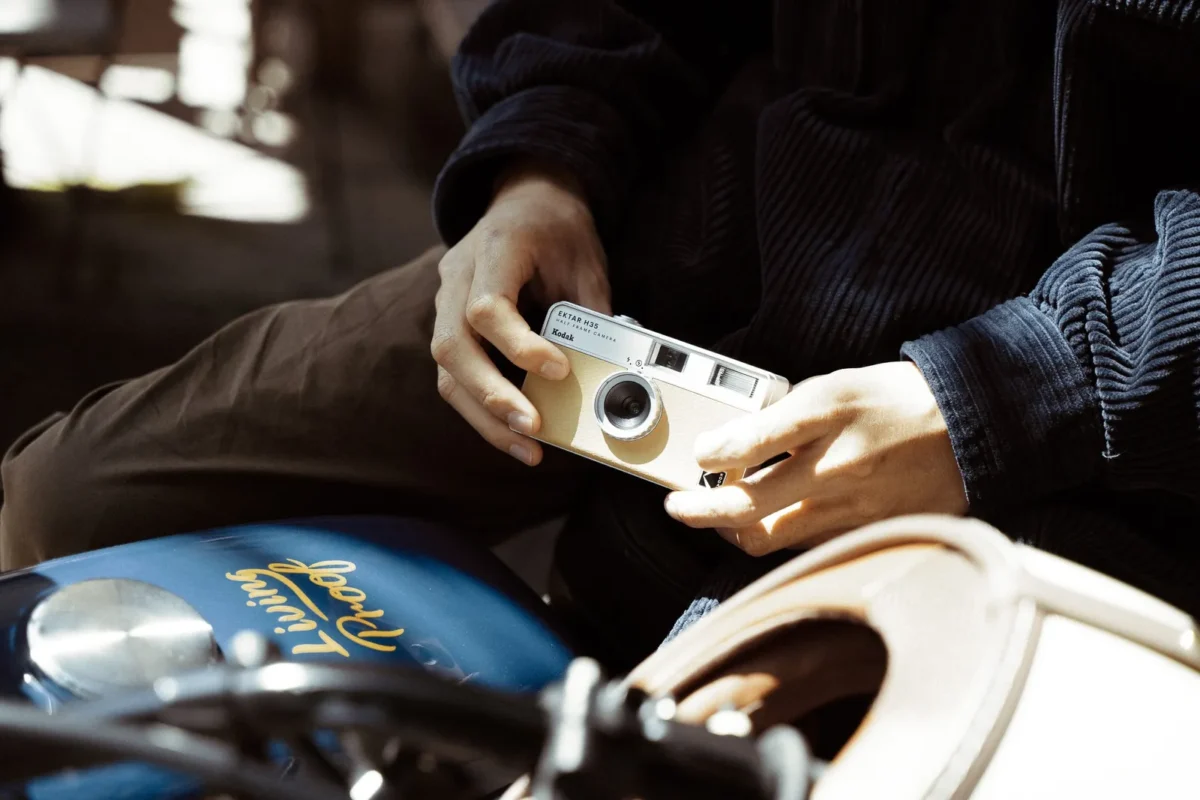
Most failed disposable camera shots come down to the same few things.
- A finger over the lens or the flash. Hold the camera by its edges.
- Too close to the subject. Under a metre, it goes soft.
- Flash not charged. Wait for the light before you press.
- Backlight without flash. People in front of a bright sky become dark silhouettes. Flash fills in their faces, even at midday.
- Too far away with flash. The people at the back of the group end up in the dark.
- The camera left in a car on a summer day. Heat damages film, both before and after you shoot.
Check the expiry date on the box as well. Old film gives paler colours and more grain.
Reusable film cameras as an alternative
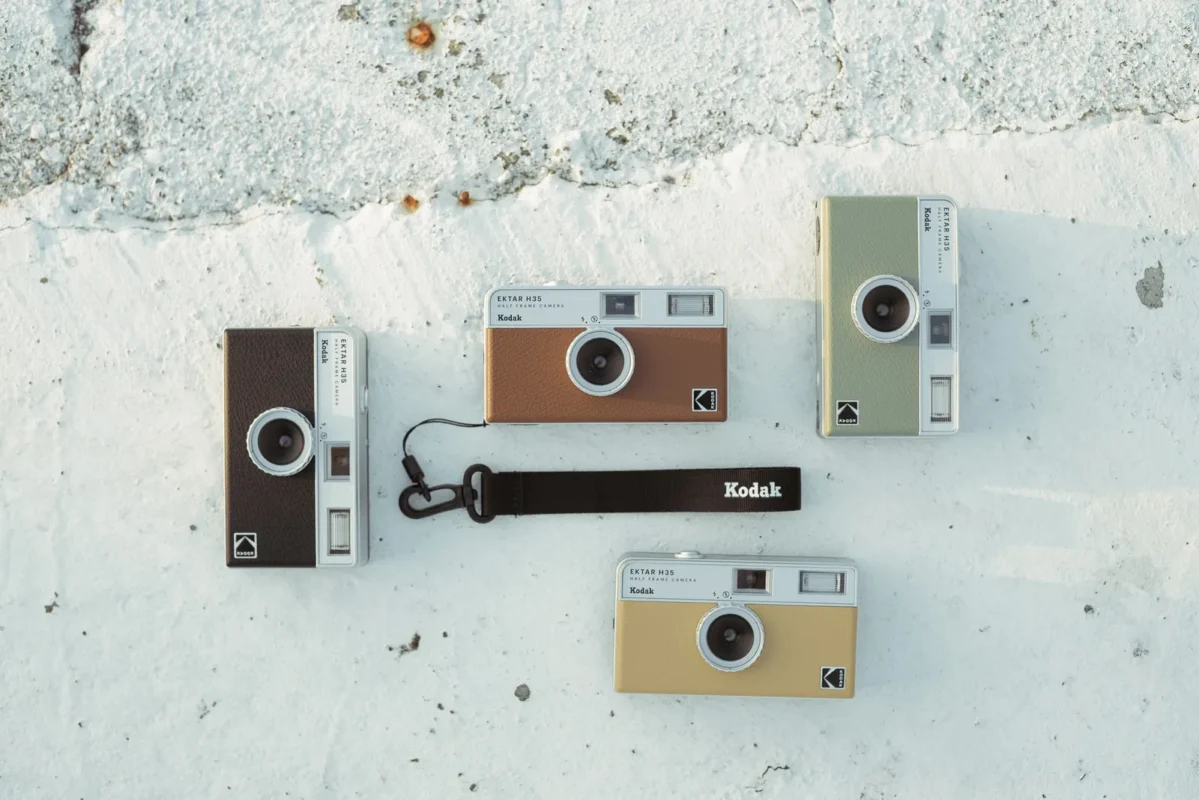
If you shoot film more than once or twice a year, a reusable camera is worth a look. It is almost as simple to use, but you load ordinary 35 mm film yourself and keep the camera after developing. You also choose the film for the occasion: colour for summer, black and white for an autumn walk.
Kodak makes reusable half-frame cameras. Each picture uses half a frame on the film, so one roll gives twice as many shots. The negatives are smaller and won't take as much enlargement, but for ordinary prints and screens they are plenty.
The downside is that you load and unload the film yourself. At a wedding with a hundred guests, disposable cameras are still the easier option.
Frequently asked questions about disposable cameras
What is a disposable camera called in Swedish?
In Swedish it is called an engångskamera. In English you will see both disposable camera and single-use camera, and packaging often uses the abbreviation SUC.
How do you develop a disposable camera?
Hand the whole camera in to a photo lab and don't open it yourself. The lab takes out the film, develops it and gives you prints, scanned files or both. Black and white film needs a different process from colour, so check with the lab first if your camera is black and white.
Which disposable camera is best for a wedding?
Choose one with flash, since dinner and dancing usually happen indoors and in the evening. Wedding-themed cameras look nice on the tables. Plan on roughly one per table and a few spare.
How deep can you take a waterproof disposable camera?
It depends on the model, and the depth is stated on the packaging. Never go deeper than the maker allows. The pictures are best close to the surface anyway, since colour and light fade quickly further down.
How many pictures does a disposable camera take?
Most have 27 exposures. Some hold 39, which Kodak marks as 27+12. The counter on the camera shows how many are left.
Are there digital disposable cameras?
A disposable camera in the usual sense contains film, and you only see the pictures once the film is developed. That is part of the point: no checking and deleting, and the results have the colour and grain of film. If you want to shoot film again and again, a reusable film camera is the alternative.