
















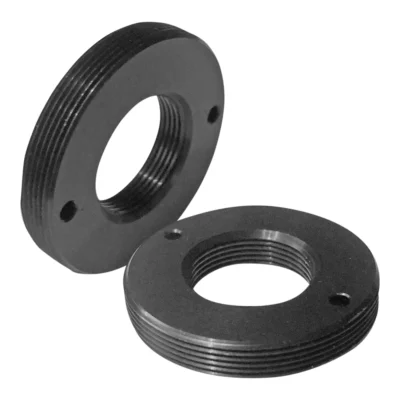
With digiscoping you take pictures through the scope and get a very long focal length with a phone or camera. The adapter has to fit both the eyepiece and the phone or camera, so check the scope model first. For system cameras there are rings that replace the lens, and for phones there are holders and cases.

What is digiscoping?
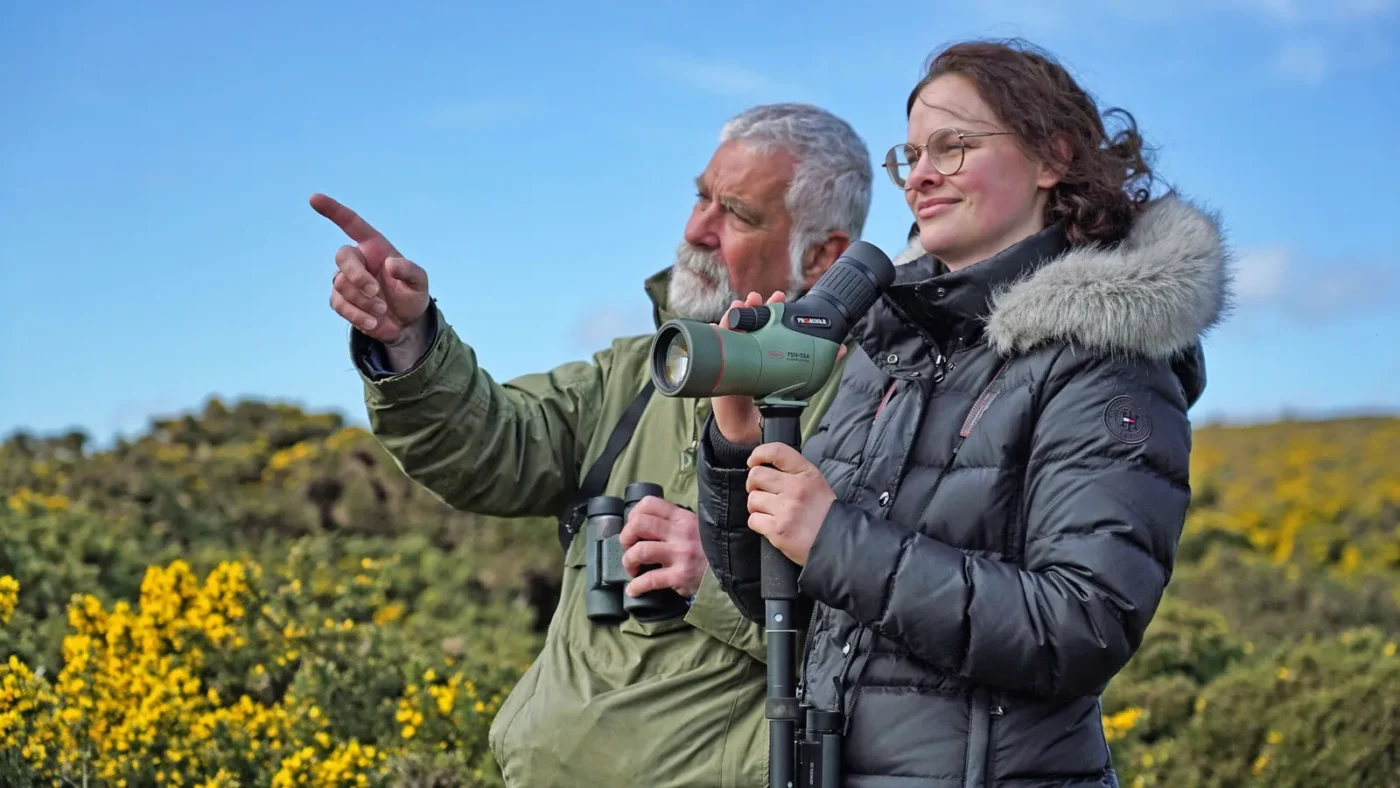
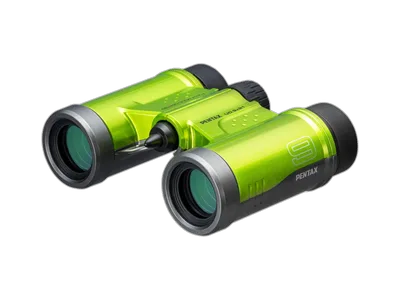
Digiscoping means taking photos or video through a spotting scope, or sometimes a pair of binoculars, with a phone or camera held against the eyepiece. The word joins digital and spotting scope.
Birders started it. They wanted a record of what they saw without carrying a telephoto lens that weighs several kilos.
It works because the scope already does the hard part. A 20-60x zoom eyepiece magnifies more than almost any telephoto lens, and the camera only has to capture the image the eyepiece shows. The sharpness rarely matches dedicated telephoto gear. For identifying a wader across the bay or reading a ring on a gull's leg, it is usually more than enough.
Phone or camera behind the eyepiece
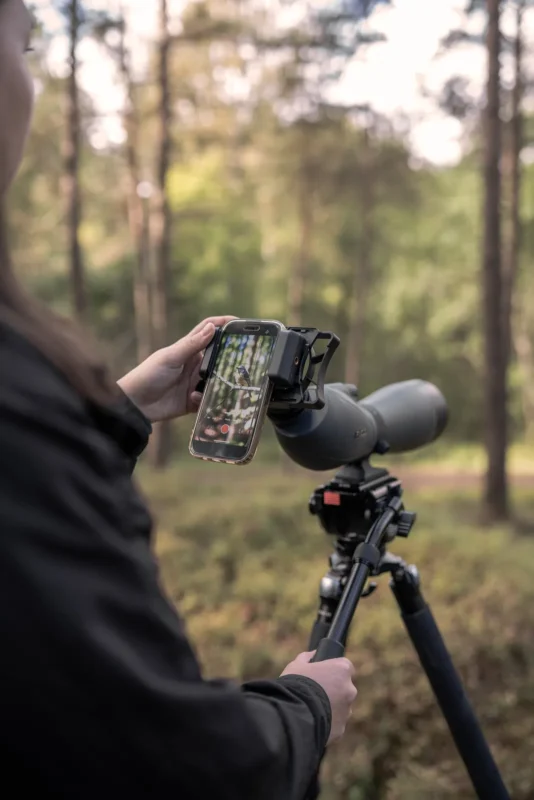
Most people start with their phone. It is already in your pocket, and the screen shows straight away whether the image is lined up. The small phone lens sits close to the eyepiece's exit pupil, which is why the two work so well together. Video often turns out better than people expect.
A compact camera with optical zoom also works and gives you more control over focus and exposure.
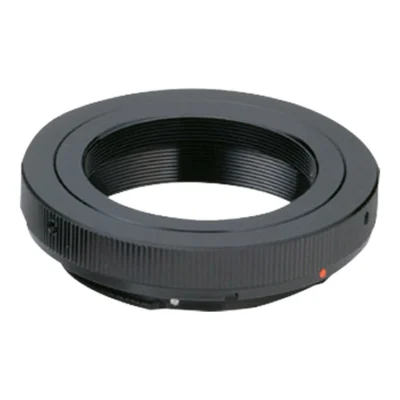
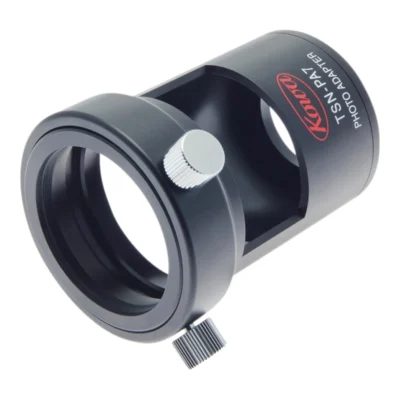
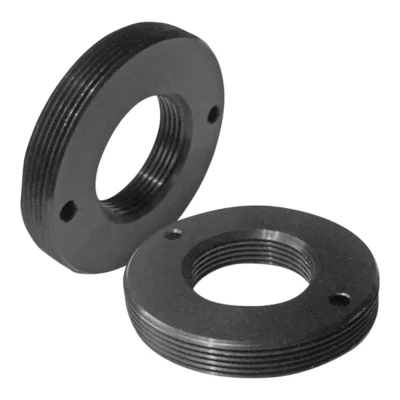
To get the most out of the scope, a mirrorless camera or DSLR is mounted with a digiadapter and a T2 ring for the camera's lens mount. The scope then acts as a very long telephoto lens with manual focus. That asks more of your tripod and your technique, but the bigger sensor gives clearly better pictures once the light starts to fade.
Types of digiscoping adapter
Every adapter solves the same problem. The camera lens has to sit exactly in line with the eyepiece, at the right distance from it. What differs is how much adjusting you do and how tied you are to one phone or one scope.
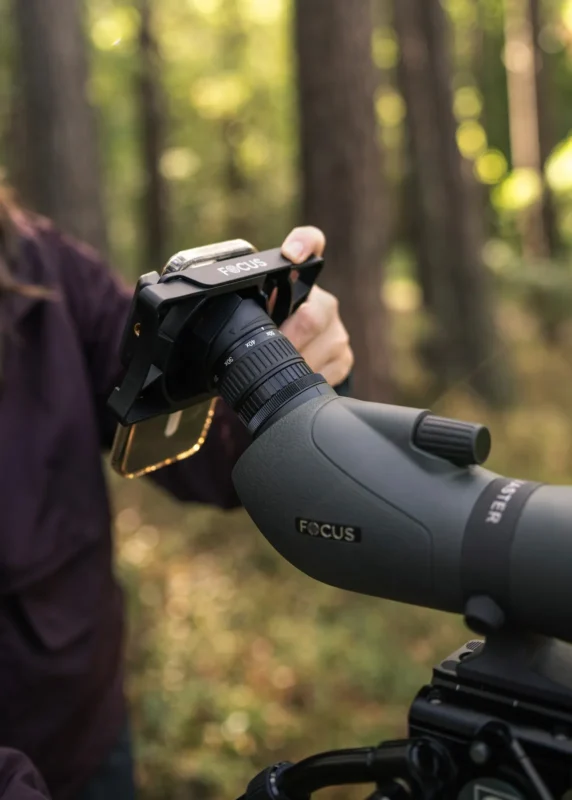
Universal clamp adapter for phones
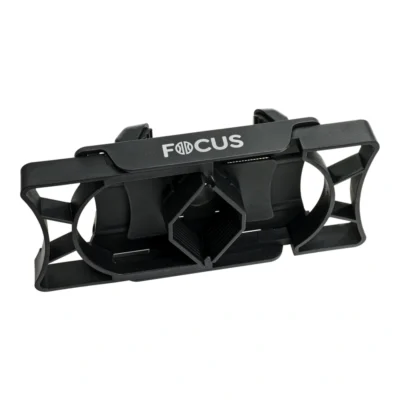
One clamp holds the phone and another grips the eyepiece. You centre the lens with the adjusters and lock it. Focus Connect is one example and takes eyepieces from 23 to 64 mm in diameter. When you change phones the adapter comes with you, though you will need to centre it again after changing phone or eyepiece.
Phone shell and adapter ring
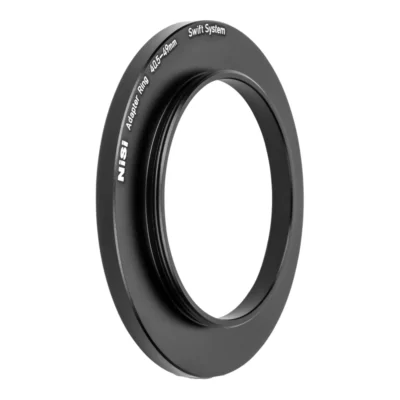
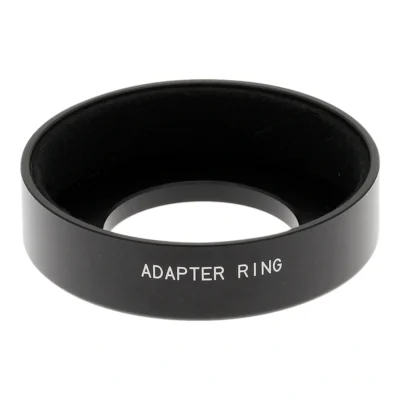
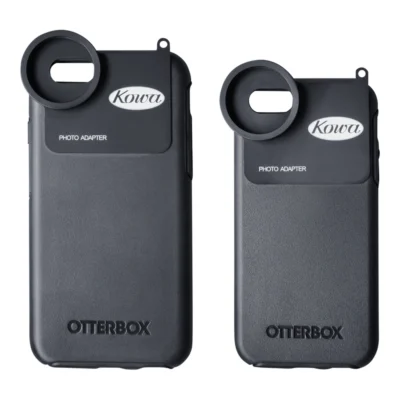
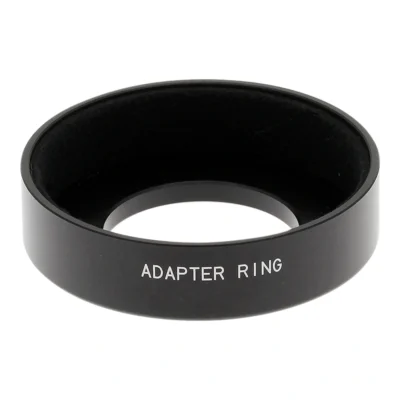
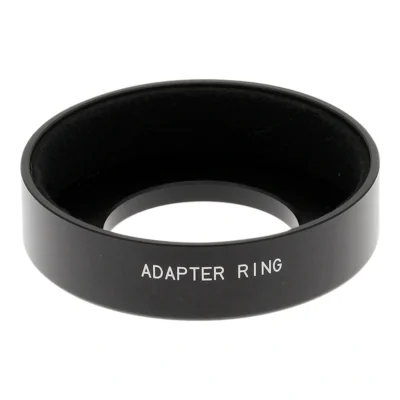
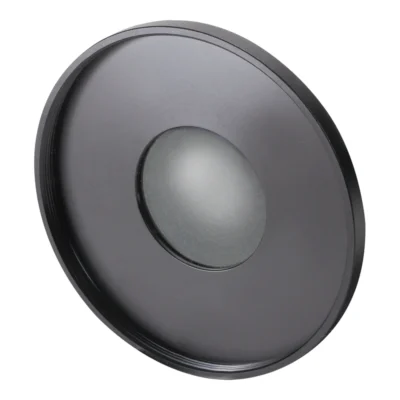
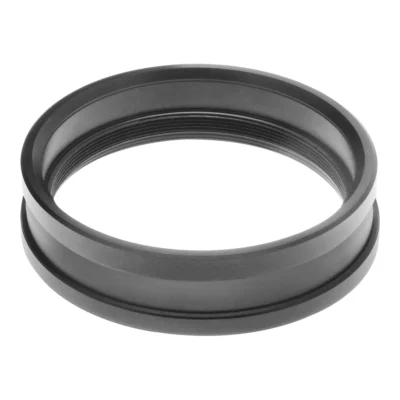
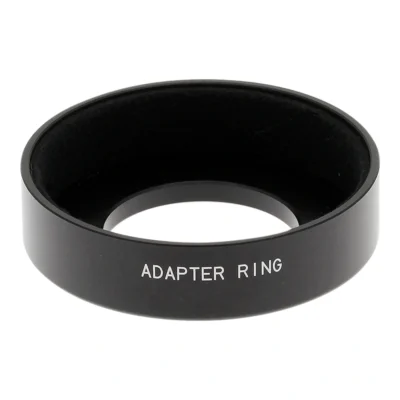
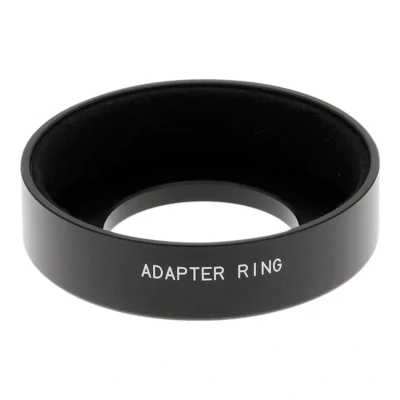
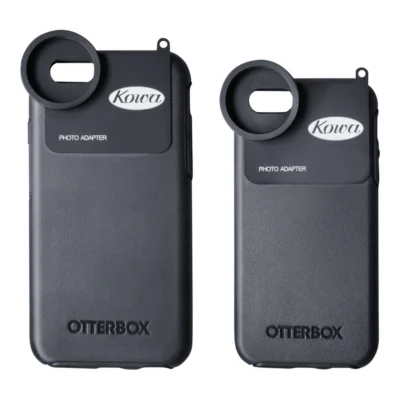
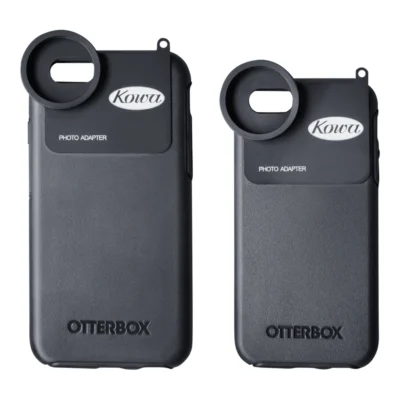
Here you fit a shell made for your exact phone model. Shells are made for iPhone and Samsung Galaxy. Kowa developed its shells together with Otterbox. An adapter ring goes on the eyepiece and the shell clicks onto the ring, so the lens lands in the same spot every time.
If you digiscope often, this is the most convenient system, because you are ready in seconds once the bird has settled. The downside is that the shell has to be replaced along with the phone. There are also adapter plates that let the shells fit Swarovski and Zeiss eyepiece rings.
Adapters for compact and system cameras
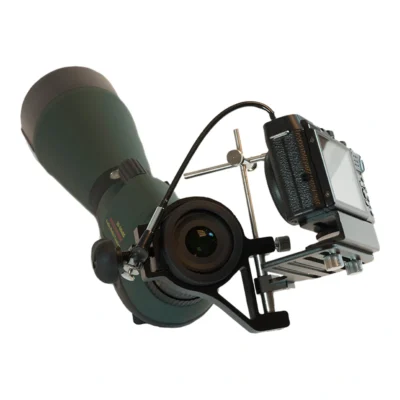
Compact cameras use holders that clamp around the eyepiece, and the camera can swing aside when you want to look yourself. Mirrorless cameras and DSLRs use a digiadapter made for the scope series plus a T2 ring for the mount, such as Canon EF, Nikon F, Pentax K, Micro Four Thirds or Sony.
| Type | Fits | Advantage | Keep in mind |
|---|---|---|---|
| Universal clamp | Most phones and many eyepieces | Moves with you to a new phone | Needs re-centring after a phone or eyepiece change |
| Phone shell with ring | One phone model, one ring per scope or binocular | Fast to mount, same position every time | New shell when you change phones |
| Compact camera holder | Compact cameras with optical zoom | More control over focus and exposure | More gear to carry |
| Digiadapter with T2 ring | Mirrorless cameras and DSLRs | Largest sensor, best in low light | Needs a solid tripod and manual focus |
How to choose the right adapter
Start with the eyepiece, not the phone. Measure the outer diameter where the adapter will sit, with the eyecup in the position you actually use. For a universal adapter, that measurement just has to fall within the adapter's range. A ring system needs a ring made for your specific scope or binocular. Kowa makes rings for its own models and for some Zeiss and Leica optics.
Then look at the phone. A thick case or a camera bump that sticks out a long way can make centring hard, so take the case off if it fights you. Phones with several cameras sometimes switch lens on their own as you zoom. The wrong lens ends up behind the eyepiece and the picture goes black or soft. Lock the camera app to the main camera if your phone allows it.
If you already own a Kowa scope, shell and ring is the obvious choice. With a Focus scope or another brand, a universal adapter is usually simpler.
Binoculars work too, as long as they are on a tripod. Holding both binoculars and phone by hand rarely gives you anything worth keeping.
Spotting scope and tripod for digiscoping
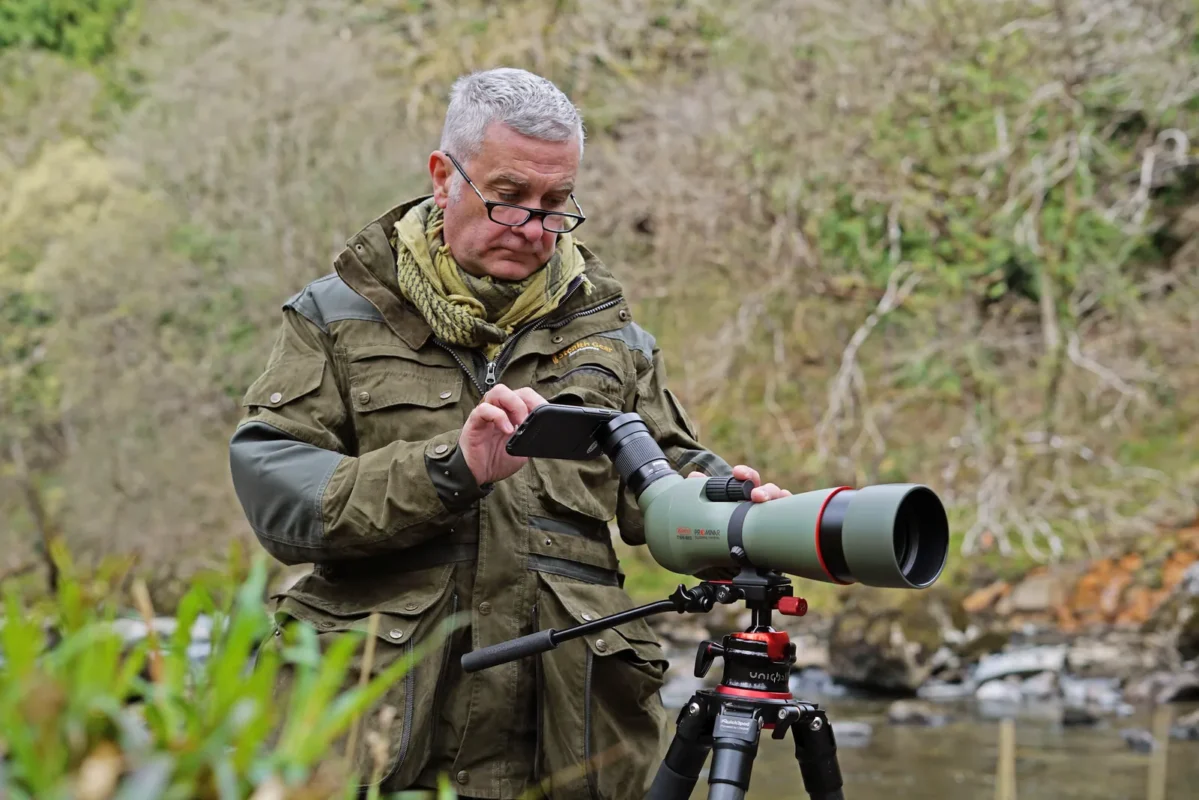
A spotting scope is a powerful single-eye telescope, usually with a zoom eyepiece and an objective lens between 50 and 100 mm. An angled eyepiece is more comfortable for long sessions and when people of different heights share one scope. A straight eyepiece is quicker to point at the subject. A larger objective gives a brighter image at high magnification, and the camera shows that clearly on an overcast day.
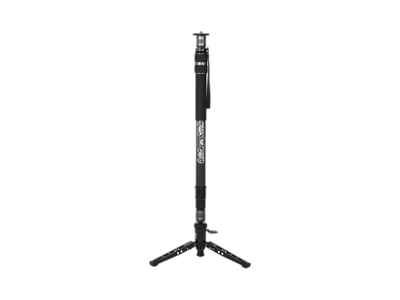
The tripod matters as much as the glass. At 40x, every tremor is magnified 40 times too. A sturdy tripod with a head that pans smoothly does more for your pictures than almost anything else you can buy. That is why many scopes come as a kit with a tripod, which is a good way to start if you do not own one.
Shooters use spotting scopes at the range to see their hits on the target. The same rule holds there.
Vignetting, magnification and shake
Dark corners and the black ring
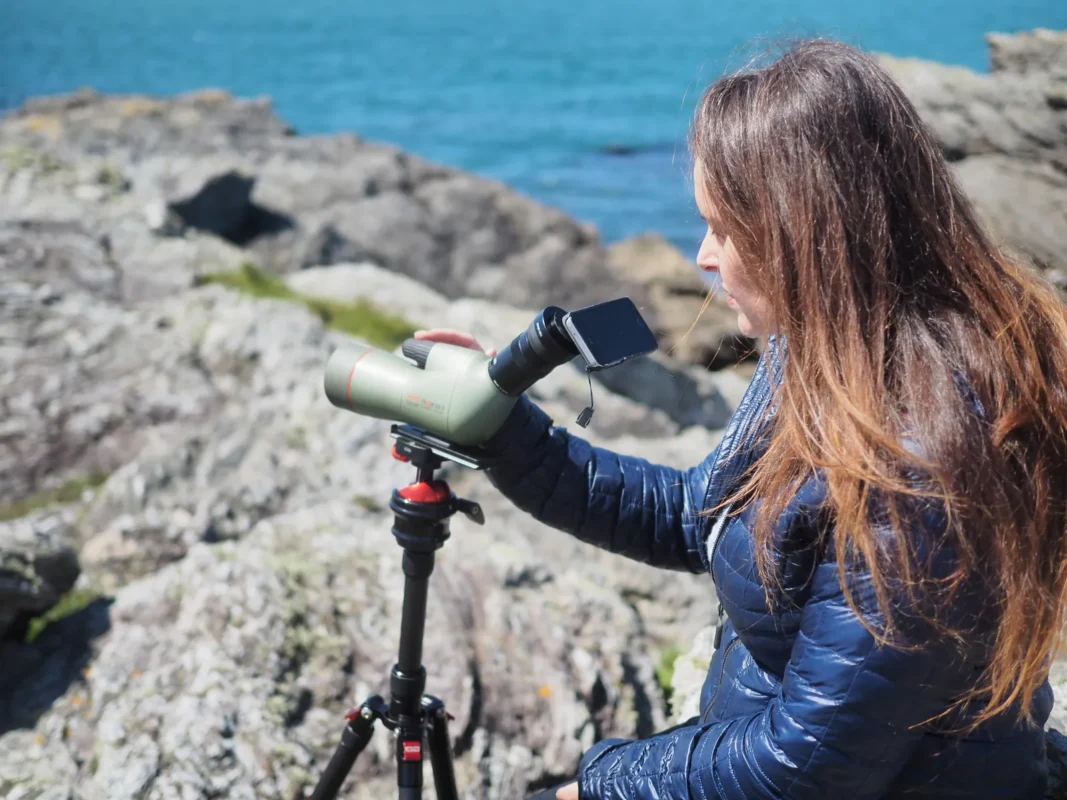
The black circle around the image is called vignetting. It appears when the camera lens is off-centre or at the wrong distance from the eyepiece. Fix the centring first. Then zoom in a little on the phone until the ring disappears. The eyecup position sets the distance to the lens, so try twisting it in or out a step.
Lower magnification often gives better pictures
Cranking the zoom to maximum is tempting. At the top end the image gets darker, depth of field shrinks and every vibration shows. Find the subject at the lowest setting and only go up once everything is in place. Many of the best digiscoped pictures are taken in the lower half of the zoom range.
On a warm day, heat shimmer blurs anything far away, whatever gear you use. Mornings and evenings give sharper results.
Stability and shutter release
Just tapping the screen is enough to shake the image. Use a two or three second self-timer, a Bluetooth remote, or the volume button on a pair of wired headphones. Focus the scope by eye first, then fine-tune on the screen. Lock focus and exposure on the subject.
Video is a handy shortcut. Record a few seconds and pick the sharpest frame afterwards.
Frequently asked questions about digiscoping
What is digiscoping?
Digiscoping is taking photos or video through a spotting scope or binoculars with a phone or camera. The camera records the image the eyepiece shows, so you get the scope's magnification without a heavy telephoto lens. Birders and wildlife watchers use it most.
Which digiscoping adapter should I choose?
Measure the outer diameter of your eyepiece first. If you change phones often, a universal clamp adapter suits you best. If you digiscope a lot with the same phone and scope, a phone shell with an adapter ring is the quickest to use.
Can I digiscope with a smartphone?
Yes, and that is how most people start. The small phone lens pairs well with an eyepiece but has to be centred precisely. An adapter holds the phone in place, and with the scope on a tripod the pictures get much sharper than handheld.
What is a tubkikare in English?
Tubkikare is Swedish for spotting scope. The word digiscoping comes from it, joining digital and spotting scope.
Do Kowa digiscoping adapters fit other scopes?
Kowa shells attach to an adapter ring, and rings exist for some Zeiss and Leica optics. There are also adapter plates for Swarovski and Zeiss eyepiece rings. Always check that the ring is made for your exact model.
Do I need a tripod for digiscoping?
In practice, yes. At 20 to 60 times magnification the slightest shake shows in the picture. A sturdy tripod matters as much as the adapter, and many spotting scopes are sold as a kit with one.