
















The lens decides the angle of view, how close you can get and how much light reaches the sensor. Wide angles are used for landscape, architecture and tight rooms, macro for small subjects up close, and standard and telephoto lenses for portraits and subjects further away. Check two things before you buy: that the mount fits your camera and that the lens covers the sensor format of your camera. Cine lenses are rated in T-stops instead of f-numbers and have a focus ring geared for follow focus.

The lens shapes the picture more than the camera does. It decides how much of the scene you get, how much light reaches the sensor and what the background looks like. A new lens is close to a new camera, which is why many photographers keep the same body for years and keep buying glass.
Focal length, angle of view and sensor size
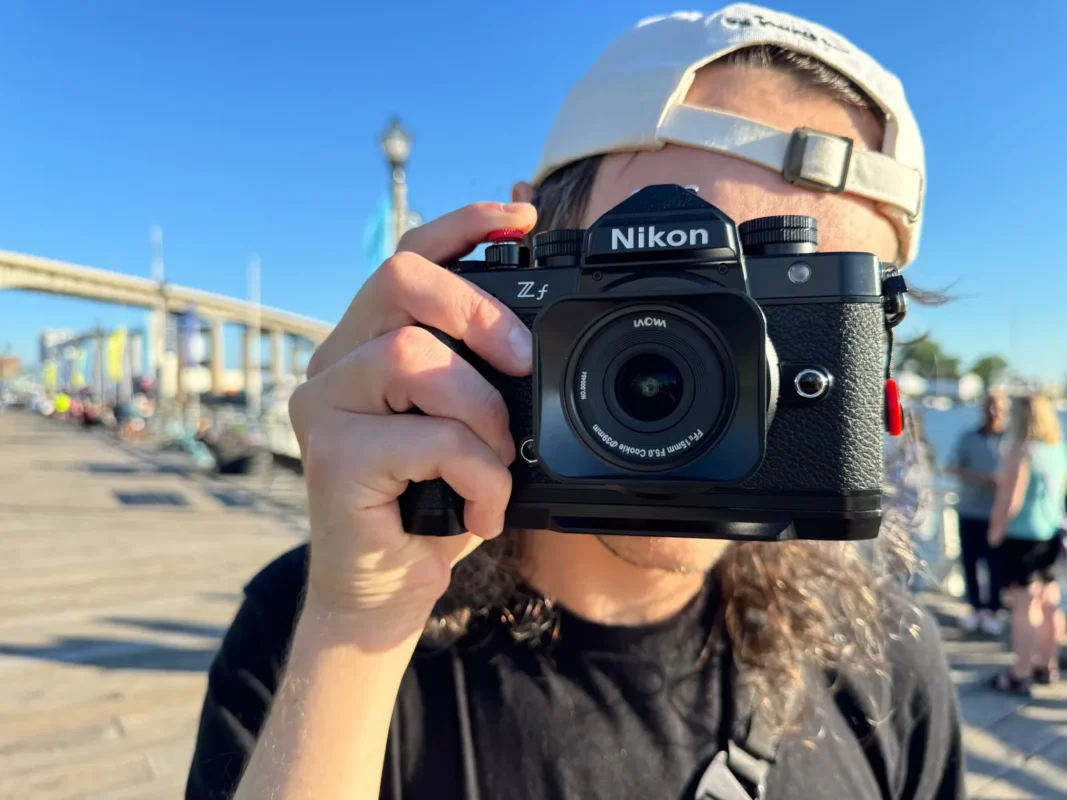
Focal length is given in millimetres and sets the angle of view. A short number gives a wide view. A long number gives a narrow view where the subject seems closer.
The same focal length covers a different angle on different sensors. A 12 mm lens is extremely wide on full frame, while the same 12 mm on Micro Four Thirds frames roughly like 24 mm on full frame. On APS-C, multiply by about 1.5. Check which format a lens is designed for. A full-frame lens usually works on a smaller sensor, but the other way round you get dark corners or a round image.
In the guides below, wide and tele refer to the angle of view on full frame unless we say otherwise.
Lens types and when you need them
Wide-angle lenses
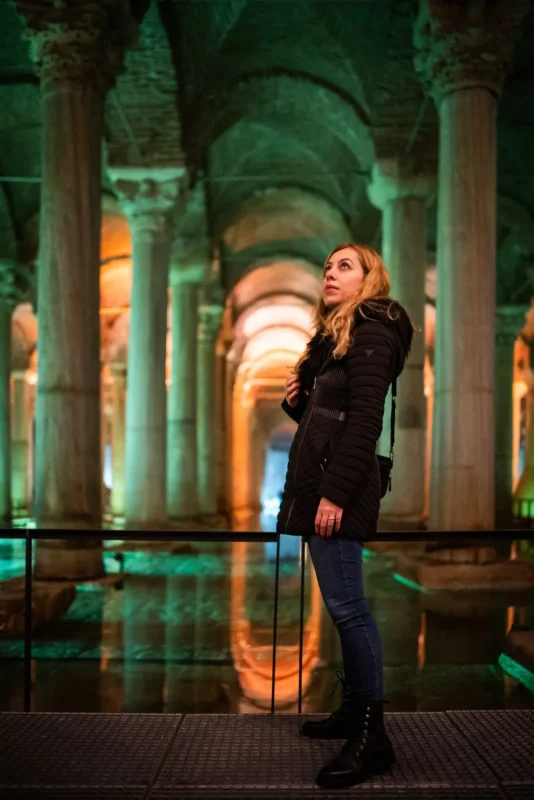
Anything shorter than about 35 mm on full frame counts as wide, and below 24 mm you are into ultra-wide. These are the lenses for landscapes, architecture, interiors and the night sky. They also stretch perspective: near things look big and far things look small, which you can use on purpose.
Standard, telephoto and zoom lenses
A standard lens sits around 50 mm on full frame and renders perspective roughly the way your eye sees it. From about 70 mm up we talk about telephoto, and short teles between 85 and 135 mm are the classic portrait lenses. A zoom covers several focal lengths in one lens. A prime has one focal length but is often faster and smaller.
Macro lenses
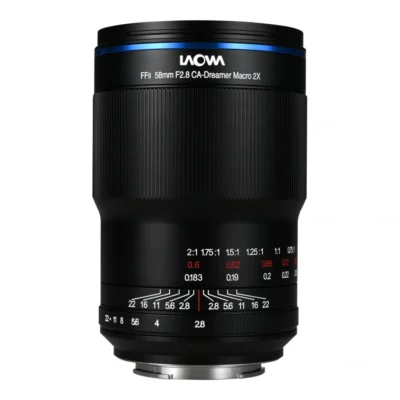
A macro lens focuses close enough that a small subject is as large on the sensor as in real life, or larger. Insects, flowers, jewellery and product shots are typical. Most macro lenses also work as normal lenses at a distance.
Cine lenses
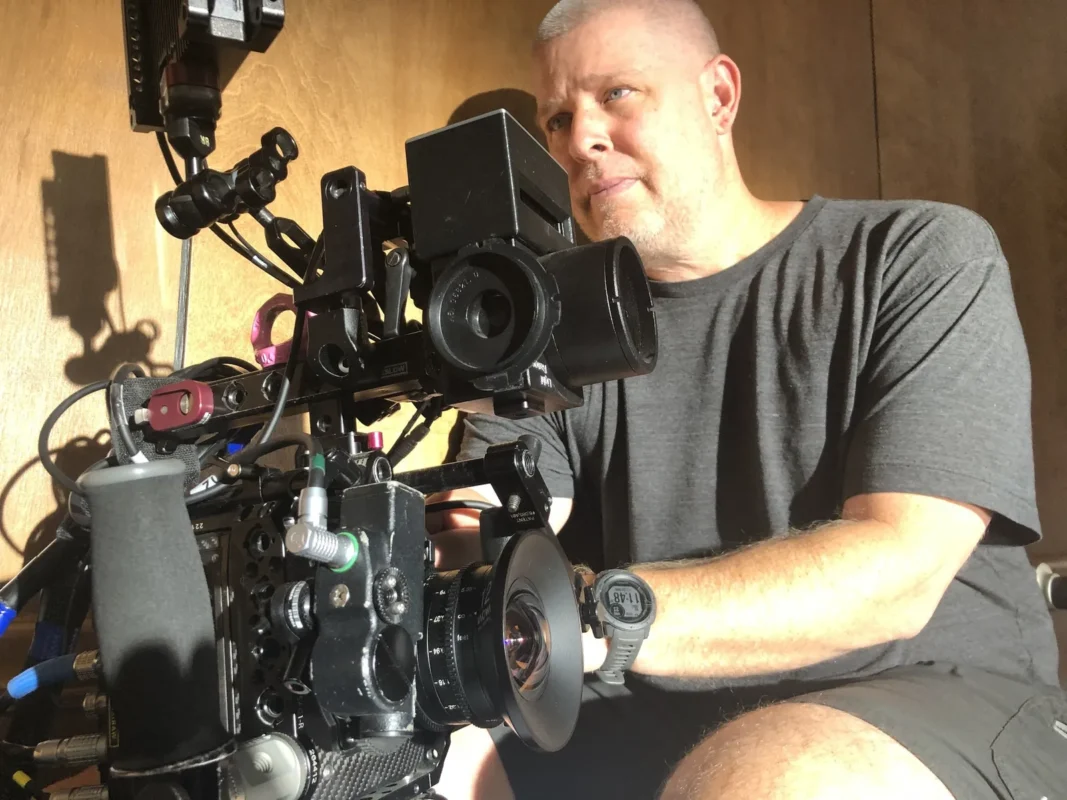
Lenses built for film have geared focus and aperture rings for a follow focus, a click-free aperture and speed given as a T-stop. They exist in every focal length group above and are often sold with interchangeable mounts.
Lens mount: will it fit my camera?
The mount is the mechanical and electrical link between lens and camera, and it has to match. Common mirrorless mounts are Sony E, Canon RF, Nikon Z, Fujifilm X, L-mount and Micro Four Thirds. For DSLRs there are Canon EF and Nikon F, among others.
L-mount is shared by several camera makers, so an L-mount lens fits bodies from all of them. That is unusual among mounts.
Many of our lenses come in several versions, one per mount. Pick the one that matches your body. If you want to put a lens on a camera with a different mount, you need an adapter, which our lens adapter guide covers.
Lens speed: f-stops and T-stops
Speed is the widest aperture, for example f/2.8 or f/0.95. The lower the number, the more light gets in. Each full stop, such as f/2.8 to f/2, doubles the light.
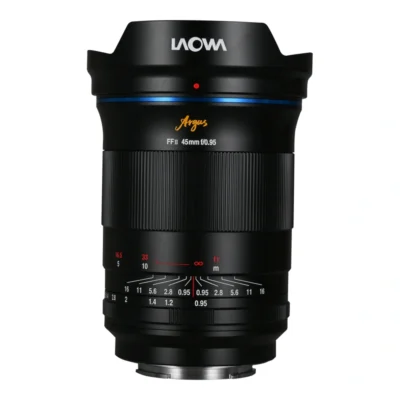
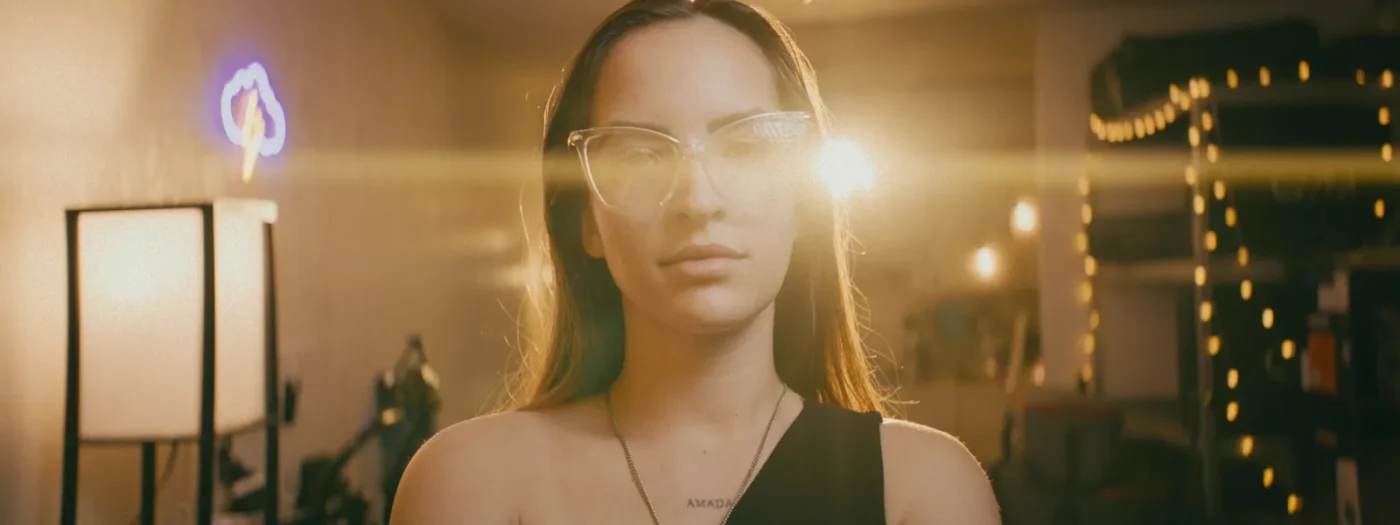
A wide aperture does two things. You can shoot in dimmer light without pushing ISO as far, and depth of field gets shallower so the background melts away. The cost is size and weight, and wide open the zone of focus is thin and easy to miss.
A T-stop measures how much light actually makes it through the glass, while the f-stop is worked out from the size of the opening alone. Cine lenses use it so exposure matches across a set. A T-stop is always a little higher than the matching f-stop.
Manual focus or autofocus
Many Laowa lenses and several from ZEISS are manual focus. That sounds harder than it is. On a wide lens depth of field is so deep that you often set focus once and leave it. Mirrorless cameras offer focus peaking, which colours whatever is sharp, and magnification in the viewfinder.
For macro, landscape, architecture and video plenty of people prefer manual focus anyway. For sport, running kids or birds in flight, autofocus is hard to replace. Some manual lenses have electronic aperture control and contacts that send data to the camera. The product page says so when they do.
How to choose a lens
Start from what you shoot most, not from what is popular. Someone who mostly shoots landscapes gets more out of a wide-angle than a fast 50 mm, and the opposite holds if you photograph people.
A prime is often the most image quality for the money. It has fewer elements than a zoom of the same speed, and it makes you move your feet. Many photographers do most of their work with one or two primes.
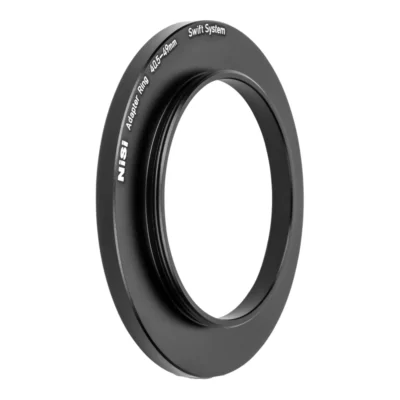
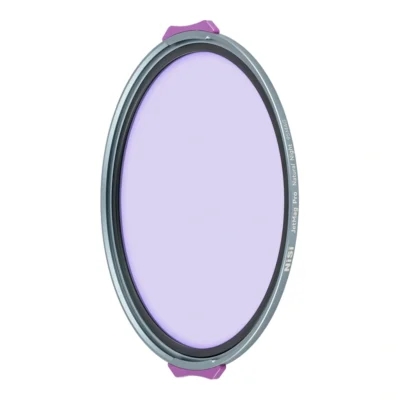
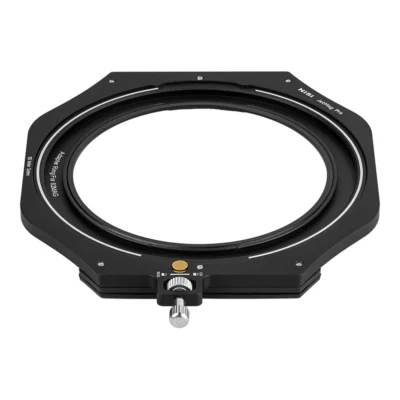
Check the filter thread before buying. If you already own filters in one size, it helps if the next lens takes the same, or can be matched with a step-up ring. Ultra-wides with a bulging front element often have no filter thread at all and need a filter holder. You will find those among the lens accessories, along with hoods, caps and adapters.
Finally, look at the weight. A lens too heavy to bring on a walk takes no pictures.
Frequently asked questions about lenses
What is objektiv in English?
Objektiv is Swedish for lens, and kameraobjektiv means camera lens. Product names often use wide angle, macro and prime for a fixed focal length.
Will any lens fit my camera?
No. The lens needs the same mount as the camera, such as Sony E, Canon RF, Nikon Z or L-mount. Many lenses come in one version per mount, so pick the one for your body. An adapter can sometimes let you use a lens from another mount.
What does the f-number on a lens mean?
It tells you the widest aperture. A low number like f/1.4 lets in a lot of light and gives shallow depth of field with a soft background. A higher number like f/5.6 usually means a smaller, lighter lens.
What is the difference between an f-stop and a T-stop?
The f-stop is calculated from the aperture opening, while the T-stop measures how much light actually passes through the glass. Cine lenses use T-stops so exposure matches across a set.
Are manual focus lenses hard to use?
Not on a modern mirrorless camera. Focus peaking shows what is sharp and the viewfinder can magnify the image. On wide lenses depth of field is so deep that you rarely need to refocus.
Which lens should I buy first?
The one that suits what you shoot most. A fast prime around 35 or 50 mm is a good all-rounder for people and everyday shots, while a wide-angle suits someone who mostly shoots landscapes and buildings.