

















Black and white developing goes in steps: developer, stop bath and fixer, and then a rinse. The developer affects grain and contrast the most, and comes both as powder to mix and as liquid concentrate. Check whether the developer is for film or paper, and choose the pack size by how much you develop.
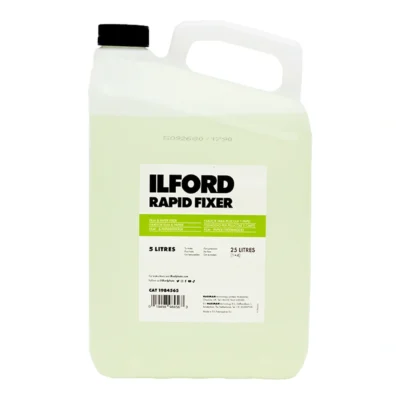
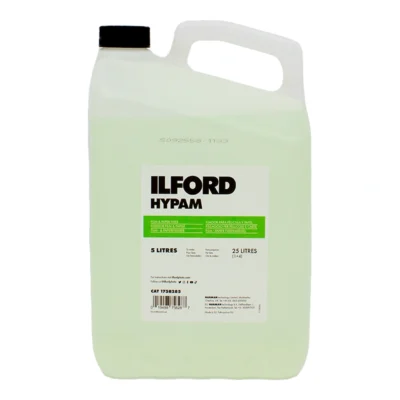
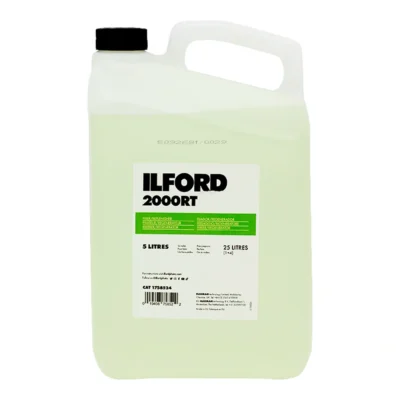
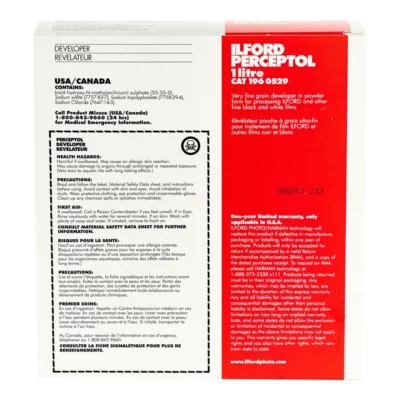
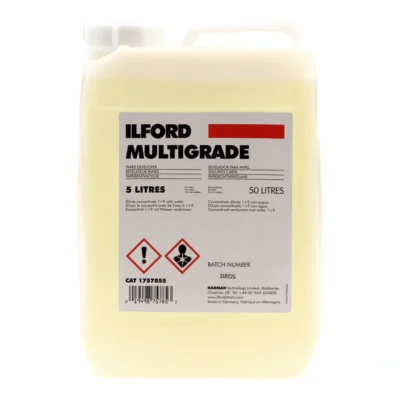
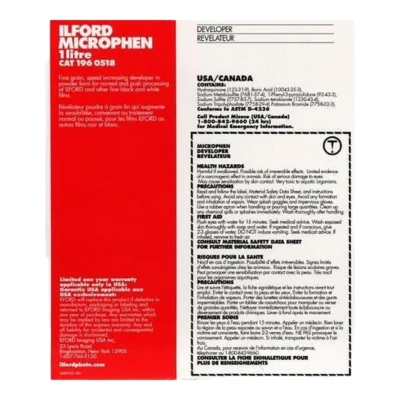
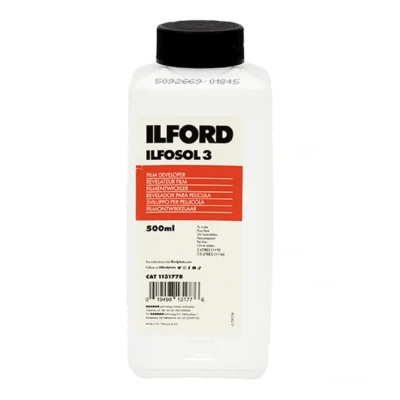
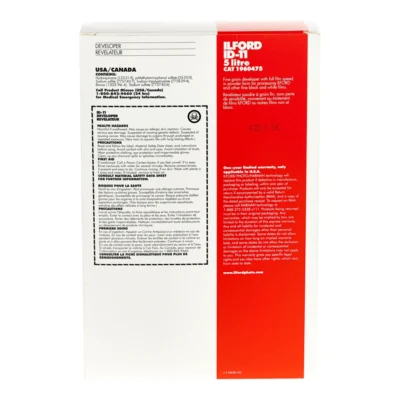
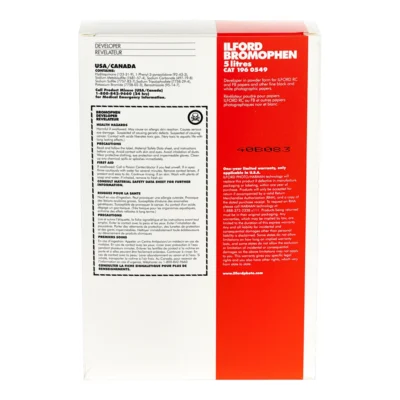
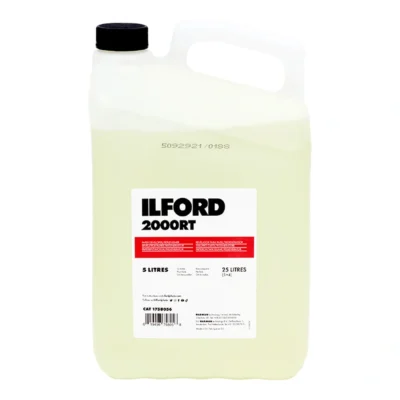

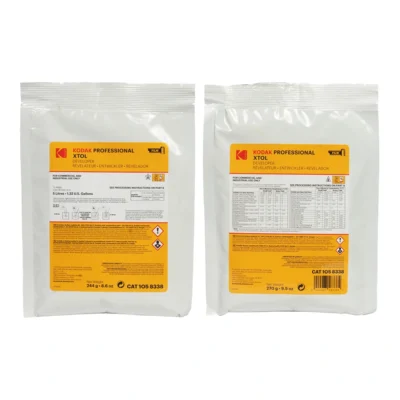


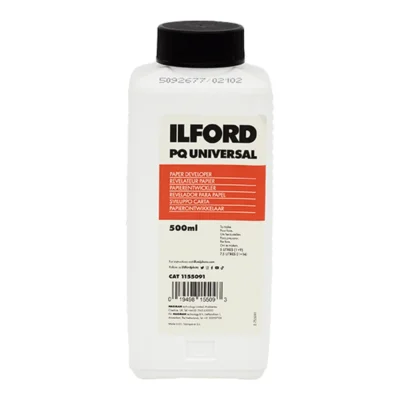
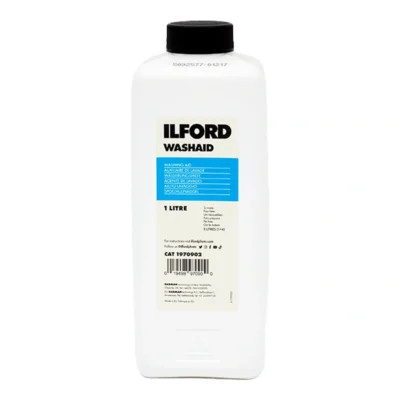
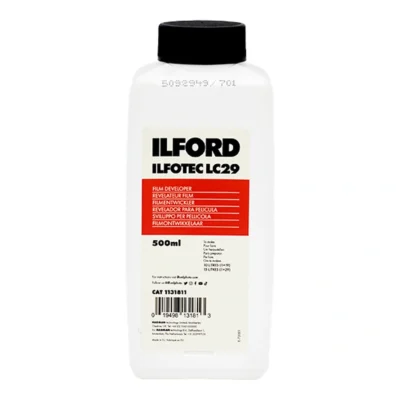
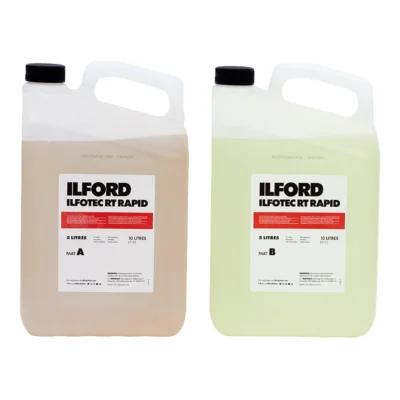
The chemistry in this category is black and white photo chemistry from Ilford and Kodak, for film and for photographic paper. Most of it is made for hand processing in a tank and trays. Some is machine chemistry for labs, and that is easy to pick by mistake if you only read the name.
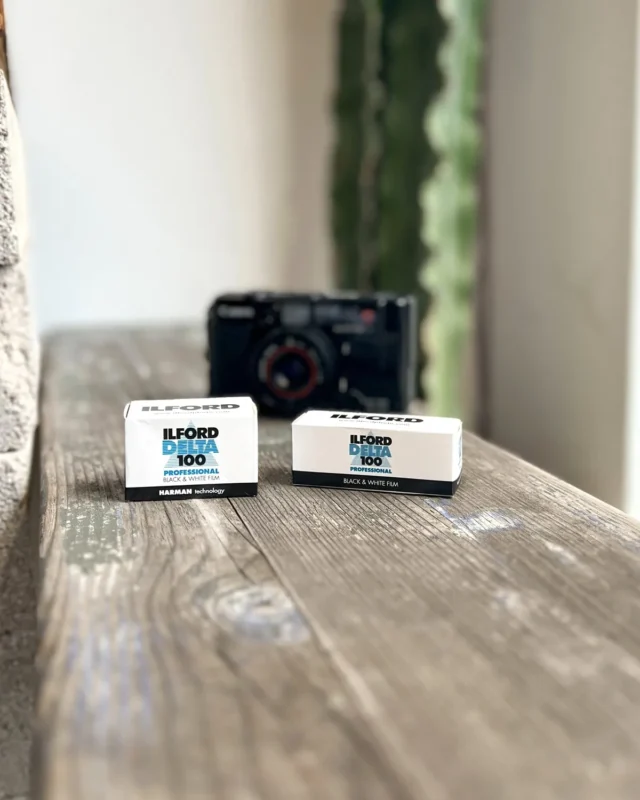
Developing film in practice
Work from 20 °C. Nearly all development times in the data sheets assume that temperature, and a few degrees warmer shortens the time noticeably. Mix the working solution in a graduate, check it with a thermometer and have stop and fix ready before you start.
During development you invert the tank at set intervals. Ilford often gives four inversions in the first ten seconds and then four every minute. Follow the scheme that goes with your developer and do it the same way every time. That is how you get even negatives from roll to roll.
After the fix comes the wash. Ilford's method saves water: fill the tank, invert five times and drain, fill again and invert ten times, then twenty. Finish with a bath containing a few drops of wetting agent so the film dries without marks.
Choosing a film developer
The film developer affects grain, sharpness and how much of the film's speed you get. The differences are real but smaller than the difference between two films. Pick one developer and learn it before you switch.
Classic powder developers such as Kodak D-76 and Ilford ID-11 give a balanced result with most films and make a good standard. XTOL is also a powder and gives fine grain at full speed.
Liquid concentrates such as Ilfosol 3 and Kodak HC-110 are diluted straight into water and used once. That keeps things simple and consistent, and a bottle lasts a long time if you develop a few rolls a month. Perceptol gives especially fine grain at the cost of speed. Microphen does the opposite and suits pushed film.
Powder or concentrate
Powder keeps a long time while the packet is sealed and works out cheap per roll. It has to be dissolved in warm water and left to cool, and a mixed stock solution keeps for a shorter time. Concentrate costs a bit more but is ready in a minute. If you develop only now and then, a concentrate is usually the easier choice.
Stop bath, fixer and washing
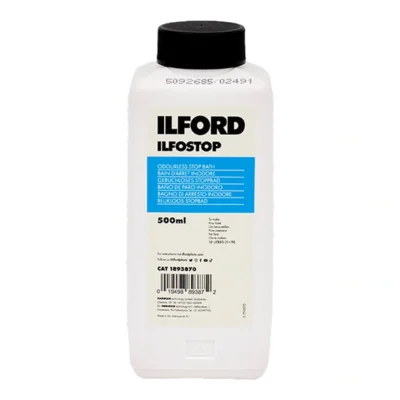
Stop bath halts development. It is a weak acid, and some stop baths change colour when exhausted. For film many people simply rinse with water instead, while paper benefits from a proper stop.
Fixer dissolves the silver that did not become image, so the film or paper can face daylight. A rapid, non-hardening fixer works for both film and paper and is the usual choice today. Fixer can be reused a number of times. Keep track of how much has gone through it, because exhausted fixer gives negatives that stain over the years.
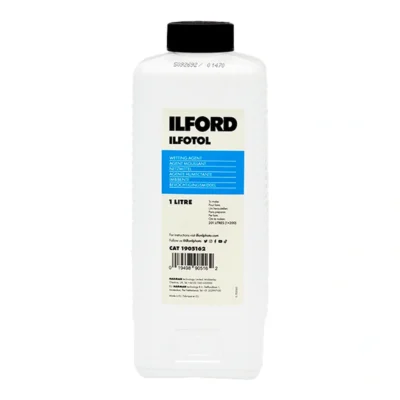
Washing aids such as Washaid and Kodak's Hypo Clearing Agent help fixer residue leave faster. They save the most time with fibre paper, which otherwise needs a long wash. Wetting agents such as Ilfotol and Photo-Flo come last and let the film dry evenly without water marks.
Paper developers and toner
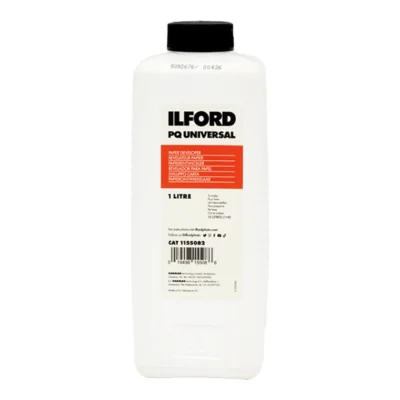
Paper has its own developers, which work faster and with different contrast than film developers. Ilford Multigrade and PQU are liquids and suit both RC and fibre paper. Kodak Dektol and Ilford Bromophen are powders. The choice shifts image tone a little, especially on warm-tone papers.
Selenium toner is used on finished prints. It makes the image more permanent and, depending on paper and dilution, gives deeper blacks and a cool or slightly red-brown tone. Toner is diluted heavily and used in its own tray after washing.
Machine chemistry, kits and colour
Some products are made for machines. That covers Ilford chemistry marked RT and 2000 RT, and chemistry for Ilfolab processors. They are tuned for a machine's times and temperatures, not for a tank on the kitchen bench. If the name says RT or machine, read the product page before you buy.
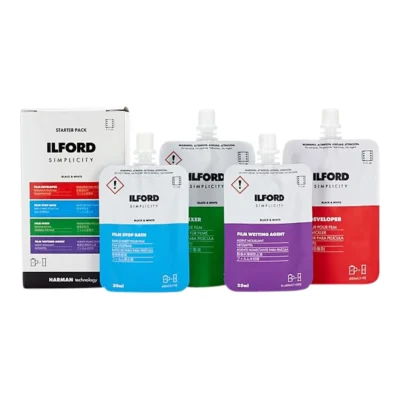
Ilford Simplicity is developer, stop and fixer in single-use sachets. One sachet covers a tank with two 35 mm rolls or one 120 roll. It is an easy way to start without buying full bottles.
Colour development in C-41 needs its own colour chemistry and a temperature close to 38 °C. The black and white chemistry here will not develop colour film.
Storage and waste
Keep concentrates and mixed solutions dark and cool in tightly closed bottles. Squeeze out the air if you can, since oxygen breaks down developer. Label every bottle with contents and date. Wear gloves, ventilate the room, and never mix chemistry in kitchen tools used for food.
Used fixer contains silver and does not belong down the drain. Collect it in a canister and take it to your local recycling centre as hazardous waste. Check with your municipality what applies to exhausted developer where you live.
Frequently asked questions about chemicals
Which chemicals do I need to develop black and white film?
You need a film developer, a stop bath or plain water, and fixer. A wetting agent in the final rinse helps the film dry evenly. A liquid concentrate that you dilute and use once is the easiest way to start.
Can I use the same chemicals for film and paper?
Fixer and stop bath can often be used for both, at different dilutions. Developers differ, though: film and paper each have their own. Check the bottle to see what it is made for.
How long does developer keep?
Sealed powder and concentrate keep a long time, often several years. An opened bottle or mixed stock solution lasts less, as oxygen breaks it down. Store it dark and cool in a full, tightly closed bottle.
What is Ilford Simplicity?
Simplicity is developer, stop bath and fixer in single-use sachets for black and white film. One sachet covers two 35 mm rolls or one 120 roll in a tank. It suits people who develop rarely or want to try without buying full bottles.
How do I dispose of used photo chemicals?
Used fixer contains silver and should go to your recycling centre as hazardous waste, not down the drain. Collect it in a labelled canister. Ask your municipality about developer and other chemistry.
Can I develop colour film in black and white chemistry?
No. Colour negative needs colour chemistry for the C-41 process, run at close to 38 °C. Black and white chemistry will not give a usable colour image.