
















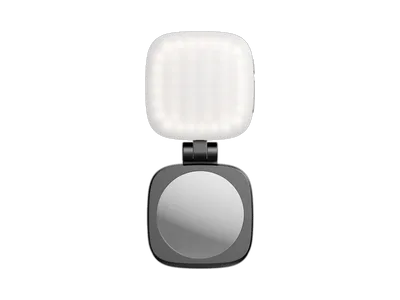
The right bag depends on how much you carry and how you move. A shoulder or sling bag is enough for one camera and a couple of lenses and is quick to work from, a backpack spreads the weight better on longer trips, and a rolling bag takes the weight when there is a lot of gear. Compare the inner dimensions with what you will pack and see whether your laptop fits. Hard cases protect best in shipping and on flights.
Read more about bags & Transport
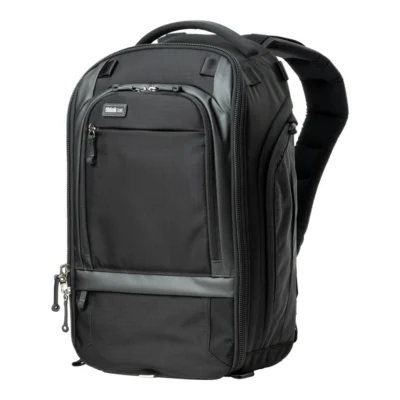
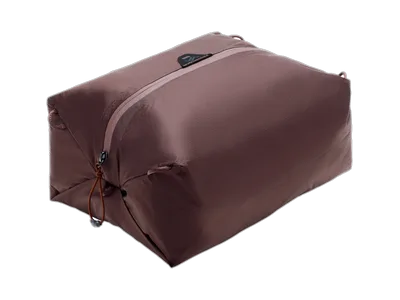
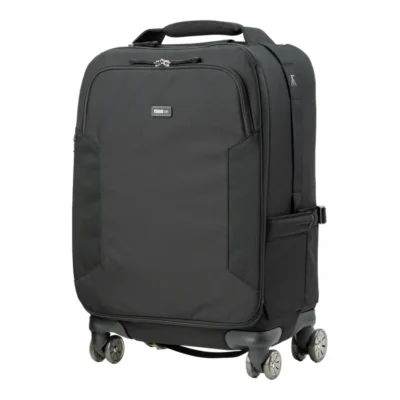
Bags for the camera and for everything else
Bags & Transport holds everything that carries, protects and organises your gear between shoots. That covers more than the bag itself. A strap, a rain cover and a few packing cubes often decide as much as the bag does whether a trip or a day of shooting goes well.
The range is split into six parts. Three carry the camera: camera bags, rolling bags, and hard cases with camera inserts. Three belong around them: travel bags and packing, rain covers and spare parts, and straps and clips.
The bags that carry the camera
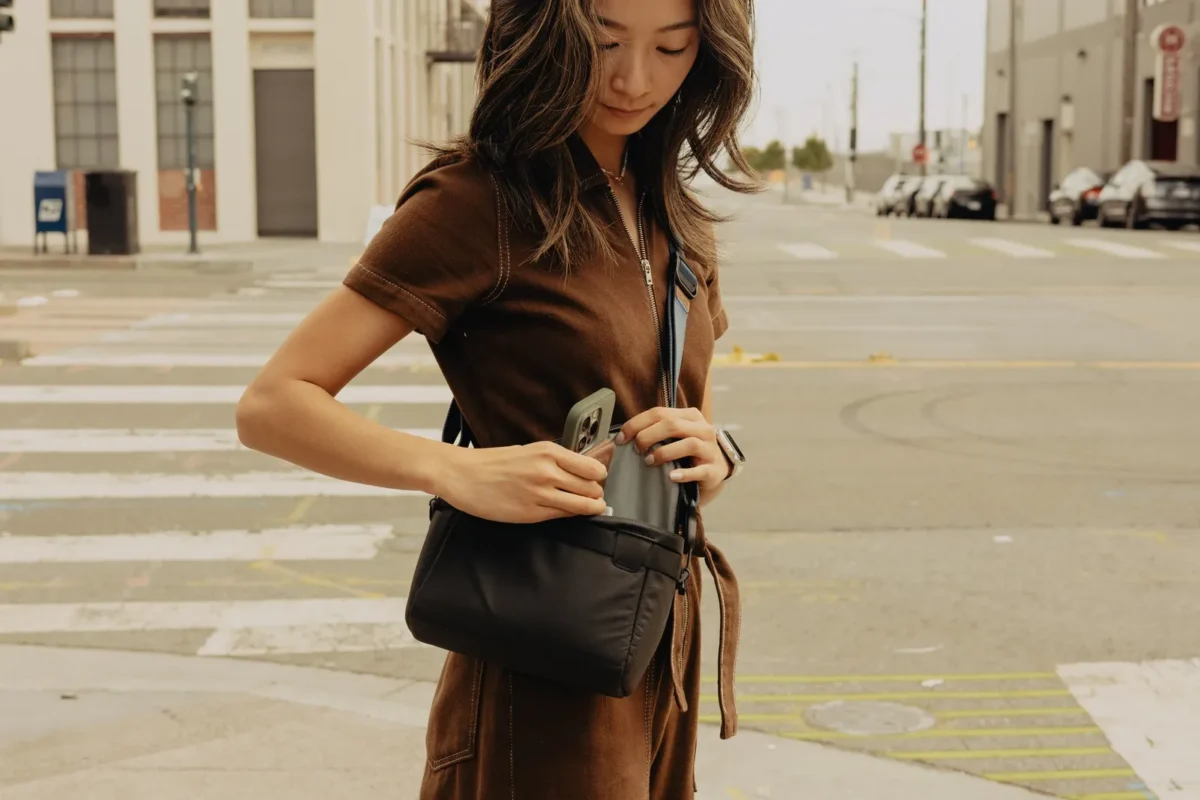
Camera bags
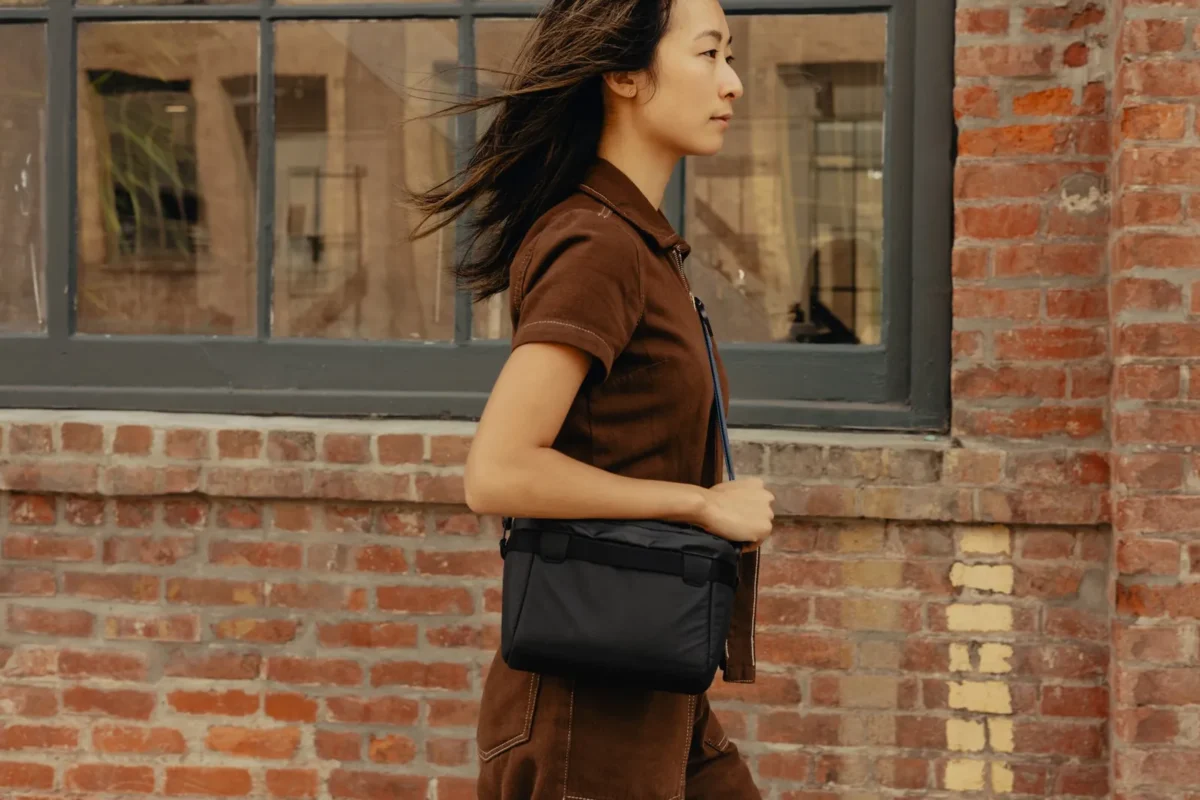
Backpacks, shoulder bags, slings and cases with padded compartments for camera and lenses. These are the bags you wear while shooting, and most people start here. How they differ and how to pick the size is covered on the camera bags page.
Rolling bags
For when the kit gets too heavy to carry. Rollers come in carry-on sizes and in larger versions for flashes and light stands. They suit airports and studios, and cobblestones and stairs less so.
Hard cases and camera inserts
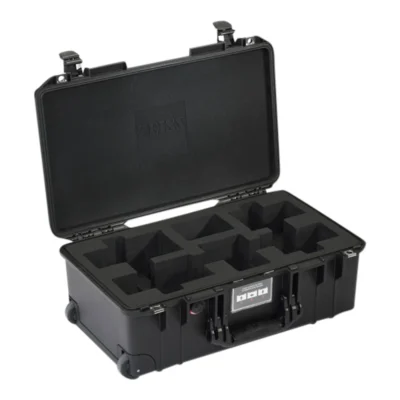
The softest and the hardest protection in one place. A camera insert is a soft padded cube that turns an ordinary backpack or suitcase into a camera bag. A hard case has a rigid shell and a slot for each lens, and is used to move lens sets, often cine lenses.
What goes around them
Travel bags and packing
Duffels, travel backpacks and weekenders, plus what keeps them in order: packing cubes, tech pouches for cables and chargers, wash bags, shoe pouches and laundry bags.
Rain covers and spare parts
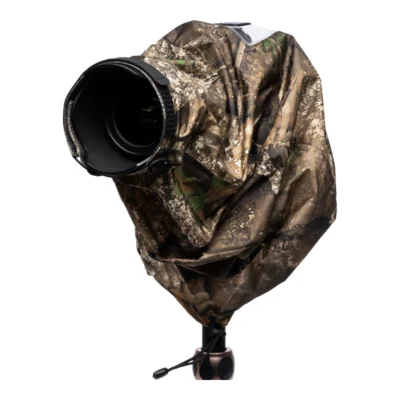
Rain covers that sit over camera and lens while you shoot, covers for the bag itself, and eyepieces that seal against the viewfinder. You will also find dividers, straps, wheels and other parts that keep a bag in use after something breaks.
Camera straps and clips
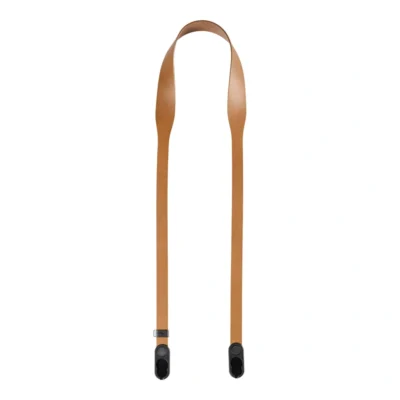
Neck, shoulder and wrist straps, hand straps, harnesses and clips that lock the camera to a backpack strap. The strap decides where the camera is when it is not at your eye.
Combine by how you shoot
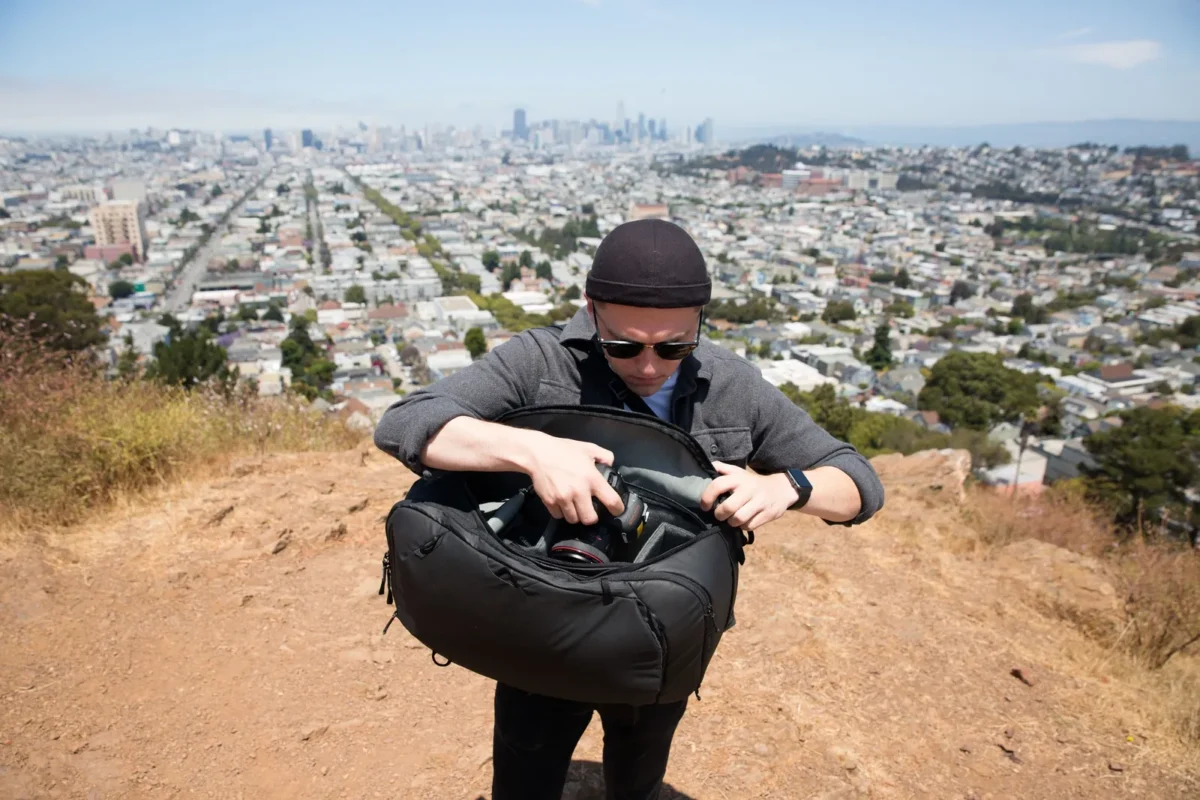
No single bag does everything. Most people who shoot a lot end up with two or three things used in different combinations.
| Situation | Typical combination |
|---|---|
| Everyday and city | Sling or shoulder bag, plus a shoulder or wrist strap |
| Day trips and hiking | Camera backpack, or a hiking pack with a camera insert, a clip on the shoulder strap and a rain cover |
| Flying with one camera | Travel backpack or duffel with a camera cube, a tech pouch and a small bag for the days out |
| Jobs with a lot of gear | A roller for the journey and a harness or belt during the job |
| Film and studio | Hard case for the lenses and rollers for lights and stands |
In our experience it pays to start with the bag you will use most and add the rest once you know you need it. A big camera backpack bought for one trip often spends the rest of the year in the wardrobe.
Much of this category moves between bags. A camera insert, a tech pouch and a rain cover go from one bag to the next, so they are rarely a wasted first buy.
The brands and their systems
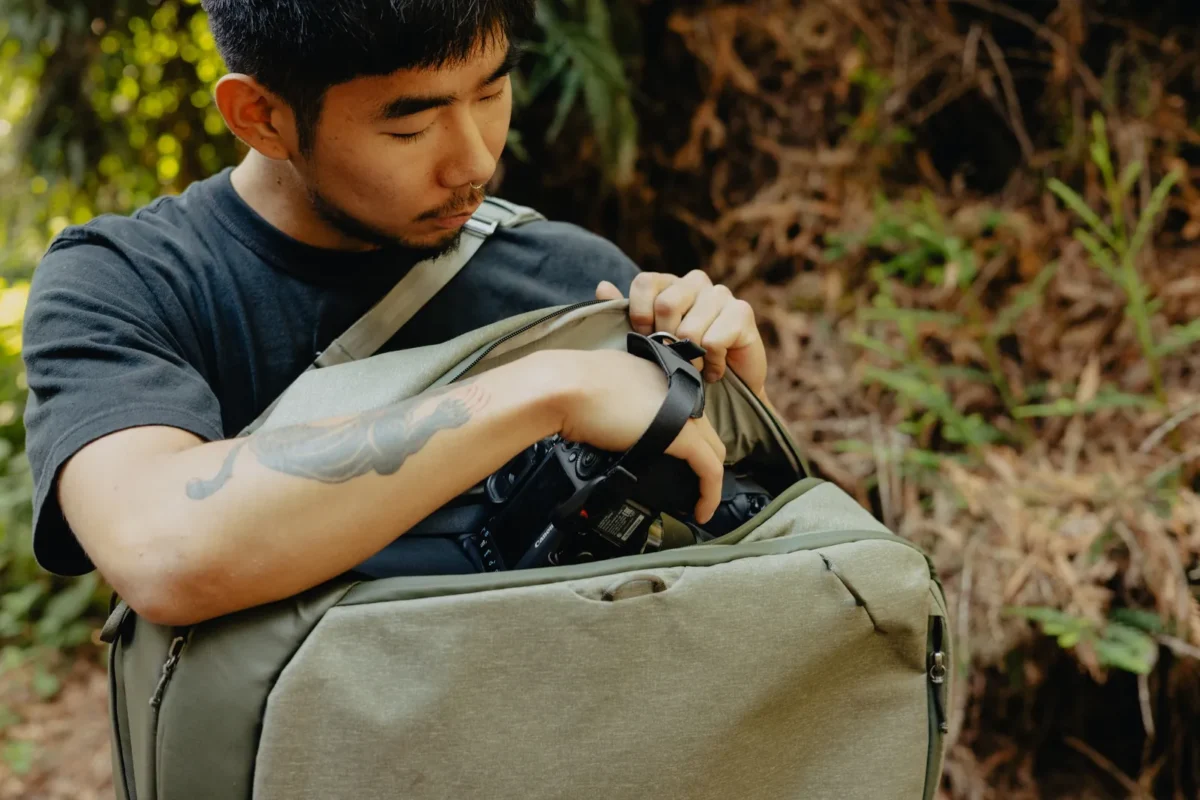
Several brands build their gear as systems where the parts work together. Worth knowing if you buy one piece at a time.
Peak Design has its Everyday, Travel and Outdoor lines. The camera cubes fit the travel bags, and the straps attach with the same small anchors on the camera, so it can switch between a shoulder strap and a wrist strap. The Capture clip locks the camera to a backpack strap. There are also plenty of spare parts for their bags.
Think Tank is known for rolling bags, rain covers and belt systems for working photographers, and its canvas Retrospective line includes travel bags and camera bags in the same style. Gomatic makes travel and everyday bags, among them collapsible bags in the Navigator line and a series made with photographer Peter McKinnon.
A camera bag, on the other hand, is rarely tied to a camera brand. What matters is the dimensions, not whether the camera is a Canon, Nikon, Sony or Fujifilm.
What applies to every bag
Empty weight counts. Wheels, frames, thick padding and metal buckles all add up, and you feel it at check-in and on your back. Compare the weight in the product description before choosing the biggest version.
Water-repellent fabric handles a shower, but no bag stays dry for hours on wet grass. Plan on a rain cover if you are out in bad weather.
Check which laptop fits if one is coming, and look at the zips. They wear out faster than anything else on a bag, especially one that is packed too full. With spare dividers and straps a bag can often be repaired rather than replaced.
Frequently asked questions about bags & Transport
Which camera bag fits a Canon camera?
Most camera bags are not tied to a camera brand. What matters is the size of the body with its lens mounted and how much gear you carry. Cases and half cases are the exception, as they are made for specific camera models.
Should I choose a backpack, a roller or a hard case?
A backpack suits days on foot when you shoot along the way. A roller takes the weight at airports and in studios when the gear is too heavy to carry. A hard case is for moving lens sets by car, by air and to film sets.
Can I use an ordinary backpack for my camera?
Yes, with a padded camera insert inside. The insert protects camera and lenses, and you choose the backpack for fit and the rest of your packing. Getting to the camera is slower than with a proper camera backpack.
What do I need besides a camera bag?
A comfortable strap or clip, a rain cover if you shoot outside in bad weather, and a tech pouch for chargers, cables and memory cards. On trips, packing cubes keep the rest of the bag in order.
What is the difference between Peak Design, Think Tank and Gomatic?
Peak Design builds bags, camera cubes, straps and clips as systems that work together. Think Tank is known for rolling bags, rain covers and belts for working photographers, and has the canvas Retrospective line. Gomatic makes travel and everyday bags, including collapsible ones.